








TEXARKANA — Upon assuming the role of president of the TexAmericas Center, Scott Norton envisioned the industrial park as a magnet for employers, aiming to generate essential job opportunities in North East Texas. However, he was unaware that the site would be situated above one of the nation’s most significant lithium deposits, known as the Smackover Formation, positioning it as a pivotal hub for mineral production in Texas.
Norton emphasized the potential benefits of lithium production, stating, “This is a great opportunity not just for the Department of War and Red River Army Depot, but for the entire region concerning capital investment and job creation.” The advent of lithium production in East Texas could lead to the creation of high-paying jobs, bolster local businesses, and prompt enhancements to the region’s infrastructure, including roads and public utilities. Conversely, it also raises concerns about escalating property values for landowners and the risk of infrastructure lagging behind rapid growth, reminiscent of past downturns experienced during the oil and gas boom.
At a lithium symposium held in Texarkana this past July, economists cautioned against pursuing a boom mentality, advocating instead for deliberate, sustainable growth.
Regulatory Challenges Ahead
As the lithium industry evolves, local officials and state lawmakers face the challenge of managing this burgeoning sector to safeguard landowners’ rights, ensure safe extraction practices, and evaluate the overall cost-benefit of lithium production in East Texas. Brent Elliott, an economic geologist with the Bureau of Economic Geology at the University of Texas, remarked, “We can learn from Arkansas and from some of these other places, but it has to make sense economically for companies.” He highlighted the necessity for clarity regarding ownership, unitization, and production procedures to attract investment.
Next year could be pivotal for the lithium industry if lawmakers prioritize it during the 2027 legislative session.
Who Will Oversee Lithium Production?
The production of lithium is a national concern with broad implications. Stakeholders range from landowners near production sites to major companies like EnergyX, ExxonMobil, and Chevron, as well as local and state lawmakers. Former President Donald Trump and Texas’ congressional delegation have advocated for increasing domestic mineral production to lessen dependence on foreign sources for critical minerals. Currently, the Environmental Protection Agency governs federal regulations concerning mineral extraction.
In Texas, the Texas Railroad Commission oversees lithium mining regulations, having been granted rule-making authority in 2023. This agency has established some guidelines informed by the oil and gas sector and brine production practices. Industry representatives are seeking clarity on critical issues such as property tax assessments, royalty agreements, and brine injection regulations, whether from the commission or state legislators.
Researchers from the Bureau of Economic Geology, including Elliott, plan to present findings on water rights and mineral royalties to lawmakers by year-end, assisting in shaping regulations for this emerging industry.
At the recent symposium, which marked a first for the Texarkana Chamber of Commerce, experts provided valuable insights into the industry to regional and state leaders, even drawing Arkansas Governor Sarah Huckabee Sanders to Texas to help inaugurate the event.
Arkansas has witnessed rapid growth in lithium production over recent years, leveraging its existing brine extraction framework. Regulatory structures established in Arkansas were frequently mentioned as a potential model for Texas.
Robin Hickerson, president and CEO of the Texarkana Chamber of Commerce, noted, “They seem to be very happy with the structures in place in Arkansas and would like to see more structures in the state of Texas.”
Economic and Environmental Implications
Texas’ reputation as a business-friendly state may attract lithium producers to establish high-paying jobs for those displaced from the oil and gas sector, as both industries share similar skill requirements. This could also stimulate ancillary development, such as retail, dining, and hospitality in less developed areas.
However, before such progress can occur, crucial details must be resolved. Bruce Cutright, the CEO of GeoFrame, an Austin-based company aiming to establish the largest lithium production facility in the U.S. in Mount Vernon, has been collaborating with community leaders in Franklin County to advance the project.
Cutright remarked that the Legislature has several matters to address next year, particularly regarding the rights and responsibilities associated with minerals and brine, the water byproduct of drilling.
Chris Alex, vice president of U.S. Upstream Asset Development for EnergyX, posed a key question for lawmakers: Is the brine being extracted as a byproduct of oil and gas production, or is it being specifically taken to recover lithium through direct extraction? “The state has yet to clarify this in a ruling or statute,” he stated.
There are additional concerns about how lithium production will impact property taxes and who will ultimately benefit financially from mineral production. Cutright expressed worry that without clear guidelines on property tax implications, homeowners near his facility may struggle with increased property valuations. “I wouldn’t want these beautiful fifth-generation ranches to suddenly be priced out of their property,” he stated.
Currently, Texas relies on individual landowners and producers to negotiate these matters within lease agreements, as noted by Alex.
The Mineral Interest Pooling Act, which governs royalties for oil and gas rights, could also inform legislative discussions, according to Elliott.
Environmental Concerns
Globally, most lithium is extracted from saline aquifers and processed in extensive evaporation ponds, primarily in arid regions of the Southern Hemisphere. This extraction process can be lengthy and is susceptible to delays caused by weather conditions, necessitating significant water resources and contributing to water scarcity in countries like Chile, which harbors the largest lithium reserve worldwide. Moreover, lithium extraction has been linked to the contamination of groundwater.
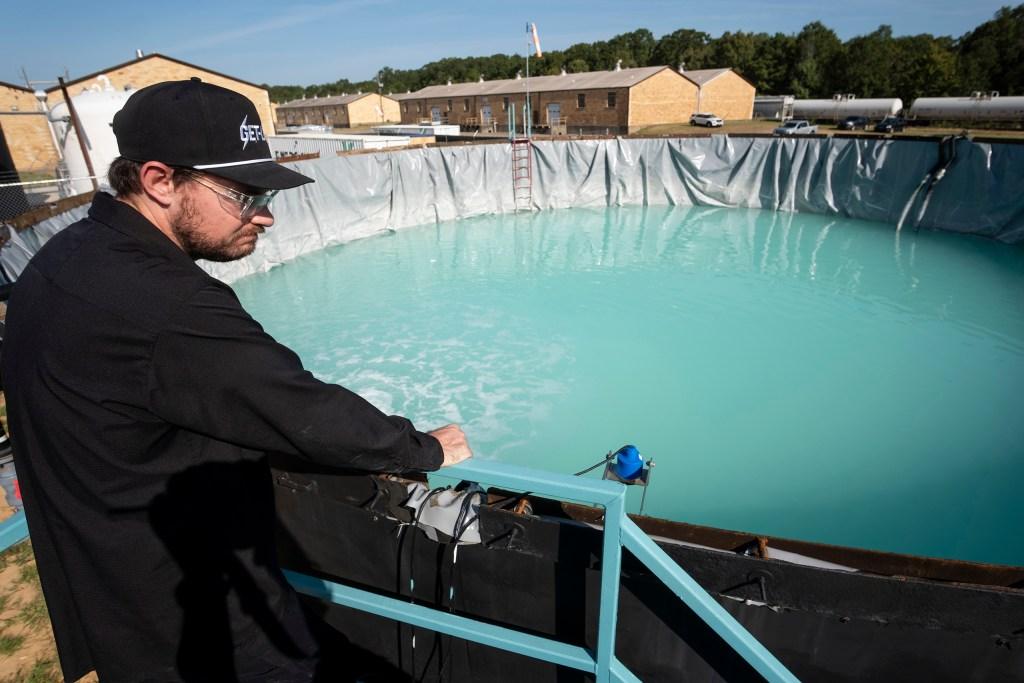
In East Texas, however, producers are exploring a method known as Direct Lithium Extraction (DLE), which resembles oil and gas extraction techniques and may be particularly effective for accessing lithium from the Smackover Formation located deep below the surface.
Neil Carman, a seasoned environmental advocate and former Clean Air Director for the Sierra Club’s Lone Star chapter, expressed apprehension regarding Texas’ nascent lithium industry, fearing insufficient regulation to protect community interests. He highlighted that DLE carries similar risks to oil and gas extraction, warning that infrastructure failures could threaten potable groundwater resources that East Texans strive to safeguard.
Carman urged for the establishment of explicit reporting requirements for operations and a comprehensive contingency plan for potential mishaps.
Elliott views DLE as akin to existing oil and gas practices, noting that the Railroad Commission has already implemented regulations regarding overall brine production, which includes lithium.
Alex of EnergyX believes that brine extraction regulations mirror those for oil and gas in certain respects while imposing stricter requirements in others. He assured that EnergyX has a robust emergency action plan coordinated with county officials and that their site exceeds the Railroad Commission’s existing requirements.
Cutright expressed satisfaction with the state’s regulatory framework but advocated for updates to the Railroad Commission’s rules concerning brine reinjection. Currently, extracted brine must be reinjected into the same geological formation, which he argues could dilute lithium concentrations over time, necessitating the search for new injection sites. “There needs to be a side decision loop in the permitting process that considers alternative zones for reinjection,” Cutright suggested.
The Road Ahead
Arkansas has benefited from leveraging much of its infrastructure and regulations from bromine production, prompting experts to recommend that Texas observe its northern neighbor’s approach.
Nonetheless, Texas is uniquely positioned to foster significant industry growth and development that may not be achievable in Arkansas, according to Elliott. “We have the advantage of developing infrastructure that would be better suited for future development without having the previous baggage,” he explained.
Yet, progress may take time. While lithium was initially a legislative priority leading up to 2027, concerns regarding data centers, especially regarding water and energy usage, have surged among residents. Elliott noted, “The data center issues have really kind of moved to the forefront. I don’t know if that’s a good thing or a bad thing for lithium.”
In East Texas, companies are advancing with test sites to explore the potential of the deep-water aquifer. Texarkana and neighboring communities stand poised for investment as the industry develops.
GeoFrame’s groundbreaking has been postponed from its original 2026 target due to financing and project modifications, but Cutright remains optimistic about the initiative’s future. The facility aims to produce over 83,000 metric tons of battery-grade lithium carbonate annually, significantly contributing to domestic needs if successful. “Texas is blessed with some of the highest lithium concentrations in the Smackover Formation,” he declared. “The area in Franklin County where we’re working is truly the bullseye for the highest concentrations.”