








The Galveston Bay Barrier System consists of a comprehensive seven-part strategy aimed at shielding the upper Texas coast from storm surge. This initiative represents the most significant aspect of the Coastal Texas Project, comprising approximately 85 percent of the total authorized budget. The Galveston County Public District (GCPD) Texas serves as the local sponsor for all seven components, taking on responsibilities that regional agencies typically do not manage. Unlike broader organizations that juggle various priorities, this district was established specifically to oversee coastal protection efforts. Each component addresses a distinct vulnerability within the region’s defenses, collectively designed to prevent storm surge from impacting the communities and infrastructure situated behind the bay.
The Bolivar Roads Gate System
At the heart of the barrier initiative is the Bolivar Roads Gate System, which will stretch across the waterway connecting Galveston Island and Bolivar Peninsula, the primary channel through which storm surge enters the bay. When a storm approaches, the gates will close, effectively blocking surge from flooding the areas behind them. Jacobs Engineering has been contracted to design this structure, which is anticipated to become the largest flood gate system globally upon completion. Detailed information about the storm surge barrier project, encompassing all seven features, is available for those seeking comprehensive insights.
Beach and Dune Restoration
Before the surge reaches the gate, it first encounters restored beaches and dunes along the outer coastline. A dune system extending 25 miles along Bolivar Peninsula and another 18 miles along West Galveston Island is in the planning stages. These natural barriers help absorb wave energy and mitigate surge before it intensifies toward the bay. Engineering firm HDR has been awarded the design contract for both restoration projects, which are the first features scheduled to enter formal design. The revitalized dunes also enhance the resilience of coastal ecosystems, aiding in their recovery after storms.
Galveston Seawall Improvements and the Ring Barrier
Two critical features focus on safeguarding Galveston Island from storm surge that may bypass the external defenses. Upgrades to the existing seawall along the southern shore of the island are planned to bring it up to modern protective standards. The proposed Galveston Ring Barrier will address vulnerable areas left unprotected by current infrastructure on the island’s backside. Together, these features will surround one of the most densely populated sections of the Texas coast, providing a more robust layer of protection. Both components are designed to function alongside the gate and dune systems, ensuring storm surge cannot breach or circumvent the island’s defenses.
Interior Gate and Pump Stations
Two additional features focus on preventing surge from entering through internal waterways rather than the main bay opening. The Dickinson Bay Gate and Pump Station will protect communities along Dickinson Bay from surge during storms. Meanwhile, the Clear Lake Gate System and Pump Station will serve the Clear Lake area, which is home to numerous residences, businesses, and commercial developments. These features combine physical gates with pump stations to manage the water that accumulates behind the barriers after a storm, as gates alone cannot effectively drain floodwater. They specifically address vulnerabilities that the outer barrier might not cover.
Home Elevation and Floodproofing
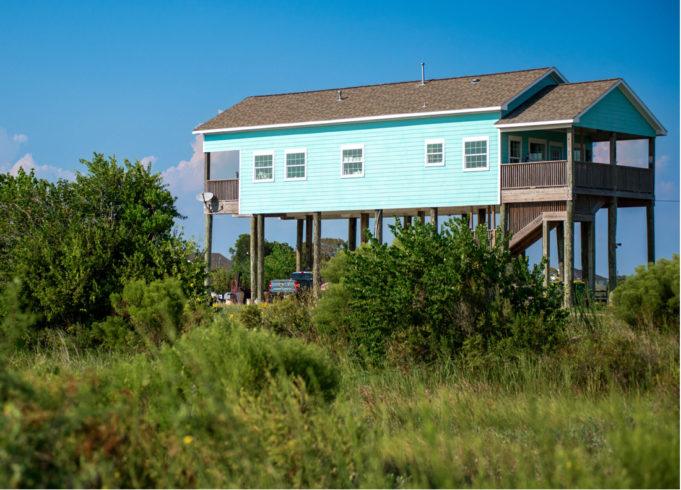
The seventh feature emphasizes individual properties rather than large-scale structures. Home elevation and floodproofing initiatives provide residents in at-risk areas with direct measures to minimize surge damage. Homes in low-lying zones can be raised above anticipated surge levels, while floodproofing techniques can be employed where elevation is not feasible. This feature acknowledges that even the most sophisticated barrier system cannot guarantee protection for every property under all circumstances. It adds a flexible personal layer to the overall defense strategy and allows residents to take proactive steps while larger construction projects are still in the planning phase.
The Galveston Bay Barrier System tackles storm surge from multiple angles, encompassing both extensive infrastructure and individual property protections. Each of the seven features plays a crucial role, collaboratively contributing to a comprehensive defense strategy. With the upper Texas coast facing significant and ongoing threats, this multifaceted approach aims to address these challenges effectively. As design work progresses, each feature is moving closer to groundbreaking, and the communities, businesses, and industries along the coastline are relying on this project to deliver essential protections. With years of planning behind it, tangible advancements are finally beginning to take shape.