







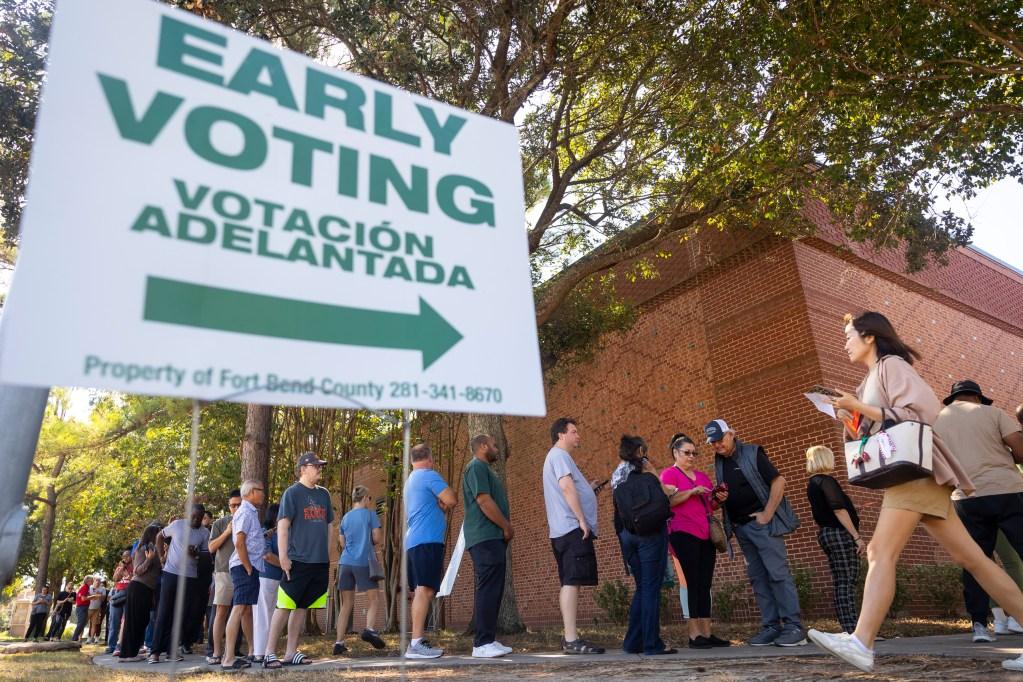
Voting for the 2026 primaries in Texas is set to commence on Tuesday, allowing both Republican and Democratic voters to select their preferred candidates for the November general election.
Before heading to the polls, it is essential for voters to understand their rights and the specific regulations that apply at voting locations, including restrictions on what can be brought or worn. Additionally, an approved photo ID is required for in-person voting.
Understanding the Primaries
The primaries will take place on March 3, with early voting scheduled from February 17 to 27. In each race, the candidate who secures more than half of the votes will progress to the November election to face the corresponding winner from the opposing party. If no candidate achieves a majority in a primary, the top two candidates will advance to a runoff election on May 26. While registration with a political party is not mandatory, voters may only participate in one party’s primary and will be restricted to that party’s runoff election.
What’s on the Ballot?
A glimpse at the federal, state, and local offices up for election this year includes:
- Federal: One U.S. Senator (John Cornyn’s seat) and all U.S. representatives under newly redrawn congressional maps.
- Statewide offices: Texas Governor, Lieutenant Governor, Attorney General, Comptroller of Public Accounts, Commissioner of General Land Office, Commissioner of Agriculture, one Railroad Commissioner (Jim Wright’s seat), four members of the Texas Supreme Court, three members of the Court of Criminal Appeals, and three members of the 15th Court of Appeals.
- Regional district-based offices: Eight members of the State Board of Education, sixteen State Senators, all 150 State Representatives, several Chief Justices of Courts of Appeals, and various judges for regional Courts of Appeals, as well as lower-level judges and local county offices including County Courts at Law, Justices of the Peace, District Clerks, County Clerks, County Treasurers, County Surveyors, and County Commissioners (precincts 2 and 4).
Where to Vote
During the early voting period, voters can cast their ballots at any polling location in their registered county. However, on Election Day, some counties may require voters to vote at a specific location corresponding to their address, which can be found on their voter registration certificate or by checking their registration status online.
For information on early voting times and locations, as well as Election Day polling places, voters should consult their county elections website. A comprehensive list of counties permitting voting at any polling location on Election Day is available from the Texas Secretary of State’s office.
It is advisable to contact election officials, particularly on Election Day, to confirm that polling locations have not changed. Polls will operate from 7 a.m. to 7 p.m. on Election Day.
For those voting by mail within the U.S., ballots must be postmarked by 7 p.m. on Election Day and received by the county by 5 p.m. on March 4 to be counted. Additional information about photo IDs, registration requirements, and mail-in ballots can be found in the voter guide.
Requirements for Voting
To vote in Texas, individuals must present one of seven valid forms of photo ID:
- A Texas driver’s license issued by the Department of Public Safety.
- A Texas election identification certificate issued by DPS.
- A Texas personal identification card issued by DPS.
- A Texas license to carry a handgun issued by DPS.
- A U.S. military ID card with a personal photo.
- A U.S. citizenship certificate with a personal photo.
- A U.S. passport.
If voters do not possess an approved photo ID, they can still cast their ballots by signing a “reasonable impediment” form and providing valid supporting identification, such as a birth certificate, voter registration certificate, or a current utility bill with their name and address.
It is important to note that the address on a state ID or driver’s license does not need to match the voter’s current address. If a voter forgets their ID, they can cast a provisional ballot, which will be counted once the required photo ID or documents are provided within six days.
Polling Place Regulations
At polling locations, recording devices such as cellphones, cameras, and computers are prohibited within 100 feet of voting stations. This area is typically marked with traffic cones or signs. Campaigning, including wearing items that promote candidates or political parties, is also not allowed in this vicinity.
A recent law restricts the use of wireless communication devices, such as cellphones, in the same room where voting occurs. Voters may use written notes to assist in casting their ballots, subject to the discretion of election officials to determine if this constitutes campaigning.
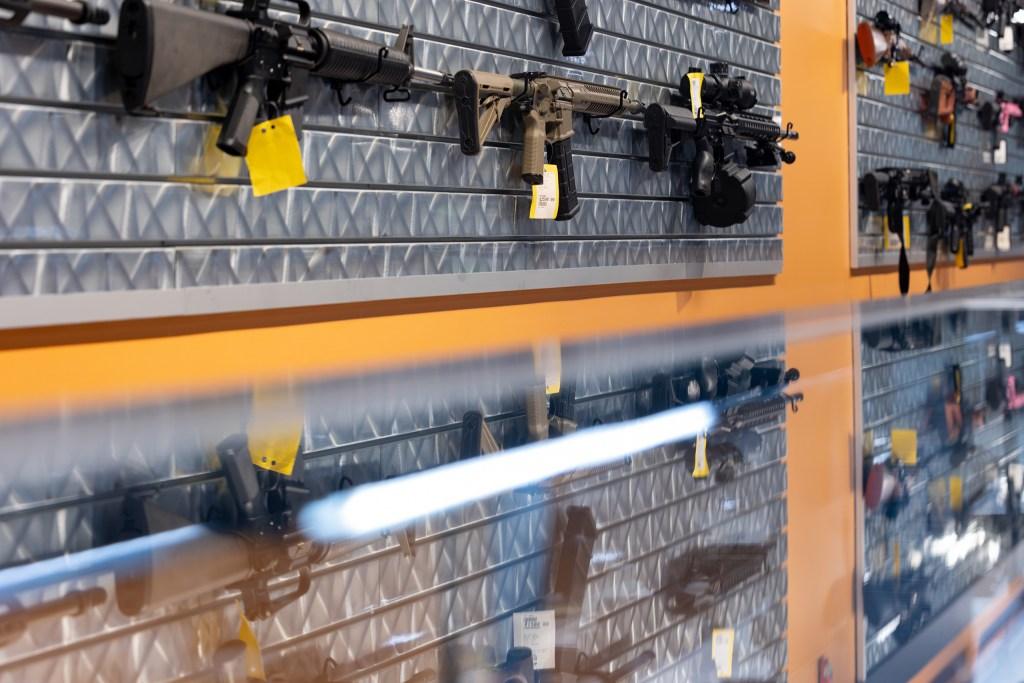
Additionally, firearms, including handguns, are not permitted within polling places as per Texas law.
Addressing “In Suspense” Voter Registration
If a voter’s registration status appears as “in suspense,” this usually indicates uncertainty regarding their address. However, individuals can still vote by completing a “statement of residence” at the polls. Voters who have moved but did not update their address by the February 2 registration deadline may still be able to vote at their previous polling location if it is within the same county or political subdivision or cast a limited ballot.
A limited ballot includes only statewide and federal elections for Congress and Texas’ U.S. senator. Unless eligible to vote by mail, limited ballots are only available in-person during early voting at the main early voting location, typically the office of the election administrator or county clerk. Voters should contact their county elections office to request a limited ballot.
Voting in Person After Requesting a Mail-in Ballot
In Texas, if a voter has requested a mail-in ballot but decides to vote in person, they are allowed to do so. The process is simplified if they bring their mail-in ballot to surrender at their polling place. If the voter does not have their ballot or it was not received, they can still cast a provisional ballot. Their vote will be counted once the county verifies that the mail-in ballot was not received.
Voters who initially sought to vote by mail due to illness or disability may also qualify for curbside voting or an emergency ballot.
To obtain an emergency ballot, a representative must submit an application in person on the voter’s behalf accompanied by a certified doctor’s note. This application must reach the county’s early voting clerk before 5 p.m. on Election Day, and the completed ballot must be returned by the representative before 7 p.m. on Election Day to be counted. For more information on curbside voting and emergency ballots, voters should contact their county elections office.
Voter Rights
Registered voters whose names do not appear on the official voter list due to administrative errors have the right to cast a provisional ballot. All voters are entitled to receive written instructions on how to vote and can seek assistance from polling officers, although they cannot inquire about whom or what to vote for.
If mistakes occur while marking a ballot, voters are permitted to use up to two additional ballots to correct their errors. Voters have the right to cast their ballots in privacy and should not face intimidation while doing so.
Voters with disabilities or limited English proficiency can request interpretation, assistance, or other accommodations to facilitate their voting experience. A law enacted in 2023 allows voters with disabilities or mobility issues to bypass lines at polling locations and mandates that each polling site has designated parking for curbside voting.
Texas law guarantees that voters can take time during work hours to vote without facing penalties or loss of pay, although these protections may not apply if polling places remain open two hours before or after a worker’s shift.
On Election Day, voters can cast their ballots as long as they are in line by 7 p.m., with early voting hours subject to change. Voters encountering issues at the polls should communicate with election officers or poll workers for assistance.
The Secretary of State’s office provides a helpline at 1-800-252-VOTE (8683), where state attorneys are available to address questions from voters and election officials. Additionally, a coalition of voting rights groups maintains voter protection hotlines in multiple languages, and Disability Rights Texas offers a helpline for individuals with disabilities.