




The Fort Worth nonprofit YesterQueer recognizes the profound impact of vintage photographs that capture moments of queerness, even when the original intentions behind them remain elusive. These images resonate with meaning, allowing viewers to connect with the past in ways that transcend time.
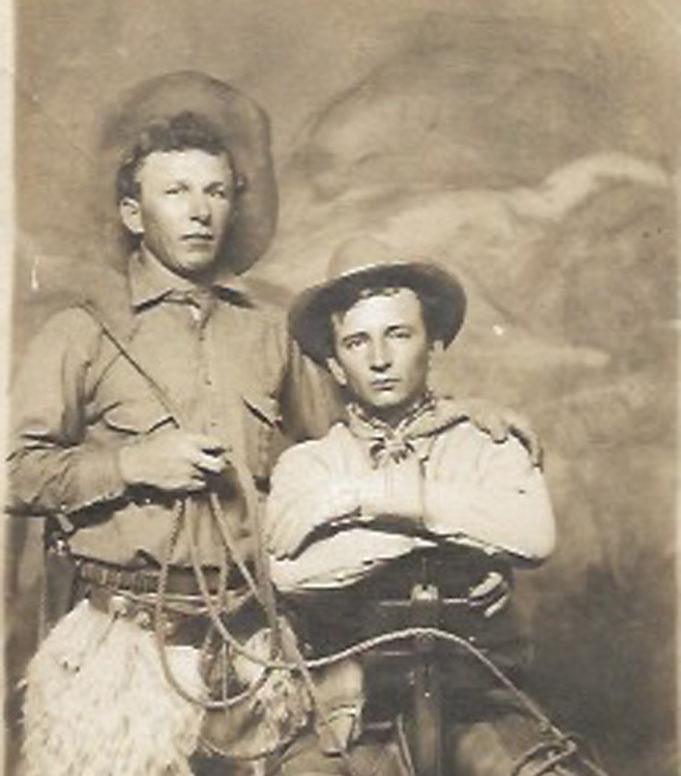
One striking example is a photograph of two unidentified cowboys taken at the Electric Post Card Studio in the early 1900s. While the identities and experiences of these individuals are lost to history, they provoke deep reflection on the feelings and conversations of locals from nearly a century ago. The nuances of their lives—glances exchanged, private understandings, and the need for anonymity—have faded, leaving behind only fragments like a receipt, a letter, or a photograph. Some images may not convey a thousand words, but they carry significant emotional weight.
Recently, I encountered a captivating portrait of three individuals during an online auction. Captured by photographer Guy N. Reid at his studio on Houston Street in the early 1920s, this formal full-length portrait exemplifies the type commissioned by Fort Worth’s burgeoning middle class to commemorate special occasions. Interestingly, while two figures don white ties and tails, the third stands out in a dark sport coat, complete with round wire-rimmed glasses, all presenting a clear image of men’s formal wear—though all three appear to be women.
This portrait has recently been added to YesterQueer’s archive, joining a select group of photos that highlight gender-nonconformity in Cowtown. Among these are images from the Electric Post Card Studio, including one of two cowboys connected by a lariat and another of two young women adorned in wide-brimmed hats and matching long-laced boots. Despite the absence of their names and identities, these individuals chose to be photographed, preserving a moment of their lives for future generations.
Seth Knievel, a Ph.D. candidate at Louisiana State University, has dedicated years to uncovering such images, scouring thrift stores, estate sales, and antique shops throughout the South. He recently examined the Reid portrait and noted a crucial detail: this was not a casual snapshot taken by an acquaintance but a deliberate act conducted in front of a stranger—an act that could have led to rejection or worse. The mere existence of this portrait reflects a notable bravery from its subjects.
Knievel emphasizes the importance of understanding the limitations of these photographs and the assumptions that contemporary historians might draw. The notion of a public homosexual identity was virtually non-existent before the Oscar Wilde trials in 1895, and by the McCarthy era, same-sex affection depicted in photographs often invited severe repercussions.
While Knievel meticulously researches the subjects of his photographs, utilizing any available handwritten captions or visual cues, he believes the aesthetic appreciation of such images transcends the need for proof of identity. “It doesn’t really matter whether or not the people in this photograph were queer,” he explains. “What matters is that when we look at these photographs, we have the space to imagine. This photograph represents a transgression of social norms, and that in itself is really impactful.”
The mission of YesterQueer is to collect and preserve the fragments of a history that was never intended to be remembered. Although the three individuals in the Reid portrait remain unnamed, their choice to step into a studio a century ago and seek visibility speaks volumes. Some acts of courage may not be recorded in history, but they are immortalized in photographs.
In another example, two young women in wide-brimmed hats and matching long-laced boots likely had no inkling that their photo would resonate with queer audiences a century later.