







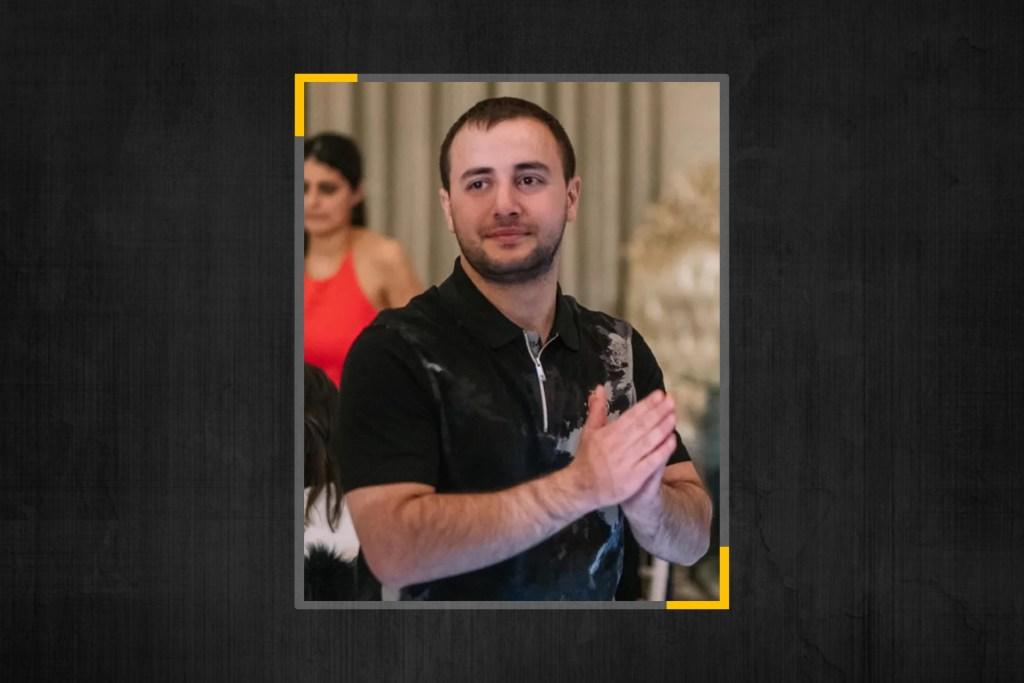
Argam Nazarian’s journey to the United States began in 2008 when he and his family, fleeing religious persecution, arrived as Iranian refugees. As Armenian Christians, they faced severe mistreatment in predominantly Muslim Iran, which included imprisonment and threats to their lives.
After a brief return to Iran—forced by his father who had converted to Islam—Nazarian sought asylum in Russia as a young adult, where he later met his wife. In 2021, he re-entered the United States unlawfully through Mexico. Federal authorities permitted him to stay and work while awaiting an immigration hearing.
For four years, he lived in Los Angeles, supporting his family until he was detained by Immigration and Customs Enforcement (ICE) last June, shortly after U.S. military strikes targeted Iranian nuclear facilities. Since then, he has been held in detention, initially in El Paso before being transferred to the Cibola County Detention Center in New Mexico in March. The reasons for his transfer remain unclear.
During his detention, Iran faced escalating economic hardship and a wave of protests, leading to further military action by the United States and Israel against Iran in late February. This conflict disrupted ICE’s plans to deport many Iranian nationals, with flights being halted due to the ongoing war.
“I don’t have any place to go,” Nazarian, 27, expressed during a phone call from the El Paso ICE Processing Center last month as tensions in Iran escalated. “I just want to be where I can be free.”
The Texas Civil Rights Project is currently challenging Nazarian’s detention, asserting that he is being held unlawfully without bond. Court documents reveal that the government has ordered his release twice, acknowledging that he poses neither a flight risk nor a threat to the community. Notably, he has no criminal record.
His initial habeas corpus petition was dismissed by U.S. District Judge Leon Schydlower in March following his transfer. Subsequently, his attorneys filed an emergency petition in New Mexico, which is now with U.S. District Judge Sara M. Davenport. She has mandated that the government respond by April 9 and has prohibited any transfer of Nazarian out of the district while the case is pending.
Despite being under an order of removal, Nazarian remains in active asylum proceedings. Requests for comments from the Department of Homeland Security and ICE went unanswered.
Immigration detainees in Texas face stricter restrictions on release than those in New Mexico, largely due to a recent ruling by the Fifth Circuit Court of Appeals, which upheld mandatory detention without bond. In contrast, the Tenth Circuit has previously deemed such mandatory detention illegal.
In a related development, the Eighth Circuit Court of Appeals overturned a lower court ruling that deemed detention without bond unlawful, impacting states in the Midwest, including Minnesota.
“Argam came to the U.S. to seek safety and freedom, and he doesn’t understand why he’s behind bars,” stated Charlotte Weiss, an attorney with the Beyond Border program at the Texas Civil Rights Project. She also noted that Nazarian’s knee injury requires urgent medical attention.
Early Life and Asylum Journey
Nazarian first arrived in the U.S. as a child refugee in 2008, brought by his parents and younger brother to escape persecution in Iran. However, his father, after converting to Islam, took the family back to Iran in 2009, despite Nazarian’s desire to remain in the U.S.
“The U.S. was colorful and beautiful,” he recalled. “I was crying not to go back to Iran. After we went back, everything was black and white. There was no color, no life.”
In search of safety, Nazarian traveled through Armenia and Russia, where he eventually met his wife. After being denied asylum in Russia, the couple journeyed through Ukraine and Mexico before entering the U.S. unlawfully in August 2021, where they were detained before being released with a notice to appear in court.
Settling in Los Angeles with family, they became part of a close-knit Armenian Christian community. Nazarian took on the role of caretaker for his mother, who suffers from chronic health issues. He applied for asylum in April 2025, but his application was denied, and his appeal is still pending.
Fearing for his life if deported back to Iran, Nazarian also worries about the fate of his family, including his wife, who has her own pending asylum claim. “I’m going to lose my family if I get deported,” he lamented, highlighting his deep sense of loss and the years he spent working legally and paying taxes in the U.S.
Detention Experience
On June 23, 2025, Nazarian was approached by individuals who did not identify themselves as law enforcement while heading to work. He was handcuffed and taken to a federal facility in Los Angeles, where he faced poor conditions, including a lack of clean clothing and proper hygiene facilities.
After being transferred to El Paso, he spent two weeks in a tent camp, where he was denied showers and phone calls. On August 6, an immigration judge ordered his release on bond, stating that he posed no danger or flight risk. However, the government contested this, citing federal law that mandates detention for those who entered without inspection.
Nazarian’s habeas corpus petition was one of over a thousand filed in Texas challenging the legality of such detentions. Most petitions argue unlawful denial of the right to seek bond for release. While some judges in El Paso are more lenient, Judge Schydlower has been noted for a slower approach and fewer approvals for habeas corpus petitions.
The backlog of petitions is partly due to a ruling from the Board of Immigration Appeals that altered longstanding precedents regarding bond eligibility for those who crossed unlawfully.
Nazarian’s legal team contends that he should be eligible for release on bond, given his years in the U.S. and the judge’s findings regarding his risk profile. His worsening knee injury has been documented by medical professionals, raising further concerns about his treatment in custody.
Seeking Safety and Freedom
For Nazarian, the United States symbolizes more than just opportunity; it represents safety. He noted the increasing violence against Christians in Iran, as highlighted in a recent report by the Center for Human Rights in Iran.
Historically, the U.S. had limited deportations to Iran due to strained diplomatic relations, but policy changes have led to recent deportation flights as tensions escalated between the two nations. The ongoing conflict has resulted in significant casualties and displacement in Iran.
Nazarian reflects on how deeply his experience has changed him. “Absolutely I’m a different person,” he said, acknowledging the toll on his mental and physical health. He credits the support from his advocates and attorneys for giving him hope amid his struggles.
Weiss remarked on the visible despair in Nazarian’s demeanor, especially in light of the current situation in Iran. She emphasized the urgency of his case, stating that this may be his last opportunity to secure safety and freedom.