







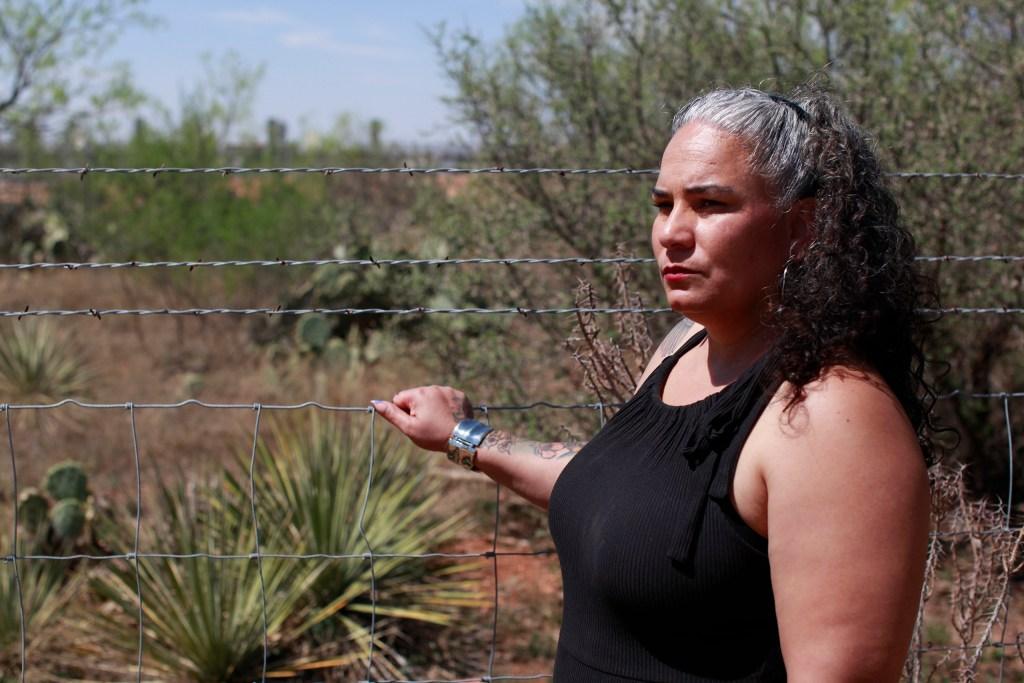
Omaira Garcia, a resident of Abilene, Texas, found her life irrevocably altered by the arrival of dust clouds from a construction project next door, which she later discovered was the development of OpenAI’s flagship “Stargate” data center. Despite being an Air Force veteran, Garcia was unaware of the plans to build the facility adjacent to her home until after construction had commenced in the summer of 2024. Now, a large power plant stands approximately 500 yards from her residence, with the exhaust stacks from gas-powered turbines visible from her kitchen window.
“We weren’t given any time to understand what this impact was going to be on us,” Garcia shared through tears, expressing her feelings of entrapment in her own home.
OpenAI has not responded to multiple inquiries regarding the situation. However, a spokesperson for Crusoe, the developer behind Stargate, stated that the data center has significantly contributed to Abilene’s economic development, funding improvements such as new fire trucks, school expansions, and road enhancements.
Garcia’s experience reflects a broader issue as data centers like Stargate are rapidly expanding across the nation to meet soaring demands for artificial intelligence. Despite commitments to utilize renewable energy, data from recent research indicates that AI companies are largely relying on natural gas to meet their energy needs. An analysis by Cleanview revealed that nearly 60 data centers are planning to construct their own gas plants to bypass grid connections.
In Texas, at least 15 gas plants associated with data centers are in the pipeline, with permits suggesting that nine of them could collectively release over 130 million tons of greenhouse gases annually, equating to the emissions from 35 coal-fired power plants, based on calculations from the Environmental Protection Agency.
Stargate’s developers have already installed 10 gas-powered turbines and 62 backup diesel generators, with plans to add 41 more turbines and an additional 18 generators. If these expansions are approved, Stargate could become one of the largest fossil fuel power plants in Texas, capable of powering over a million homes and generating more greenhouse gases annually than nearly 2 million vehicles.
The initial construction of Stargate’s Abilene campus seemed modest, but a permitting loophole allowed for the quiet establishment of extensive power sources with minimal public awareness. Many Texas data centers have exploited minor air permits designed for smaller operations, such as dry cleaning services, that do not necessitate public scrutiny or comprehensive environmental assessments. This approach often involves a “small first, big later” strategy, limiting community input and momentum for large-scale projects.
Bruce Buckheit, a former air enforcement chief for the EPA, criticized this method, noting, “All of this should have been rolled into one permit.” The use of minor permits has left communities blindsided by the sudden appearance of exhaust stacks and other infrastructure in their backyards.
Stargate was initially announced in January 2025 as part of a $500 billion joint venture among OpenAI, SoftBank, and Oracle, aimed at constructing hyperscale AI data centers nationwide. President Donald Trump emphasized the significance of the project, while OpenAI CEO Sam Altman described it as potentially the most critical endeavor of the era.
With around 300 operational data centers and an additional 200 in development, Texas is poised to overtake Virginia as the leading data center market in the U.S. The state’s abundant natural gas resources and favorable regulatory environment have attracted numerous AI firms, leading to the construction of a “shadow grid” of custom power plants designed to support entire cities.
For instance, Meta’s El Paso data center plans to rely on a new 366 MW gas plant, while Chevron is developing a substantial natural gas power complex in the Permian Basin aimed exclusively at powering data centers. Additionally, Pacifico’s GW Ranch in Pecos County recently received the largest air pollution permit in the U.S., permitting emissions of up to 33 million tons of greenhouse gases per year—nearly 5% of Canada’s total annual emissions.
Overall, Texas has over 80 GW of new gas power plants in its construction pipeline, more than any country except China, with about half of that capacity designated specifically for data centers. Jenny Martos, author of a report on this trend, noted that it risks locking the state into fossil fuel reliance for the foreseeable future.
In 2024, Stargate’s developers obtained permission to operate 10 gas turbines and 62 backup diesel generators through minor permits that allow for significant emissions without public notice or environmental studies. These permits enable the operation of turbines and generators with allowances for over 1.6 million tons of greenhouse gases and 1,000 tons of harmful air pollutants annually.
Experts have raised concerns about the rapid issuance of these permits, which are typically granted to lower-level polluters. Kathryn Guerra, a former Texas Commission on Environmental Quality (TCEQ) staff member, highlighted how these minor permits are often used without adequate public awareness, suggesting an intentional lack of transparency.
Data centers across Texas have leveraged minor permits to install thousands of backup diesel generators, which, although intended for emergency use, are frequently operated for maintenance, according to their permits. Operating these generators for as little as one hour weekly can exert the same public health impact as five large gas-fired power plants. The cumulative effect of these generators in Texas could lead to emissions of nearly 2,500 tons of nitrogen oxides annually, significantly exceeding the emissions from the state’s newest coal-fired power plant.
In Whitney, a data center owned by Cyrus One received permission to operate hundreds of generators, with emissions estimates just under the threshold necessitating stricter permitting. Similarly, a Vantage data center near San Antonio secured a permit for emissions slightly below the area’s limits.
The staggered permitting strategy employed by data centers has raised suspicions of potential violations of EPA policies designed to evaluate entire projects. Buckheit noted that this piecemeal approach undermines the public’s ability to engage meaningfully in the permitting process.
As the expansion of Stargate requires a major air permit that calls for advanced emissions reduction technologies and public comment periods, local residents like Garcia feel a sense of helplessness, as much of the construction has already taken place.
Despite assurances from Crusoe that they take quality-of-life concerns seriously and are committed to being responsible neighbors, residents like Garcia have yet to receive any communication from the developers regarding the ongoing construction and its impacts.
Garcia, who had invested time and effort into finding her ideal home, now faces the daunting prospect of living next to a data center that has drastically altered her neighborhood. She described the quality of life on her once-peaceful road as diminished, with trash accumulating and traffic congestion making it challenging for her to exit her driveway.
Her neighbor, Paul Daniel, who has lived in the area for over 40 years, expressed frustration over the devaluation of his property due to the unforeseen construction. Having planned to pass down his home to his children, he now feels that legacy has been compromised.
Garcia discovered the expansion plans only through external sources, learning of the impending major air permit applications after the fact. The thought of 41 additional turbines being constructed near her home is overwhelming, leaving her uncertain about the future and its implications for her health and well-being.
In her attempts to sell her home after learning of the new developments, Garcia received no offers, and suggestions to convert her property into a rental for workers at the data center were impractical given her circumstances. “It feels almost impossible,” she lamented, reflecting on the bleak outlook for her family’s living situation.