







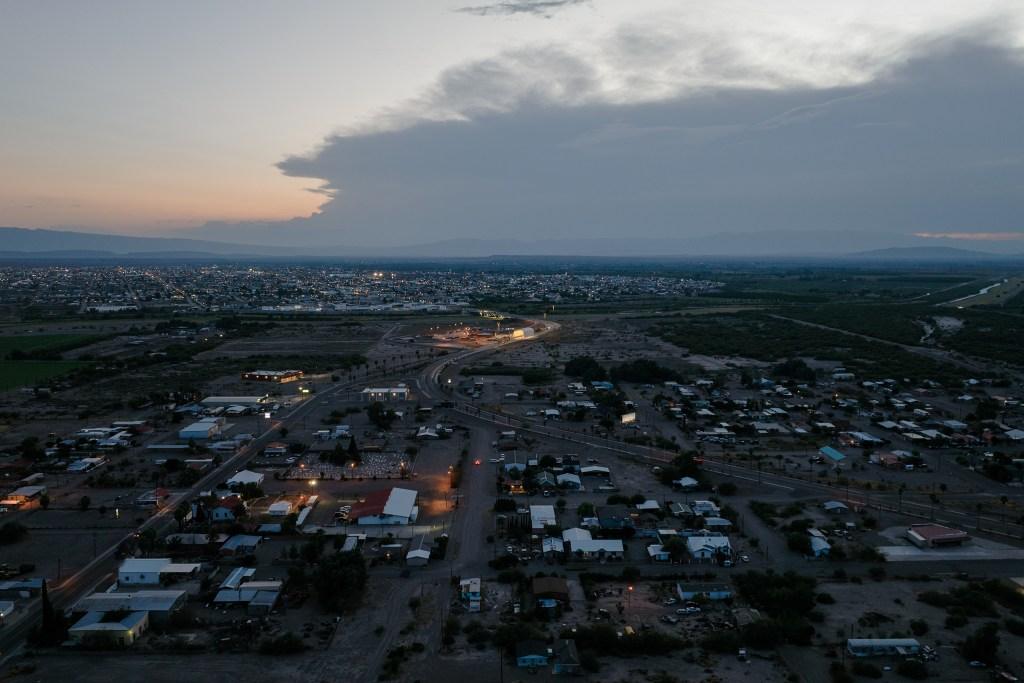
A small rural community in Texas is at odds with the Trump administration over plans to construct a border wall that would disrupt the levee system safeguarding the area. In a federal court hearing, the town expressed concerns that the wall could exacerbate flooding and alleged that the administration is bypassing legal protocols in its haste to proceed.
The Department of Homeland Security is advancing its ambitious $46 billion initiative to build a border wall stretching from the Pacific Ocean to the Gulf of Mexico, fulfilling a key promise of President Donald Trump. However, the plan faces significant resistance from landowners, environmental advocates, Native American tribes, and others who argue that the expedited construction threatens historical, cultural sites, and the local way of life along the border, particularly when illegal crossings are at their lowest in years.
The legal action initiated by the development district of Presidio highlights the clash between a tight-knit community of just over 3,200 residents and a federal agency central to the administration’s immigration enforcement strategy. It also underscores the friction that can arise between local municipalities and the federal government.
Attorneys representing the development district assert that the proposed construction poses a risk to the levee system, which has been crucial in protecting the town from flash floods, a frequent issue in Texas. They argue that the government has violated the Rivers and Harbors Act, which mandates consultation with the Army Corps of Engineers before any construction on or near levees.
In response, the government contends that a final construction plan has yet to be established, maintaining that it holds the authority to bypass numerous regulations to expedite the wall’s construction in pursuit of reducing border crossings to zero.
The community is particularly concerned about the impact of the proposed wall on the levees and berms constructed in the 1970s and 1980s to mitigate flooding risks. Court documents reveal that Customs and Border Protection plans to replace the existing levee’s earthen slope with a concrete wall topped by 30-foot steel bollard panels, but details have been withheld under the pretext of national security.
Laura Bakst, an attorney for Democracy Forward, representing Presidio’s development district, noted, “There is unfortunately a long history here of CBP construction causing or increasing flood risks.” During the hearing, a government lawyer argued that it is premature to claim that the wall would harm Presidio since a definitive plan has not yet been decided.
In an effort to accelerate the wall’s construction, former Homeland Security Secretary Kristi Noem and current Secretary Markwayne Mullin have waived various environmental and archaeological protections typically required for federal infrastructure projects. While Congress has granted Homeland Security the power to expedite wall construction, critics contend that the department is overstepping its authority by issuing broad waivers along the extensive U.S.-Mexico border.
In Presidio’s case, the development district argues that Homeland Security is violating the Rivers and Harbors Act, emphasizing that despite the waivers, the department must still engage with the Army Corps of Engineers before initiating the project.
Louis Katz, another attorney representing the district, cautioned that the department’s approach to waiving state and federal laws represents an “extraordinary exertion of authority.”
A pressing question remains regarding the timeline for construction. Although supplies have been pre-positioned, including the steel panels for the wall, actual construction has yet to commence in the area. A Justice Department attorney indicated that the construction timeline is uncertain, suggesting that work could begin late this summer or in the fall.
Homeland Security has indicated that completing the wall is a top priority, with Mullin stating that the initial phase of the wall should be finished within a year. Customs and Border Protection has claimed it is capable of erecting up to six miles of wall each week.
Amidst this backdrop, Judge Reggie Walton expressed skepticism regarding the administration’s push for the wall in light of historically low border crossings. He highlighted the ongoing challenges posed by the remote terrain of the Big Bend Sector, which has not experienced the surge in crossings seen in other regions along the border.
Despite the government’s claims about the anomaly of current crossing levels, Judge Walton remarked on the reality that attempts to cross the border will always persist. He is grappling with the extent of his authority to restrict the department’s actions, given the congressional powers granted to it. A ruling from the judge is expected in the coming week.