







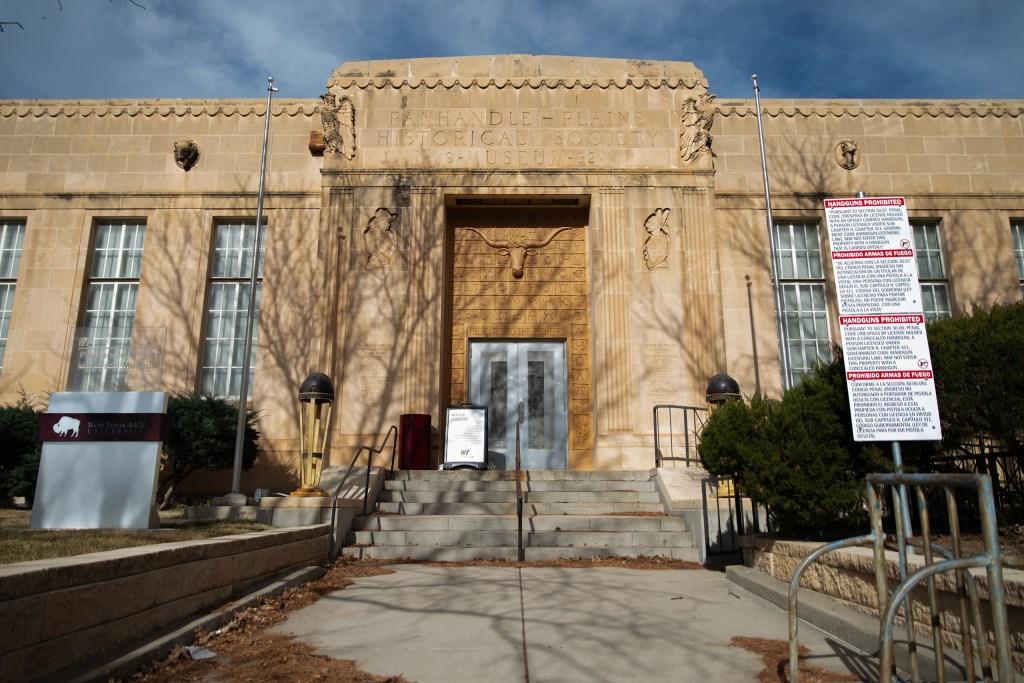
LUBBOCK — The Panhandle-Plains Historical Museum, a cherished institution in the small town of Canyon, is facing the threat of permanent closure. This museum, which is nearly as old as the city itself, boasts the largest collection of historical artifacts in Texas, making its potential shutdown a significant loss for the region.
Last month, West Texas A&M University, the owner of the museum building, notified the Panhandle-Plains Historical Society that it could no longer sustain long-term funding for the facility. University President Walter V. Wendler later indicated that the university formally requested a plan from the society to relocate its extensive collection, citing decades of rising operational costs, a decrease in state funding, and numerous fire code violations identified by the Texas State Fire Marshal.
Since the museum’s closure in March due to safety concerns, the news has deeply affected the Panhandle community. Social media has seen an outpouring of nostalgia as residents share memories of visiting the museum with family and school groups. Many have raised questions about the transparency of the reasons behind the closure of this vital piece of local history.
Community Response
The situation culminated at a City of Canyon Commission meeting on Tuesday, where the room was packed with residents, many holding signs that read “Save our museum.” Some attendees left voluntarily to allow outgoing state Representative John Smithee, R-Amarillo, and his team to enter without violating fire codes. City officials, Wendler, and Smithee discussed potential resolutions to the conflict between the university and the historical society.
“I wouldn’t say this marriage is over, but it has been somewhat on the rocks lately,” Smithee remarked. “We need to ensure both sides are committed to finding a solution. It breaks my heart, and everyone else’s, to see that sign in front of the door.”
During the meeting, Mayor Gary Hinders voiced his desire to keep the museum in Canyon and emphasized the importance of collaboration between the university and the historical society. He noted that the museum plays a crucial role in driving tourism and revenue for a city with a population of just over 15,000.
While the city does not maintain a formal partnership with either the museum or the society, it provides local tax funds to support the institution, primarily through advertising. Additionally, the museum has received funding from the state Legislature, although Wendler pointed out that state support has dwindled by 65% since 1984.
Potential Solutions
City officials explored various solutions during the meeting, including pursuing state, federal, and private funding sources. They also considered designating the museum as a convention or visitor center to access more local tax money, a move that would necessitate a public election.
“We’ve come to a dead end with the A&M system and funds there. I think there’s been nothing forthcoming,” Hinders stated. “Ultimately, we will need a combination of state support and private funding.”
Regardless of the path forward, the financial implications of reopening the museum are substantial. Smithee estimated that restoring the museum in its current location could cost between $20 million and $40 million, while constructing a new facility might require $250 million. He noted that the latter figure would likely be untenable for the Legislature, referencing comments from Lt. Gov. Dan Patrick regarding the justification of such a large expenditure.
With the next legislative session not set to begin until January 2027, Smithee emphasized the importance of starting discussions this summer with the committees responsible for Texas House and Senate budgets. He suggested that planning for a one-time appropriation of $20 million to $40 million should begin promptly.
“I’m not running again, so it will be up to someone else to secure this funding a year from now,” Smithee reminded the commission. “However, I believe I can help lay the groundwork to make it happen.”
Wendler assured the commission that he remains committed to finding a solution, despite the state fire marshal’s recommendation to vacate the building due to safety concerns.
He mentioned that operating the building incurs costs of about $100,000 per month, which includes basic maintenance. However, since the building is not classified as an “education and general building,” the university system lacks a dedicated funding stream. Some attendees expressed concern that the university was not adhering to a 1932 lease agreement that placed the responsibility for maintenance on West Texas A&M.
Wendler contended that the university and the society are united in their frustration over the situation’s complexities. He drew comparisons to other museums at Texas universities, noting that while they face challenges, they are “minuscule” in comparison to those confronting the Panhandle-Plains Historical Museum.
“This is the most significant history museum in Texas,” Wendler declared. “The costs associated with upgrading the building and addressing fire and safety concerns are extraordinary and beyond what most people can comprehend.”
Community Sentiment
The commission opened the floor to audience comments, with many speakers asserting that the museum belongs in Canyon due to its rich historical connections to the nearby Palo Duro Canyon and the family artifacts donated by local residents over generations. There were concerns that the collection might be relocated to Amarillo or Lubbock, with some arguing that these cities do not deserve the museum.
Mary Bearden, a former president of the historical society, expressed optimism following the meeting’s discussions.
“I was worried that the parties wouldn’t be able to find common ground,” Bearden shared. “Based on today’s discussions and the potential cooperation between the Legislature, A&M, and the society, I am hopeful that we can preserve the Panhandle-Plains Museum.”