








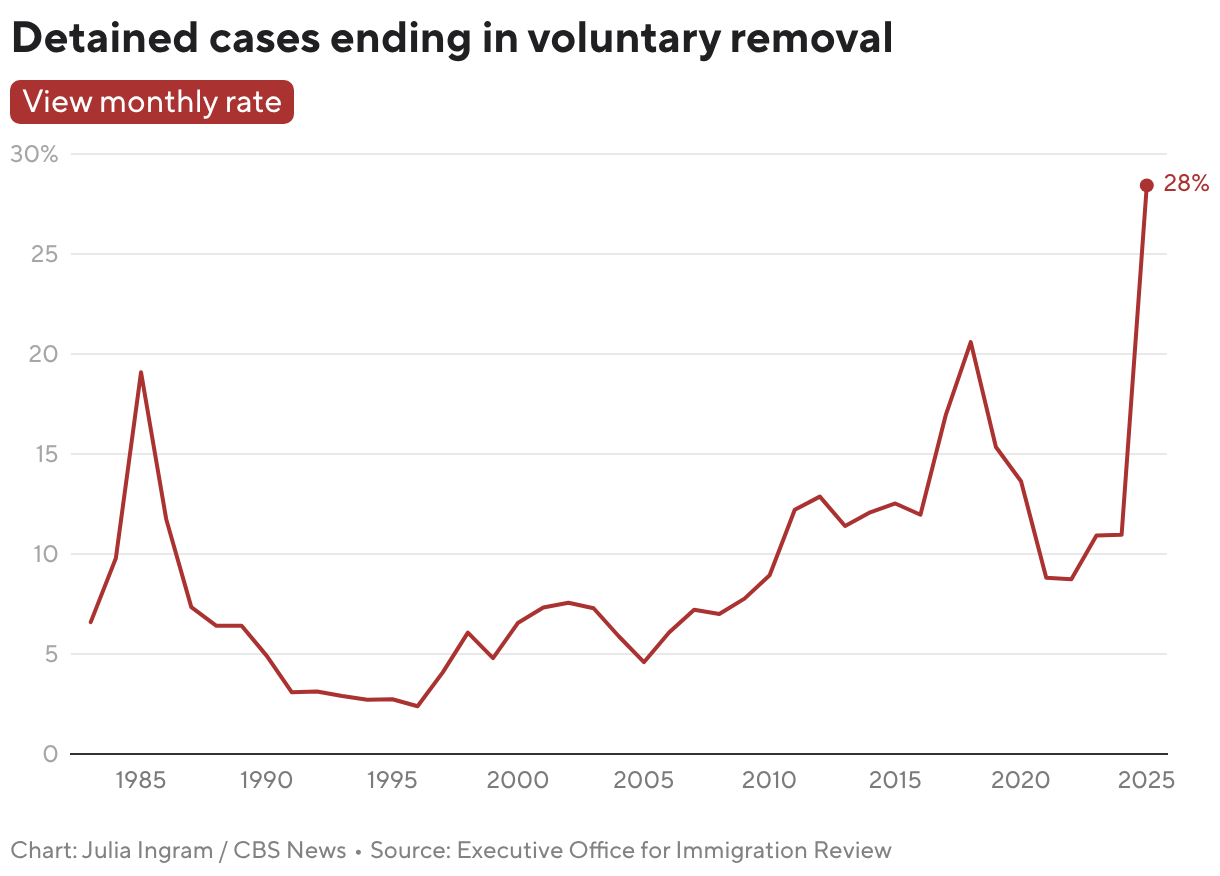
As avenues to freedom diminish within U.S. immigration courts, a staggering number of detainees are choosing to voluntarily depart the country. A recent analysis reveals that last year, 28% of concluded immigration removal cases involving detained individuals resulted in voluntary departures, marking the highest percentage recorded in recent history.
This trend appears to be escalating, with the percentage of voluntary departures among detainees increasing almost every month throughout 2025, peaking at 38% in December. It is important to note that this data does not include individuals who were not granted hearings before an immigration judge, such as those subjected to expedited removal proceedings.
Vilma Palacios, a 22-year-old who returned to Honduras after six months in detention, articulated the emotional toll of the experience. Detained in Basile, Louisiana, she described the process as exhausting, leading many to simply seek freedom over the complexity of their legal situations. “It’s set up for every individual who is detained to get to the point where they’re just emotionally drained and exhausted,” she said.
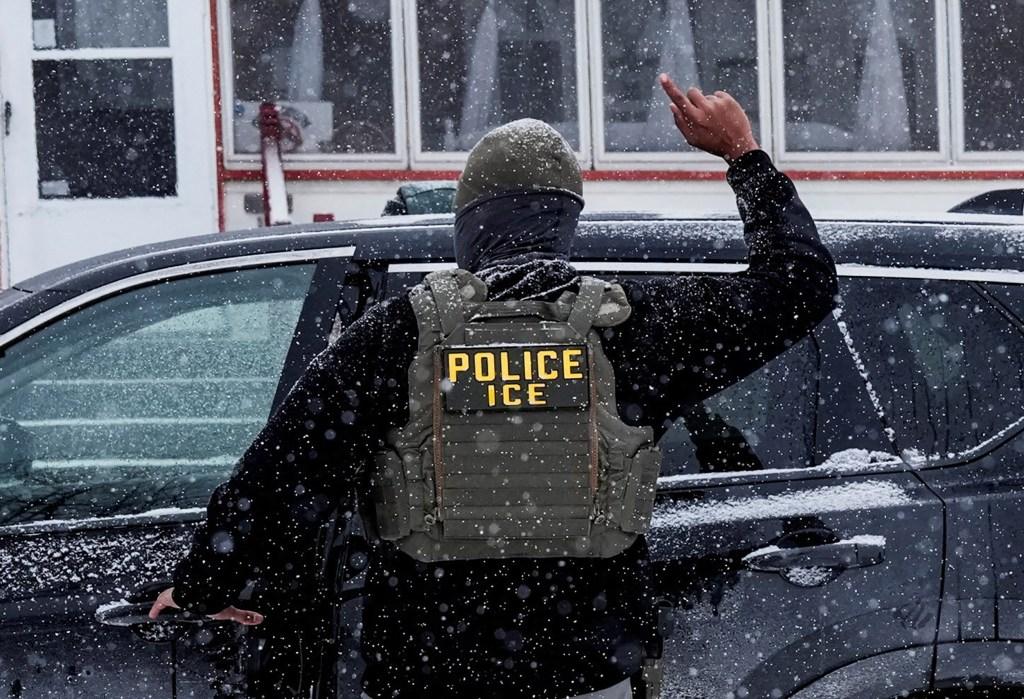
Palacios’s journey began when she was arrested by ICE agents after bringing her car for a routine inspection, despite having no criminal record. She had lived in the United States since the age of six and was previously apprehended with her family at the border in 2010, though they were later released to pursue an asylum case. Court records indicate that her case was administratively closed in 2015, leaving her status uncertain.
A spokesperson from the Department of Homeland Security stated that Palacios “freely admitted to being in the U.S. illegally” and had never sought legal status. Palacios countered this claim, asserting that she was in the process of renewing her work permit at the time of her arrest and believed she was following all necessary legal protocols.
During her time in detention, Palacios endured isolation from her family and friends, which she described as emotionally devastating. “Everything was taken from me, like being ripped apart from every person that I loved,” she recalled. She also expressed a desire to assist fellow detainees who were struggling to access medical care, but was discouraged by the facility’s staff.
As of mid-January, approximately 73,000 individuals were held in ICE detention, the highest number recorded by the DHS. Jen Grant, a supervising attorney at the Legal Aid Society in New York, noted that conditions in detention centers have deteriorated significantly due to overcrowding.
Palacios sought a bond for her release, but her request was denied. “They weren’t looking at the roots that I created in the United States,” she lamented, reflecting on the life she had built and the job opportunities she had lined up.
This struggle is not unique to Palacios; a CBS News analysis found that favorable bond rulings for detainees dropped from 59% in 2024 to just 30% last year. The current administration’s immigration policies have shifted towards mandatory detention for anyone who entered the U.S. illegally, limiting judges’ ability to grant bond. Although a California district judge deemed this practice unlawful, guidance from the chief immigration judge suggested that the ruling was not binding.
Many detainees are now turning to habeas corpus petitions in federal court to contest their detention. While such petitions can compel a judge to review the legality of their detention, not all detainees have the means to pursue this option, and success is not guaranteed.
Another detainee, referred to as U.G., expressed relief when a judge ordered her deportation after 13 months in custody. Although she did not initially seek voluntary departure, she contemplated the option as her time in detention dragged on. “Every day that I sit here, I’m choosing to sit here,” she reflected, highlighting the difficult choices faced by those in similar situations.
Immigration attorney Christopher Kinnison noted that many clients feel increasingly hopeless about their chances in court. Asylum grant rates have plummeted, with less than 30% of requests being approved by late 2025, down from over 50% in previous years.
In response to the growing backlog, DHS has been pushing judges to expedite asylum cases by directing some applicants to third countries. “People have no hope,” said Grant, emphasizing the despair observed among detainees witnessing the deterioration of their peers’ cases.
After being granted voluntary departure, Palacios was flown back to Honduras in handcuffs, feeling dehumanized by the experience. “It doesn’t seem like it’s a voluntary departure,” she stated. Now back in a country she barely remembers, she is attempting to rebuild her life and has begun volunteering in her community.
Despite her challenges, Palacios remains hopeful about her future. “My goal and dream is still to be a nurse in the United States,” she stated resolutely. She is determined to make an impact in whatever way she can, looking forward to the possibility of returning to the U.S. one day.