







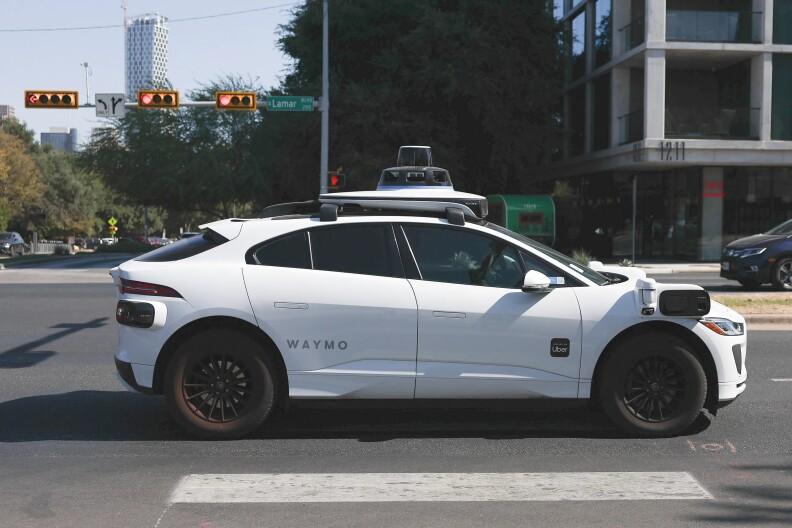
A recent incident involving a Waymo autonomous vehicle in downtown Austin has sparked renewed concerns about the safety of self-driving cars. The vehicle obstructed an ambulance that was responding to a shooting on March 1, where three individuals lost their lives and fifteen others were injured. A video circulating on social media captured the moment, showing the Waymo car blocking the street as paramedics sought access to the scene, prompting the ambulance driver to find an alternative route.
Comments from onlookers in the video echoed a growing sentiment against autonomous vehicles, with one individual remarking, “This is why we should not have self-driving cars.” Fortunately, local emergency services reported that the incident did not significantly impede their response. An Austin police officer was able to move the Waymo vehicle within two minutes of arriving, as depicted in the footage.
Despite this, the episode has intensified discussions about the implications of autonomous vehicles on public safety, especially as their presence increases in Texas. Experts point out that, statistically, self-driving cars have a lower fatality rate compared to human drivers. Adie Tomer, a senior fellow at the Brookings Institute, noted, “Their fatality rate is already much lower. The promise is, as the technology improves, that it will get better.”
However, Tray Gober, an Austin personal injury attorney critical of Waymo, emphasized that the technology is not yet sufficiently refined for widespread use. He remarked, “Self-driving vehicles are the future. There will be less crashes because of self-driving vehicles. But the future isn’t today because these vehicles are not ready.”
The incident marks yet another glitch involving autonomous vehicles in Austin, where they have been known to block traffic, disregard police instructions, and improperly pass stopped school buses during student pick-up and drop-off times. Travis Pickford, assistant chief of the Austin ISD Police Department, expressed concern about the potential risks posed by autonomous vehicles in emergencies, stating, “If we’re dealing with an incident at one of our schools, the last thing that I would want is any autonomous vehicle blocking emergency first responders.”
A Waymo spokesperson reaffirmed the company’s commitment to safety, stating, “Safety is at the core of everything we do. We appreciate the dedication of first responders and remain committed to continuous learning to better serve our riders and the community.”
In Texas, a ban on local regulations for autonomous vehicles was enacted in 2017, allowing the industry to expand. Recently, state lawmakers instructed the Department of Motor Vehicles to develop additional regulations, which will come into effect in May. Meanwhile, Waymo has introduced its vehicles in several Texas cities, including San Antonio, Dallas, and Houston, in the days following the shooting.
Austin has served as a testing ground for self-driving technology since approximately 2015. Despite local officials being unable to impose regulations, they have monitored the situation and collaborated with operators to address issues. The city has noted its efforts to work with the Texas Department of Motor Vehicles and autonomous vehicle companies to enhance safety measures.
In a swift response to the Waymo incident, an Austin police officer was able to maneuver the vehicle to a parking garage, clearing the road within a minute and a half. Jay Blazek Crossley, executive director of Farm & City, a nonprofit organization advocating for transportation safety, remarked on the improvements made since previous years, highlighting that a system for police officers to operate such vehicles was not in place four years ago.
Emergency responders in Austin are trained to handle encounters with autonomous vehicles. Captain Christa Stedman of Austin-Travis County Emergency Medical Services assured that their first responders are equipped to manage situations involving driverless vehicles that may become inoperative. “This type of scenario is something we prepare for, and it was resolved quickly without a significant impact to patient care or overall response operations,” she stated.
Other Texas cities are developing protocols for dealing with autonomous vehicles. Dallas emergency personnel are still finalizing their strategies, while San Antonio’s police and fire departments have received training and guidelines to manage encounters with self-driving cars effectively. In Houston, officials have not yet provided comments regarding their plans.
Since tracking began in 2023, Austin has recorded 230 issues related to self-driving cars, including collisions and instances where vehicles ignored police directives. However, actual collisions remain infrequent; Travis County documented 15,872 vehicle crashes in 2024, with only two involving autonomous vehicles.
Despite the low collision rate, the incidents raise genuine safety concerns. For example, Austin ISD officials found that Waymo vehicles had illegally passed school buses while their stop signs were active on multiple occasions. Although no children were harmed, Pickford cautioned that it could only be a matter of time before an accident occurs. He pointed to a recent incident in California where a Waymo vehicle struck a child, resulting in minor injuries.
Since August, the Austin school district has issued 25 citations to Waymo, which acknowledged the tickets as they were paid promptly. When district officials raised their concerns at a meeting with Waymo representatives, the company initially disputed the district’s assessment of the risk posed by their vehicles, even declining to temporarily halt operations during school hours.
Following this, Waymo continued to accumulate violations, with Pickford expressing frustration that the autonomous vehicles were not adapting their behavior after being ticketed. “The Waymos were not learning, and that was concerning to us,” he said.
In response to these concerns, Waymo implemented a software update in November and began collecting data on school bus operations in December, aiming to enhance their vehicles’ recognition of school bus signals. This came after a software recall was issued for similar issues in Atlanta, prompting investigations from the National Highway Traffic Safety Administration and the National Transportation Safety Board regarding the company’s failures to stop for school buses.
Looking ahead, Texas is establishing a regulatory framework for autonomous vehicle operations. By the end of May, operators will need to obtain authorization from the state Department of Motor Vehicles before their vehicles can transport passengers on Texas roads. Companies will be required to certify their compliance with traffic laws and provide a detailed plan on how emergency responders should interact with their vehicles in case of an incident.