









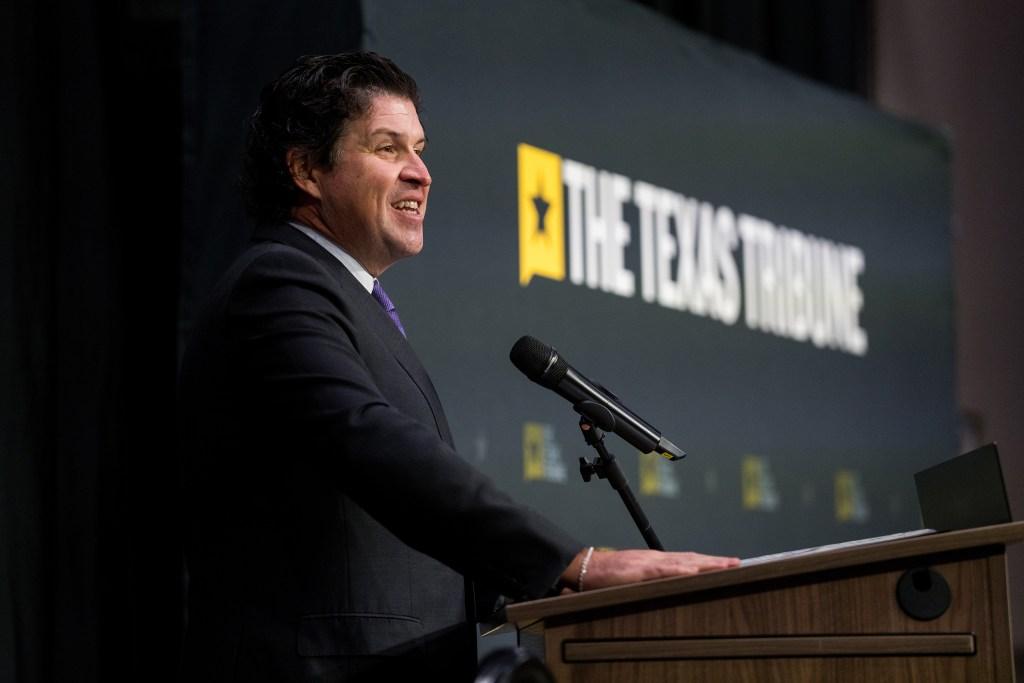
Daniel Pullin has stepped down as chancellor of Texas Christian University (TCU) just 17 months after assuming the role. His resignation, effective immediately, was revealed in a university statement dated October 22, 2026, but did not provide any specific reasons or details regarding the terms of his departure.
TCU Board of Trustees Chair Kit Moncrief expressed gratitude for Pullin’s service, wishing him and his family well in a public statement.
In a swift transition, Victor Boschini Jr., who previously held the chancellorship for 22 years, has been reinstated to the position without an interim appointment. Boschini will continue to implement the university’s strategic initiatives while managing daily campus activities, according to Moncrief.
This leadership change is occurring as TCU embarks on an ambitious plan to expand over the next decade, aiming to increase enrollment by thousands, construct new housing facilities, and elevate the institution’s status as a research university. Pullin was instrumental in developing this strategy prior to his elevation to chancellor in June 2025.
In his farewell statement, Pullin expressed his pride in TCU students and gratitude for the community’s support, emphasizing his ongoing commitment to the university’s mission.
Pullin’s journey at TCU began in 2019 when he became the dean of the Neeley School of Business. He was appointed chancellor on February 1, 2023, after a national search, and worked closely with then-Chancellor Boschini during his initial period in leadership.
The succession plan was announced by trustees and Boschini in December 2024, leading to Pullin becoming TCU’s 11th chancellor on June 1, 2025. The university did not appoint a new president following Pullin’s promotion.
TCU recently achieved a record enrollment of 13,241 students and welcomed its largest incoming class for the second consecutive year this fall. By 2035, the university aims to increase its student body to approximately 17,900 and achieve Carnegie R1 status, a prestigious classification based on research funding and doctoral output.
To support this growth, TCU is investing in housing construction set to be completed by fall 2027, with over $500 million in external funding allocated for new developments, including 2,450 beds in campus housing and around 780 beds at Morado on Berry, which will also feature retail space.
In June, TCU established the Roach Institute of Athlete Engineering with a $10 million donation, designed to bridge research in athletic performance with practical applications for military personnel, first responders, and individuals in physically demanding careers.
During Pullin’s chancellorship, TCU introduced the “TCU for Texans” financial aid program, aimed at qualifying incoming Texas students from families earning less than $100,000. This initiative covers full tuition and provides additional support for food and housing for eligible students.
Pullin’s tenure was not without controversy, marked by disputes over academic priorities and faculty engagement. In October 2025, TCU announced plans to integrate its race and gender studies departments into the English department, a decision that sparked criticism from faculty who felt sidelined in the process. University administrators cited financial and enrollment challenges as reasons for the restructuring, denying any political influence.
Before his time at TCU, Pullin served as dean of the Price College of Business at the University of Oklahoma. A native of Plano, he holds dual undergraduate degrees in accounting and finance from Oklahoma, an MBA from Harvard, and a law degree from Oklahoma. His professional background includes roles at McKinsey & Company and in private equity.
Pullin’s departure marks the third significant leadership change in Tarrant County’s higher education sector within two months, following the resignation of UT Arlington President Jennifer Cowley in August and the recent appointment of Texas A&M-Fort Worth’s Bobby Ahdieh as the next president of Pace University in New York.