









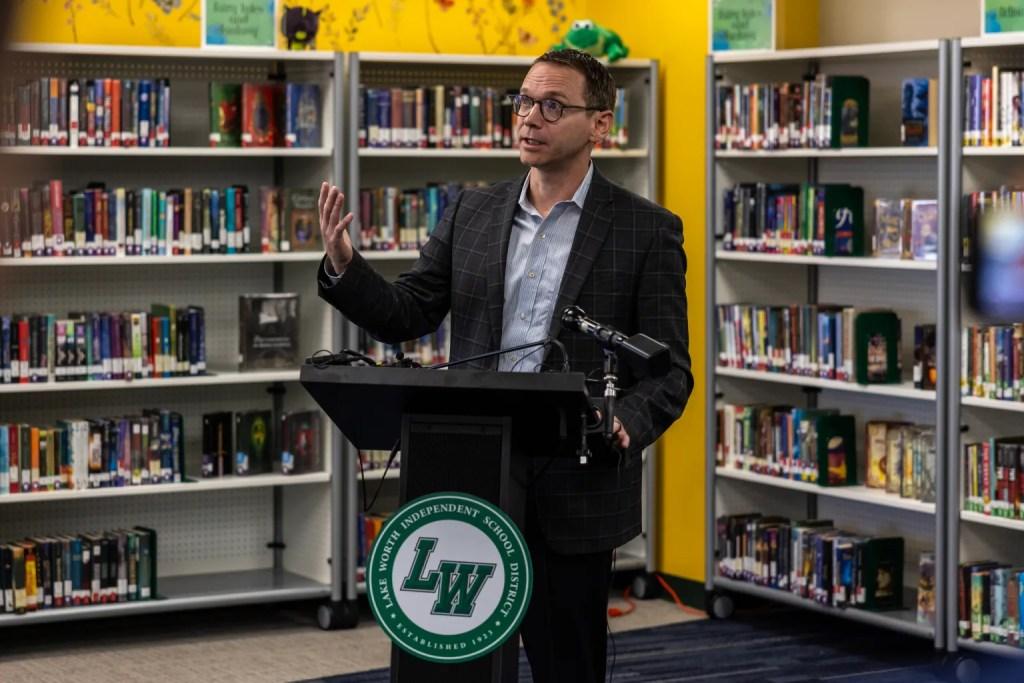
Lake Worth Independent School District (ISD) has undergone a significant leadership change following the appointment of a new superintendent and a five-member board of managers by Texas Education Commissioner Mike Morath on April 23. This newly formed leadership team is tasked with enhancing student performance in the district, which serves approximately 3,200 students.
Ena Meyers, a veteran educator with over 20 years of experience in Texas schools, has been named the new superintendent. Meyers previously held the position of deputy chief of strategic initiatives at Houston ISD and has a background that includes roles as a teacher, principal, and district leader.
New Leadership Team Established
The board of managers, appointed to take over the responsibilities of the previously elected trustees, includes:
- Tom Harris, a business and community leader and chair of the Fort Worth Mayor’s Council on Education and Workforce Development
- Amy Morgan, a veteran public school educator and former district administrator
- Kenneth (Ken) Nichols, a retired U.S. Navy officer and adjunct professor
- Mason Sneed, a private equity professional with a background in finance and engineering
- Judy Starnes, a retired educator from Lake Worth ISD and long-time community member
This new leadership team is set to conduct its first public meeting on May 18. Although the elected trustees will remain in office, they will no longer hold governing authority.
Background of the Leadership Change
The changes come after a period of uncertainty in the district, where community members and educators sought clarity regarding the dismissal of former Superintendent Mark Ramirez, despite indications of academic progress during his tenure. In contrast to the large number of applicants for the Fort Worth ISD manager positions, only 14 individuals initially expressed interest in the roles at Lake Worth ISD.
Commissioner Morath emphasized the experience and commitment of the new leadership team in a press release, stating, “Lake Worth ISD students deserve a school system that prepares them for success in college, career or the military.” He added that the appointed team is essential for improving academic outcomes and establishing a robust foundation for future success.
This intervention follows years of low academic performance, particularly highlighted by five consecutive failing ratings at Marilyn Miller Language Academy under Texas’ academic accountability system. State law mandates the closure of the school or the replacement of the elected board with state-appointed managers once a campus reaches this threshold. Morath decided that a board of managers and a new superintendent were necessary remedies for Lake Worth ISD.
Challenges and Future Goals
In December, when the takeover was announced, Morath noted the persistent weak academic outcomes and the need for stronger governance to enhance performance. He remarked, “I do not make this decision lightly,” underscoring the district’s inability to implement effective changes.
Prior to the intervention, district leaders had set ambitious goals in September to improve reading and math scores, increase attendance, and elevate every campus to at least a B rating by 2028. Ramirez had acknowledged the urgency of these initiatives as Morath considered intervention.
Following the announcement of the takeover, Ramirez, who had garnered strong public support during his short tenure, was informed he would not be a candidate for the permanent superintendent role. Elected trustees questioned this decision, asserting that Ramirez had brought necessary structure and optimism to the district.
In January, Morath appointed Andrew Kim, a former superintendent of Manor and Comal schools, as conservator to oversee the district during the transition. Later that month, Lake Worth trustees opted not to appeal the intervention, citing concerns over potential costs and limited chances of success.
Since the transition, the district has operated under temporary leadership. Following Ramirez’s resignation in March, Trent Dowd was designated as acting superintendent until Morath’s appointments were made. The newly appointed managers will now assume essential governing responsibilities, including budget approval, policy setting, contract oversight, and supervising the superintendent.
State officials have indicated that the board will collaborate with the superintendent to meet the criteria necessary for reinstating local elected control, which includes eliminating failing campuses, improving academic performance, and adhering to state governance standards. The appointed managers are expected to serve for a minimum of two years, after which the commissioner will evaluate the possibility of restoring authority to elected trustees.