







HOUSTON — The Republican Party of Texas Convention kicked off last week with an atmosphere of apparent unity, but by the conclusion of the three-day event, the durability of that solidarity remained uncertain.
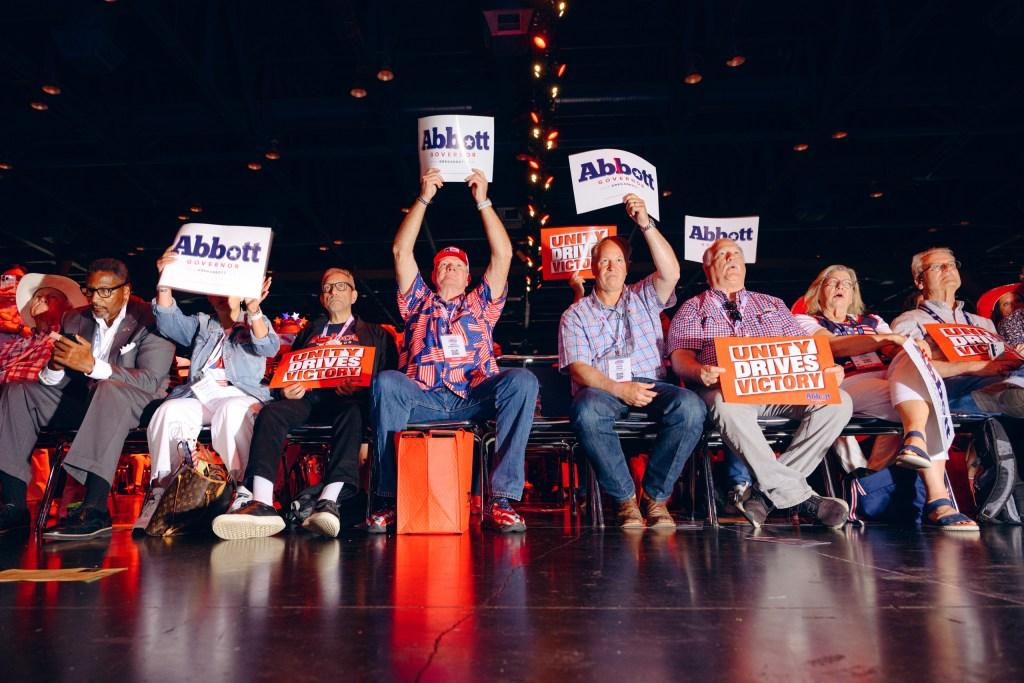
Delegates were greeted by vibrant digital displays inside the George R. Brown Convention Center, where slogans such as “unity drives victory” adorned the walls. Throughout the convention, speakers repeatedly urged attendees to set aside their differences following a contentious primary season, emphasizing the need to unite against “radical” Democrats ahead of the upcoming midterm elections.
In a notable address, Governor Greg Abbott vowed to decisively defeat Democratic opponents while emphasizing the importance of collaboration among party members. Former state Senator Don Huffines, now the GOP nominee for comptroller, echoed this sentiment, calling for the obliteration of “atheists and leftists” and endorsing all Republicans on the ballot.
Nevertheless, signs of discord began to surface as the convention progressed. Delegates voted to remove the party chair, a significant shake-up for the Texas GOP just months before a pivotal election. The crowd expressed discontent when the sitting Texas House leader addressed them, despite his role in securing numerous socially conservative legislative victories. Attendees also remarked on the lack of turnout at the convention, despite a lineup of prominent officials.
Longstanding internal disputes, particularly regarding tort reform, highlighted the fragility of the party’s unity. Party leaders stressed the necessity of cohesion to maintain Texas’ staunch Republican identity, especially as Democrats aim for a statewide win for the first time since 1994. Yet, some leading GOP figures advocating for unity exhibited divisive behavior during the event.
During his Friday speech, Lt. Gov. Dan Patrick criticized U.S. Sen. John Cornyn as a “sore loser” following Cornyn’s primary defeat by Attorney General Ken Paxton. Patrick expressed his disappointment with Cornyn for not supporting Paxton after the runoff.
In response, Cornyn remarked that Patrick’s concerns about the upcoming election reflected his own worries. Despite this friction, Patrick continued to call for Republican solidarity, acknowledging the challenges the party faces in retaining control of the Texas House.
While warning of the threat posed by Democrats, the Texas GOP remained committed to a far-right agenda focused on stricter immigration measures, election control, and the erosion of the separation between church and state. Panel discussions and committee sessions at the convention overwhelmingly concentrated on anti-Islam sentiments, with some delegates framing the issue as a dire emergency.
Republican Party of Texas Chair Abraham George opened the convention with endorsements for his reelection, including backing from Paxton. However, despite these endorsements and past legislative successes, George was ousted by delegates, highlighting internal dissatisfaction with party leadership.
George conceded defeat while urging unity, a call met with mixed reactions from his supporters. Tensions escalated at a booth for the newly-formed “Sharia-Free Texas Caucus,” where heated exchanges occurred over the party’s stance on Islam. Attempts to remove certain delegates linked to the Council on American-Islamic Relations (CAIR) were unsuccessful, illustrating the contentious atmosphere.
As the convention unfolded, House Speaker Dustin Burrows made history by addressing delegates, a first for any sitting speaker. His speech, however, was met with jeers and interruptions from parts of the audience.
Concerns raised by the public ranged from halting Sharia law to regulating data centers encroaching on quieter regions of Texas. Some party members, like Rep. Cody Vasut, expressed intentions to introduce legislation granting local counties more authority over data center developments, reflecting ongoing tensions between state and local governance.
Amid a backdrop of increasingly hardline stances, delegates revised the party platform to endorse school voucher expansion and challenged existing court rulings on education rights for undocumented students. The platform also proposed educational policies asserting that Sharia law is incompatible with the U.S. Constitution and recommended banning religious dietary accommodations in schools.
Additionally, the platform reaffirmed conservative Christian values that have been central to recent Republican successes, including the display of the Ten Commandments in public schools and designated prayer times for Christian students.
In his speech, Dan Patrick embraced the label of Christian nationalist, asserting that such a designation simply reflects his love for God and country, resonating with the crowd.
As delegates filled out voting forms on key agenda items, the convention underscored the ongoing ideological battles within the Republican Party of Texas, raising questions about its unity and direction as it heads into a challenging electoral landscape.