








The Democratic Legislative Campaign Committee (DLCC), which serves as the national arm of the party focused on legislative races, revealed on Wednesday its intention to allocate resources to Texas in the upcoming year for the first time since 2020.
This renewed national interest signals a growing optimism among Democrats that the 2026 electoral cycle could present a more favorable political landscape, particularly in light of faltering approval ratings for President Donald Trump and widespread voter dissatisfaction regarding the current economic situation.
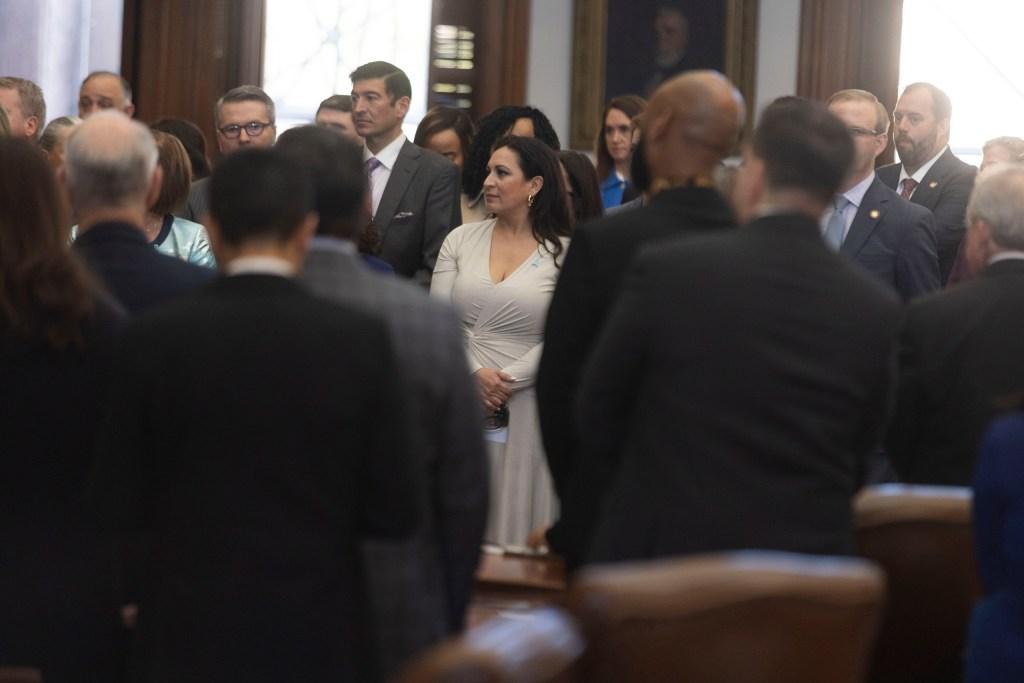
In Texas, the initiative aimed at flipping state House districts currently under Republican control will be spearheaded by the House Democratic Campaign Committee. The committee announced on Wednesday that state Representative Christina Morales from Houston will take over as chair for the 2026 cycle, succeeding state Representative Gina Hinojosa, an Austin Democrat who is now running for governor.
Morales shared with The Texas Tribune that the HDCC has set its sights on targeting four seats that Democrats previously attempted to flip in 2024, along with one additional seat that was lost:
- House District 34, which was flipped by Rep. Denise Villalobos, R-Corpus Christi, by an 11-percentage point margin.
- House District 37, won by Rep. Janie Lopez, R-San Benito, by 10 points.
- House District 112, secured by Rep. Angie Chen Button, R-Garland, with an 8-point margin.
- House District 118, an open seat that Rep. John Lujan, R-San Antonio, won by 3 points.
- House District 121, captured by Rep. Marc LaHood, R-San Antonio, by 5 points.
For the first time in several election cycles, Democrats are set to field candidates in every federal and state legislative race across Texas. Among the districts targeted, Morales highlighted three Democratic candidates running unopposed in their primaries: Zach Hebert in HD 112, Kristian Carranza in HD 118, and Zach Dunn in HD 121, emphasizing their ability to connect with the communities and convey the right messages.
“Republicans have consistently put us on the defensive, but this time I want us to focus on going on the offensive,” Morales stated.
The DLCC has not yet disclosed its specific list of Texas House districts it intends to focus on.
Since 2018, Democrats have seen their presence in the Texas House diminish. Although the party gained 12 seats that year, their efforts in 2020 to gain further ground fell short despite significant financial backing. With the Republican Party maintaining control of both chambers, redistricting efforts in 2021 allowed Republicans to reclaim three Democratic seats in 2022 and two more in 2024.
However, Democrats are hopeful that the 2026 elections will mirror the successful outcomes of 2018, a midterm year marked by Trump’s presidency and declining popularity. This sentiment was reflected in the recent November elections, where Democrats outperformed expectations nationally, particularly among Hispanic voters who returned to support the party.
Of the five districts that Morales is initially targeting, three—House Districts 34, 37, and 118—would likely have been won by 2018 Senate candidate Beto O’Rourke had the current district boundaries been in effect at that time. The remaining two—Districts 112 and 121—might have been narrowly won by GOP Senator Ted Cruz.
Motivated by the successful outcomes for Democrats in recent elections nationwide, the DLCC plans to invest an initial $50 million to flip 42 state legislative chambers. According to a strategy memo released on Wednesday, Democrats exceeded expectations by an average of nearly 4.5 points in races they targeted last month.
“The favorable political environment shaping up for Democrats is unprecedented and occurs only once in a generation. The DLCC is ready to tackle this moment with the largest target map and political budget in our history,” said DLCC President Heather Williams in a press release. “We are committed to executing our winning strategy by electing more Democrats in Texas.”
Texas will receive a portion of the $50 million as part of national Democrats’ renewed commitment to invest in the state. Although Democrats in Texas have heard similar promises before and faced disappointment, this new commitment acknowledges the sacrifices made by state House Democrats who staged a walkout during this summer’s congressional redistricting to stand against Republican gerrymandering, risking fines and their positions.
“I believe our quorum break really highlighted our state and demonstrated that we have committed Democrats here,” Morales remarked. “This is our moment, and we will build an operation that reflects it, enabling us to secure victory.”
Currently, Republicans maintain an 88-62 advantage in the 150-seat Texas House, meaning Democrats would need to flip 14 seats to gain control—a challenging task even in the most favorable circumstances. However, a significant reduction in the GOP’s margin could enhance Democratic influence in the chamber, where Republicans have largely dominated the minority party in previous legislative sessions.