







Sign up for The Brief, a daily newsletter that keeps readers informed about the most important Texas news.
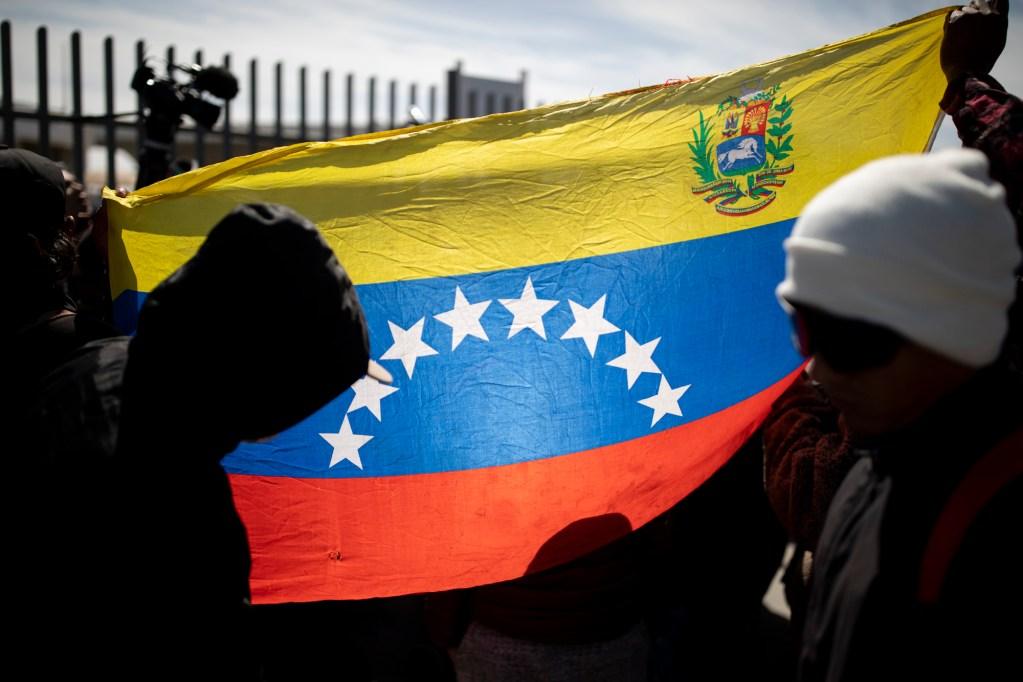
Sara was gearing up for a radio interview earlier this month to discuss her plans for opening an at-home child care center in Central Texas when she discovered that a new federal immigration directive left her unable to obtain legal status.
As an undocumented Venezuelan who applied for asylum earlier this year, Sara decided to cancel the interview and put her plans on hold indefinitely.
Now, Sara, her husband, and their two sons adhere to strict safety protocols: curtains remain drawn, and doors are locked at all times. They do not answer the door to anyone who knocks and only meet friends in emergencies. When grocery shopping, they go individually and in shifts.
In an instant, the family’s work and aspirations for economic stability and lawful living in the U.S. for nearly ten years vanished.
“We don’t understand why this administration is leaving us in such uncertainty,” Sara said, requesting to be identified by her first name due to fears of immigration enforcement. “I came here to contribute to this country. Why take away those opportunities and force us into such trauma? It robs you of sleep, peace, and your dignity.”
The Trump administration’s decision to suspend immigration applications for individuals from 19 countries on a federal travel ban list in late November triggered a new wave of fear and uncertainty across Texas, according to experts, attorneys, and families. Immigration lawyers are working diligently to help their clients grasp the implications, while community advocates strive to provide accurate information. Families who have spent years seeking legal status have retreated into hiding.
Experts note that the order’s impact has reverberated throughout the immigrant community, extending to individuals from countries not on the list who fear they may also be affected by shifting policies.
“Our task has become significantly more challenging,” said Ali Zakaria, an immigration attorney based in southwest Houston. “We not only need to demonstrate our client’s eligibility for benefits but also persuade them to submit their applications in the first place.”
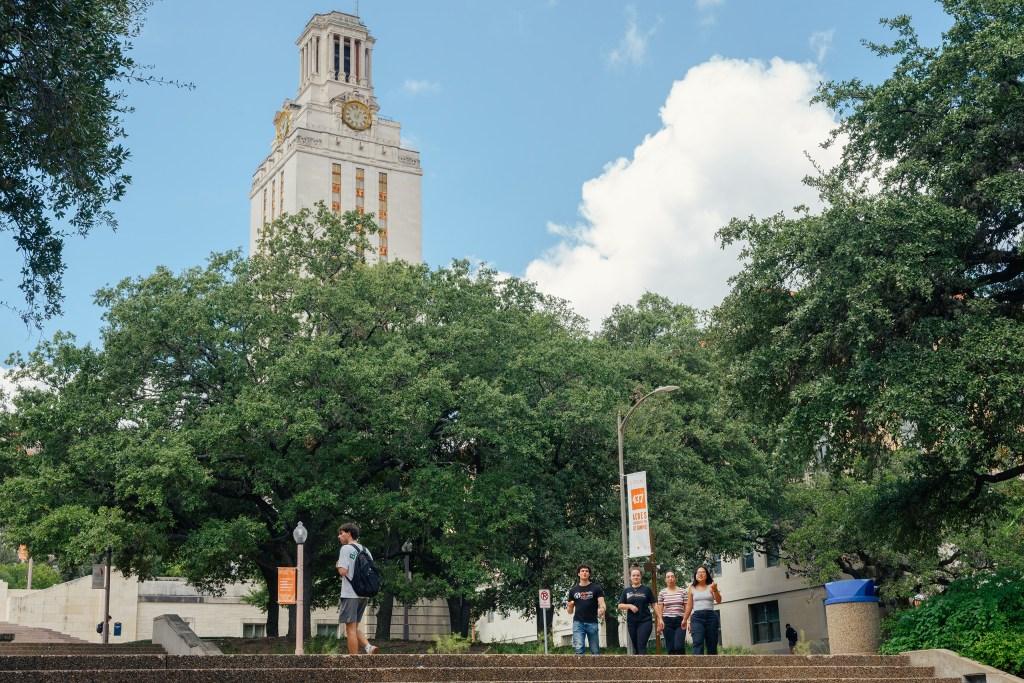
The abrupt policy change could also influence the number of international students attending Texas colleges and universities, as stated by Sarah Spreitzer, vice president at the American Council on Education’s government relations division.
Although the number of international college students in Texas is relatively low, the new policy could still deter prospective students, Spreitzer explained. Schools across the U.S. have already reported a 17% drop in new international enrollments this fall, even before the policy change took effect.
“This uncertainty may lead students to pursue their education in other countries, as visa conditions can change unexpectedly,” Spreitzer added.
After spending two decades as an elementary school teacher, Sara and her husband made the difficult decision to leave Venezuela due to the deteriorating political situation. Nicolás Maduro, the Venezuelan president who has clung to power for over a decade, has persecuted political opponents, exiled critics, and blocked referendums seeking his removal.
Sara expressed that under Maduro’s oppressive regime, she felt unable to voice her political views without risking harm to herself and her family. She was compelled to attend political rallies for a party she did not support, and political pressures infiltrated her workplace, where expressing dissent could lead to severe penalties.
The couple departed on separate journeys. Sara’s husband, a firefighter and law school graduate, arrived in the U.S. on a tourist visa a decade ago. A year later, Sara followed suit with her own tourist visa.
Upon her arrival, Sara’s husband had already secured a home. Their two sons remained behind, living with relatives and friends in Colombia and the Dominican Republic for six long years while their parents sought Temporary Protected Status (TPS), which allows individuals from designated countries unable to return safely to live and work legally in the U.S.
Once granted TPS, they petitioned for their children to join them. For the first four years, Sara worked multiple jobs, including fast-food positions and childcare, to support her family while aspiring to apply for permanent legal status in the U.S.
“I worked various roles, from line cook to fryer, taking on the hardest shifts,” she recalled. “I approached every job with love and pride, knowing that one day I would be able to pursue my passion.”
Eventually, with help from a coworker, she secured a position at a child care center, assisting the teaching staff while collaborating with nonprofit organizations to obtain a license to open her own center, which she successfully applied for last year.
In 2024, their sons received permission to join them in Texas. After saving diligently, the couple hired an attorney earlier this year and applied for asylum for their family.
However, the Trump administration continued to impose obstacles. Initially, Homeland Security Secretary Kristi Noem canceled TPS for Venezuelans and individuals from other nations, such as Ethiopia and South Sudan.
Following an incident involving two National Guard members shot by an Afghan national in Washington, D.C. in late November, the administration enacted a sweeping immigration order barring individuals from 19 countries, including Venezuela, Cuba, and various nations in Africa and the Middle East, from applying for green cards and citizenship.
Just two days after this announcement, the Trump administration declared a temporary halt to all asylum decisions. The policy mandates that the U.S. Citizenship and Immigration Services agency review applications for green cards, potentially requiring additional interviews with government officials.
“Fear has triumphed,” Sara reflected. “I feel like I have no rights because I cannot prove that I’m here legally.”
This sentiment resonates throughout immigrant communities in Texas. Joe Morales, a Lufkin resident who has assisted undocumented individuals with immigration petitions for over two decades, noted that fear has heightened over the past year, driven by stringent immigration policies that threaten deportation, due process, and family unity.
“This pervasive fear can create a ‘shelter in place’ mentality, leading individuals to neglect essential needs for a healthy life,” Morales stated. “Such neglect could result in health crises, impacting not just individuals but our entire community.”
Zakaria, the Houston attorney, described the current climate as “a truly disheartening time.”
“Communities are anxious, and while we want to help as much as we can, the prevailing policies force us to rely on the courts, which are already overwhelmed with applications for the release of detained immigrants, both legal and undocumented,” he commented.
Since the implementation of Trump’s orders, Sara’s family has remained at home, venturing out only for essential needs like groceries. After nearly a decade of building a new life, Sara expressed that the country they once viewed as a refuge increasingly resembles the one they escaped.
Meanwhile, tensions between Venezuela and the U.S. have escalated, with the Trump administration conducting military strikes on September 2 against a vessel allegedly involved in drug smuggling, resulting in the deaths of 11 individuals. In December, the U.S. seized an oil tanker off the coast of Venezuela, and Trump has not dismissed the possibility of a ground invasion targeting drug cartels.
To minimize exposure to potential ICE raids, Sara and her family have reduced their work hours. Her husband and sons take on occasional restaurant jobs, having ceased food delivery services due to perceived risks. Sara continues to accept a limited number of nannying jobs from trusted clients and has sold unnecessary belongings, including one of their two cars, depositing the proceeds into savings.
“We came to this country to build a life, adapting to the culture, laws, and norms,” she lamented. “Yet the Trump administration has dismantled all of that, leaving us feeling trapped and oppressed. It’s profoundly inhumane.”
“I recognize that some individuals have committed serious offenses, and everyone is accountable for their actions, which I do not condone,” Sara continued. “However, to generalize and categorize us all in the same way is painful, especially when you’ve done everything right, taken precautions, and contributed positively. It’s deeply hurtful.”
Uncertain about the future, Sara’s family has appointed an executor to manage their belongings should they face separation again. Yet, they lack a concrete plan for what to do if that eventuality arises. She fears the possibility of starting anew in another country, potentially facing separation from her sons once more.
Yet, despite the uncertainty, she remains resolute. “If we must start over, we will,” she affirmed.
Jessica Priest and Alex Nguyen contributed to this story.
Learn about our policies, including our partnership with The Trust Project to enhance transparency in journalism.
You have read this article this month. You have unlimited free articles remaining because we do not have a paywall.
Texans need the truth. Support independent reporting in Texas.
Fact-based journalism needs your support. Our nonprofit newsroom relies on community