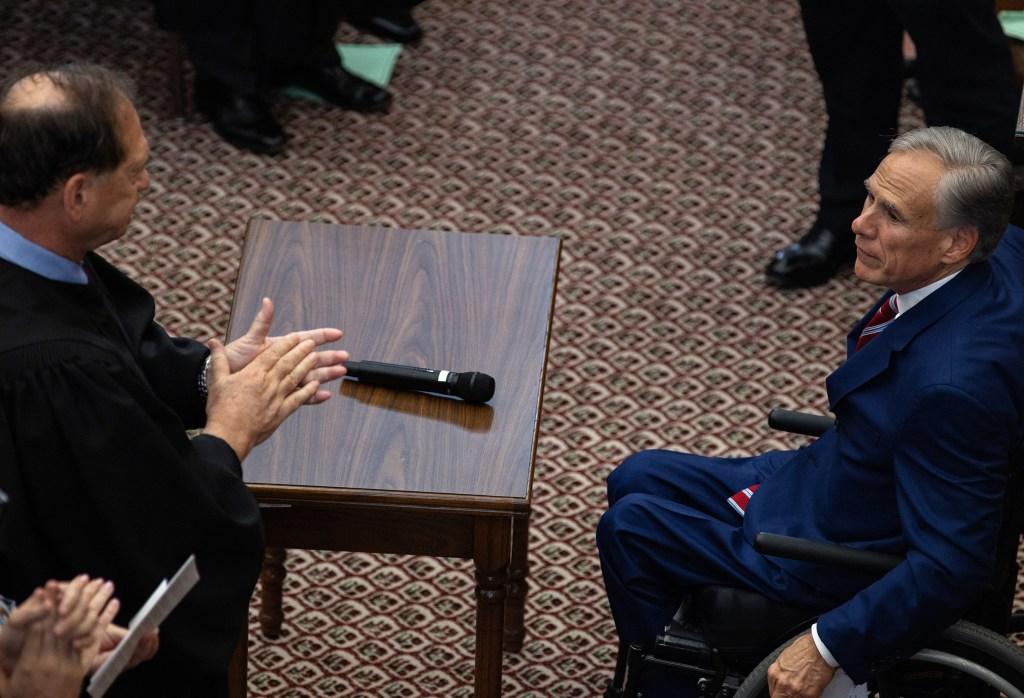









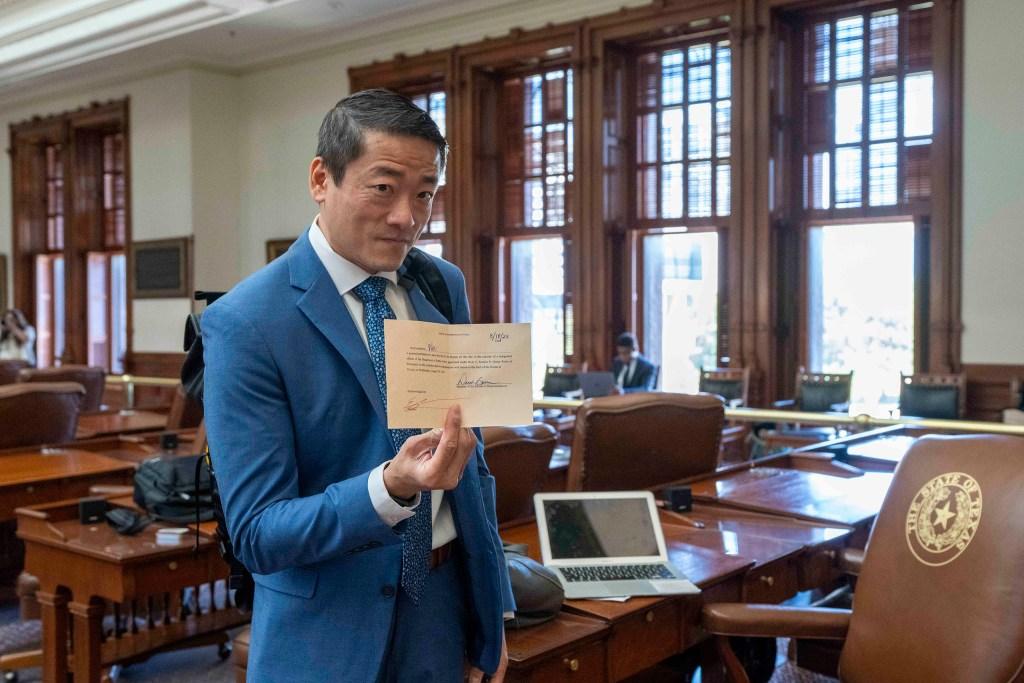
The Texas Supreme Court has dismissed Governor Greg Abbott’s attempts to oust Houston Representative Gene Wu and several other Democratic lawmakers, affirming on Friday that the legislature effectively managed to ensure their attendance last summer without needing judicial intervention.
In the majority opinion, Chief Justice Jimmy Blacklock, a Republican and former aide to Abbott, referenced established legal principles asserting that the judiciary should refrain from intervening in disputes between the legislative and executive branches that those branches can resolve independently.
Blacklock emphasized that the courts’ reluctance to engage in political power struggles serves as a significant check on judicial authority, a position he reiterated in the ruling.
This decision from the all-Republican Supreme Court marks a significant defeat for Abbott, who had pledged to expel any members who refused to return to Texas to support the GOP’s new congressional map. The controversial mid-decade redistricting was initiated under pressure from former President Donald Trump, aiming to bolster the Republican majority in the U.S. House by creating additional Republican-leaning districts in Texas.
Over 50 Democrats, including Wu, the House Democratic leader, left the state in August to disrupt the legislative process and delay the approval of the GOP’s proposed map. Abbott subsequently launched a lawsuit seeking Wu’s removal, a move that Attorney General Ken Paxton argued lacked legal standing. Paxton later filed his own lawsuit against Wu and 12 other lawmakers, which the court combined for a joint ruling.
Democratic lawmakers have criticized the mid-decade redraw as a strategic maneuver to diminish the influence of Black and Hispanic voters. Following the Democrats’ return, the legislature approved the new map, which was later validated by the U.S. Supreme Court for use in the midterm elections, overturning a lower court’s determination that the map constituted racial gerrymandering.
In its ruling, the Texas Supreme Court left open the possibility of future judicial involvement regarding quorum breaks, where lawmakers intentionally deprive the legislature of the necessary attendance to conduct business.
Blacklock noted that any potential wrongdoing by absent House members was adequately addressed through the Texas Constitution’s internal political remedies, which do not require judicial intervention. However, he acknowledged that should these remedies prove insufficient in future situations, the court may need to reconsider the availability of judicial remedies.
Justice James Sullivan, in a concurring opinion, expressed a willingness to address future quorum breaks more decisively, suggesting that lawmakers engaging in such actions could face scrutiny regarding their legislative status.
The practice of quorum breaking has deep roots in Texas political history. The framers of the state constitution intentionally set a high threshold for quorum, requiring two-thirds of both chambers to be present, in contrast to a simple majority in most states. Recent examples include Democrats fleeing the state in 2003 and 2021 to delay redistricting and stymie voting restrictions, respectively.
Historically, no Texas lawmaker has been removed from office solely for breaking quorum, and no governor has ever succeeded in having the courts dismiss a legislative member for such actions.
Following the ruling, Wu declared a significant victory, challenging Abbott’s authority by stating, “Today, the Republican-controlled Supreme Court said: No. The Constitution does not allow a governor to erase voters’ choices when they are inconvenient.” He criticized Abbott as ineffective, asserting that the court’s decision reflected a failure of the governor’s ambitions.
In his emergency petition submitted to the state Supreme Court in August, Abbott contended that Wu had effectively abandoned his position by leaving the state and declaring the legislative session over. Abbott argued that the ability of a few dissenting lawmakers to run out the clock could jeopardize the state’s future.
In response, Wu maintained that he had not abandoned his office, arguing that he was fulfilling his responsibilities to his constituents by opposing legislation they opposed. His legal representation asserted that Wu’s actions did not constitute a voluntary resignation but rather demonstrated his commitment to serving his elected term.