







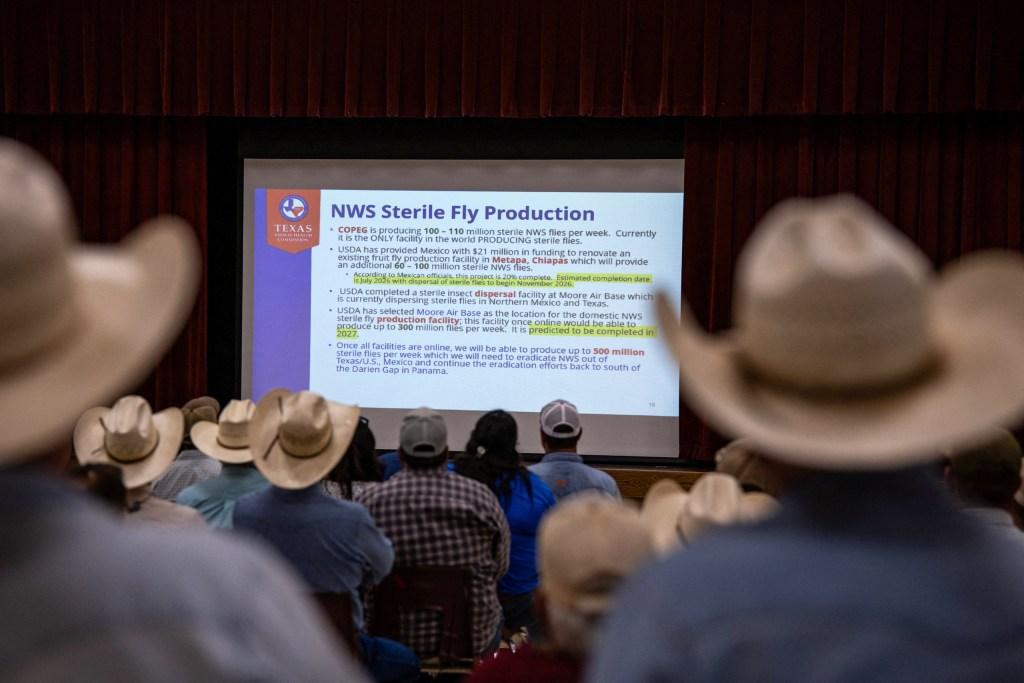
A small fly could have significant repercussions for Texas’ beef and agricultural sectors. On June 3, the U.S. Department of Agriculture identified the New World screwworm in a three-week-old calf located in Zavala County. Since that detection, additional cases of screwworm infestations have been reported across Texas.
This parasitic fly poses a potential multibillion-dollar threat to the state’s cattle industry, which generates approximately $41 billion annually. There is also concern that this could contribute to the already soaring beef prices nationwide.
The extent of potential infestations in Texas remains uncertain, with nearly 28,000 cases reported in Mexico since November 2024, according to Mexican authorities.
In response to the situation, both state and federal officials are collaborating to halt the northern spread of the screwworm, which has been monitored since 2023. The USDA and the Texas Animal Health Commission have intensified animal surveillance in areas adjacent to confirmed cases, establishing zones around each infestation. Animals are prohibited from leaving these zones without undergoing thorough inspections.
Measures are also being taken to enhance fly traps and monitor wildlife, alongside the release of sterile flies aimed at disrupting the reproduction cycle of the parasitic screwworm.
Understanding the New World Screwworm
The New World screwworm is a parasitic fly that is drawn to living tissue, laying its larvae in open wounds. Once hatched, the maggots consume the living flesh, inflicting severe damage to the animal. Without treatment, this can lead to death.
The screwworm can penetrate through various openings in the skin, such as the corners of the eyes or nostrils.
From a biological perspective, all mammals are susceptible to screwworm infestations, including pets and humans. However, livestock and wildlife are particularly at risk due to their outdoor lifestyles.
Pets like dogs and cats may also be affected through small wounds or scratches that compromise the skin barrier. Health experts, including Casey Locklear, veterinarian and parasiticides lead for Elanco Animal Health, advise that pets should be treated for fleas and ticks throughout the year.
“As a pet owner, if you notice that your dog or cat has a wound—especially if it has a foul smell or is enlarging—you may actually see the maggots,” Locklear cautioned. “If you see a wound, seek treatment promptly. Early intervention is essential for both yourself and your pet.”
Further information about the screwworm is available for those interested.