




EL PASO — The Trump administration is seeking to acquire 14 acres of land on a significant mountain near El Paso, owned by the Catholic Diocese of Las Cruces, New Mexico. This site, which attracts thousands for an annual religious pilgrimage, is intended for the installation of additional border barriers.
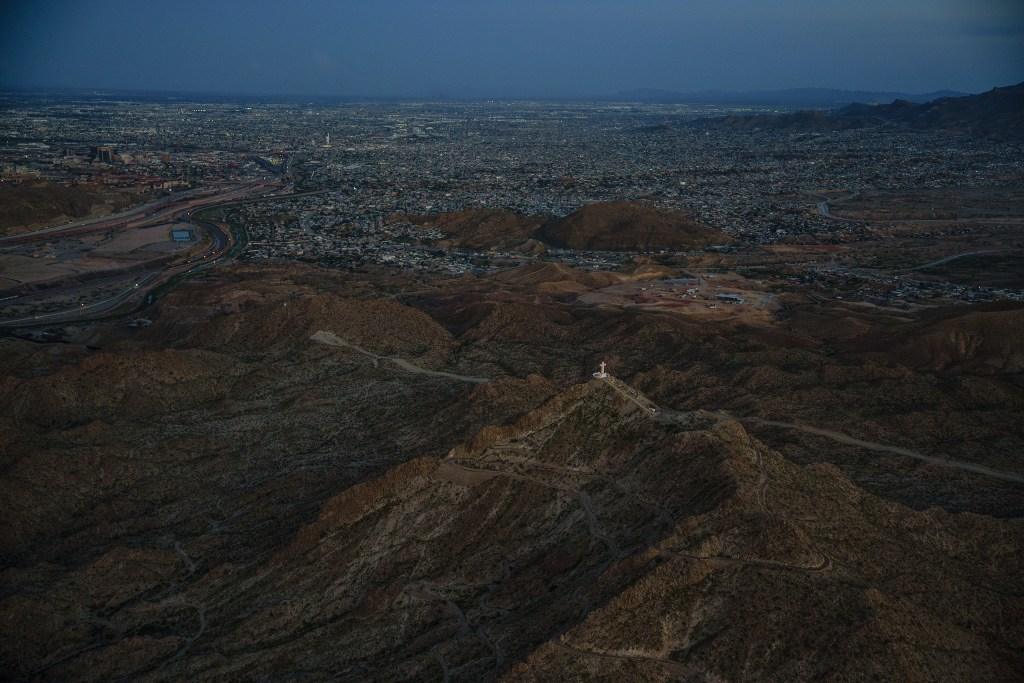
The land in question is located at the base of Mount Cristo Rey, a prominent 720-foot mountain crowned with a 29-foot statue of Jesus Christ that overlooks Ciudad Juárez, El Paso, and Sunland Park, New Mexico.
Last week, attorneys representing the Trump administration filed a lawsuit in a federal court in New Mexico against the diocese, which opposes the government’s efforts to seize the land. The lawsuit states that the federal government requires the land for barriers and technology intended to enhance the security of the U.S.-Mexico border.
In court filings, the administration revealed it had offered the diocese $183,000 for the property. However, the diocese contends that the government’s actions infringe upon its First Amendment rights regarding religious expression.
“The construction of a border wall through or near this sacred site could irreparably harm its religious and cultural significance, disrupt pilgrimage routes, and transform sacred space into a symbol of division,” the diocese noted. “Any federal action to seize this land, build barriers, or restrict access to Mount Cristo Rey would severely infringe on religious freedoms and the rights of worshippers.”
Each fall, as many as 40,000 individuals undertake a pilgrimage to the mountain’s summit, where the dioceses of Las Cruces and El Paso conduct a mass. Traditionally held on the last Sunday of October, the pilgrimage has more recently shifted to coincide with the feast day of Christ the King in November.
Some pilgrims make the five-mile trek barefoot, while others have been known to crawl on their knees to reach the top.
U.S. Representative Veronica Escobar, a Democrat from El Paso, expressed her concerns in a statement: “The cultural and religious importance of Mount Cristo Rey is central to our community. The Trump administration’s proposal to seize this communal asset for a border wall reflects a blatant disregard for the values of communities like ours. There are alternative methods to ensure border security that do not involve compromising this sacred site.”
The Trump administration has characterized the area as a heavily trafficked route for human smuggling, asserting that closing the gap is essential to curbing illegal immigration. Despite a reduction in the number of immigrants crossing, the region has witnessed a troubling increase in migrant fatalities, coinciding with heightened military surveillance from state and federal authorities.
Ruben Escandon, Jr., a spokesperson for the Mount Cristo Rey Restoration Committee—a volunteer organization that maintains the site—voiced his support for the installation of additional barriers, emphasizing the importance of public safety. He believes that constructing barriers will not hinder visitors’ access to the mountain’s peak.
“Completing the wall will help preserve the religious, cultural, and artistic significance of the area,” he stated.
Ray Aguilar, a conservationist from Ciudad Juárez, cautioned that building more barriers could adversely impact local biodiversity and cultural connections on both sides of the border. Mount Cristo Rey serves as a vital passage for wildlife migrating between La Sierra de Juárez in Mexico and El Paso’s Franklin Mountains.
<p“Plants and animals do not recognize human-imposed boundaries, so major developments like this threaten already vulnerable species,” he remarked.
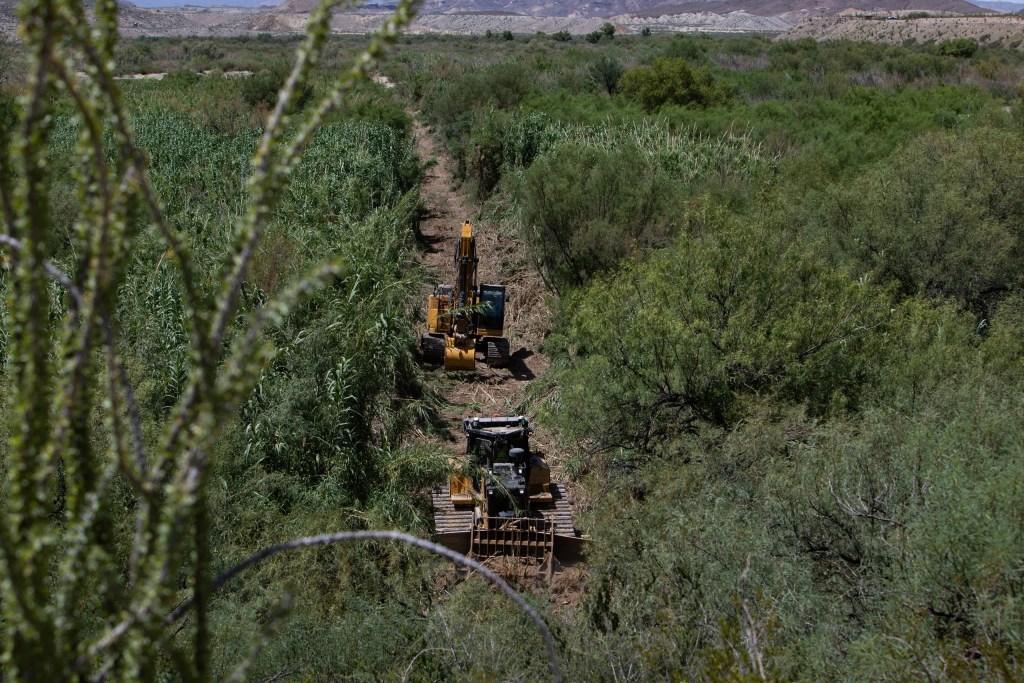
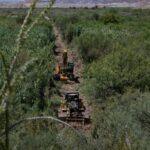
Last summer, the Trump administration announced plans to construct border barriers in the vicinity and began work on 1.32 miles of fencing south of the mountain in Sunland Park. A Galveston-based company, SLSCO, secured a $95 million contract to build the 30-foot-tall steel barriers with concrete reinforcement, and construction crews commenced work earlier this year.
This move marks another instance of the Trump administration employing eminent domain laws to appropriate land, including significant religious and cultural sites, for border security purposes.
Although the administration had previously outlined intentions to build barriers in Big Bend National Park, opposition arose from both Republican and Democratic state and local officials, alongside residents, environmental advocates, and community leaders. In a recent statement, the commissioner for U.S. Customs and Border Protection indicated that barriers would not be constructed within the national park; however, plans for surveillance technology remain active, which many residents oppose due to the environmental degradation caused by construction activities. Additionally, the government continues to acquire private properties adjacent to the park to facilitate the border wall project.
In Arizona, construction has already harmed a rare Native American archaeological site believed to date back over a millennium.