







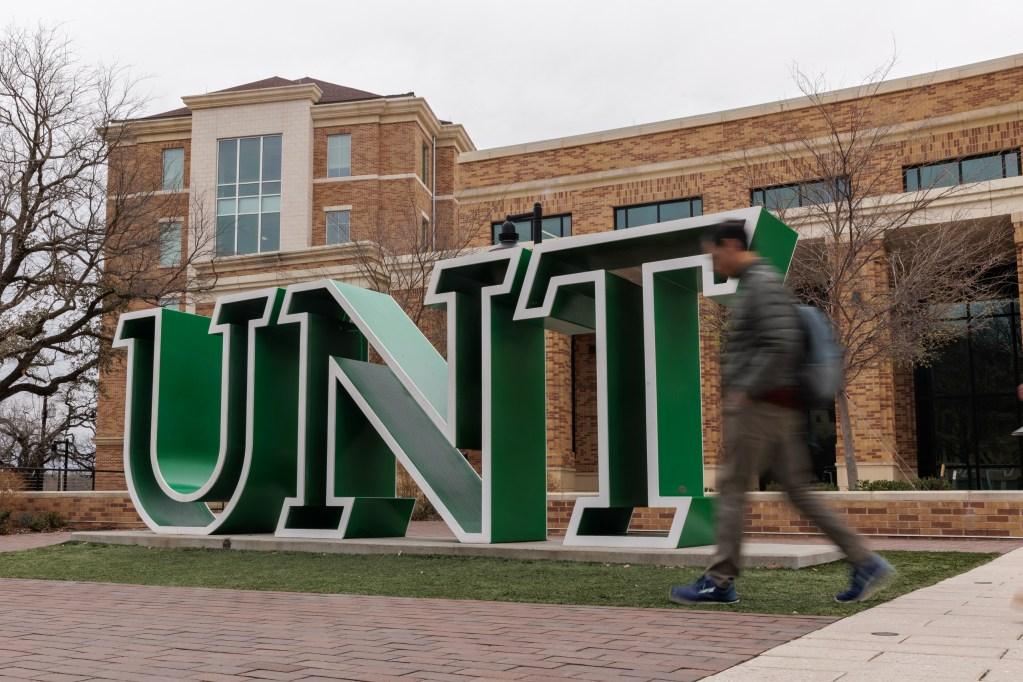
The University of North Texas (UNT) is currently considering several measures to address a significant budget shortfall projected at $45 million. This deficit has increased from an earlier estimate of $31.2 million last August, primarily due to a sharper-than-anticipated decline in international graduate student enrollment and reduced state funding linked to enrollment figures.
President Harrison Keller addressed the Denton campus this week, emphasizing the seriousness of the situation. “The principal concern is that this is a structural deficit. This isn’t a temporary deficit, so we need to get in front of it,” he stated in an interview.
University officials reported a dramatic fall in international graduate enrollment, dropping from approximately 6,200 students in fall 2024 to just under 3,400 in fall 2025. Keller indicated that while the university has not pinpointed which departments may face cuts or how many faculty members might participate in a voluntary separation program, further details will be announced before the start of spring registration in early March.
In a communication to the campus community, Keller outlined that alongside potential cutbacks, UNT intends to boost enrollment through the expansion of online and professional programs and by enhancing transfer pathways with community colleges. However, he acknowledged that these initiatives will take time to yield financial benefits.
Despite the budget challenges, Keller affirmed that the university’s recently announced initiative to cover full tuition and mandatory fees for incoming freshmen from Texas families earning $100,000 or less will remain intact, set to begin in the fall of 2026.
International students, who typically pay considerably higher tuition rates than in-state residents, have become increasingly vital to public universities’ financial stability, especially as state funding is partly determined by enrollment numbers. Keller noted that the university’s funding formula has resulted in a loss of about $32 million in state support this biennium.
During a recent board of regents meeting, Keller reiterated UNT’s reliance on international students, clarifying, “Unlike at some other Texas universities, at UNT, our international students do not displace qualified Texas residents.”
Keller also mentioned that a task force is convening weekly to explore strategies for stabilizing the budget in both the short and long term. UNT System Chancellor Michael Williams expressed a similar sentiment, stating, “There is no single lever we can pull and no shortcut that avoids hard decisions.”
In an earlier discussion, Keller revealed that some positions had already been left unfilled due to declining enrollment. He explained that compensating for the loss of international tuition revenue is challenging, as “for every full pay, out-of-state student that you lose, you have to enroll more than two resident students to make up for it.”
Keller also expressed hope that lawmakers will consider linking university funding to performance metrics, such as graduation rates and workforce outcomes, rather than merely counting semester credit hours. “Our current university funding formulas are antiquated,” he remarked, advocating for a system that aligns funding with the broader goals of educational institutions.
In 2023, Texas implemented a similar outcomes-based funding model for community colleges, rewarding financial support based on credentials and student transfers rather than enrollment figures.
The scrutiny faced by international students has intensified in recent years, particularly under the previous administration. Last year, many international students at Texas universities experienced abrupt changes to their legal status in a federal immigration database, which were later reversed. Officials cited concerns over national security and specific protests, although many affected students denied involvement in controversial activities.
In addition to these challenges, the federal government has imposed stricter travel restrictions and is scrutinizing applications from numerous countries, leading to increased uncertainty among prospective international students considering U.S. colleges.
Texas boasts one of the largest international student populations in the nation, with UNT historically enrolling more international students than any other university in the state. Most of these students come from Asia, particularly India, and are primarily enrolled in engineering, business, and technology programs.
According to the Texas Higher Education Coordinating Board, the overall number of international students in Texas declined by approximately 11% from 2024 to 2025, while UNT reported a steep drop of around 35% in its international student enrollment, one of the highest decreases among public universities in the state.