







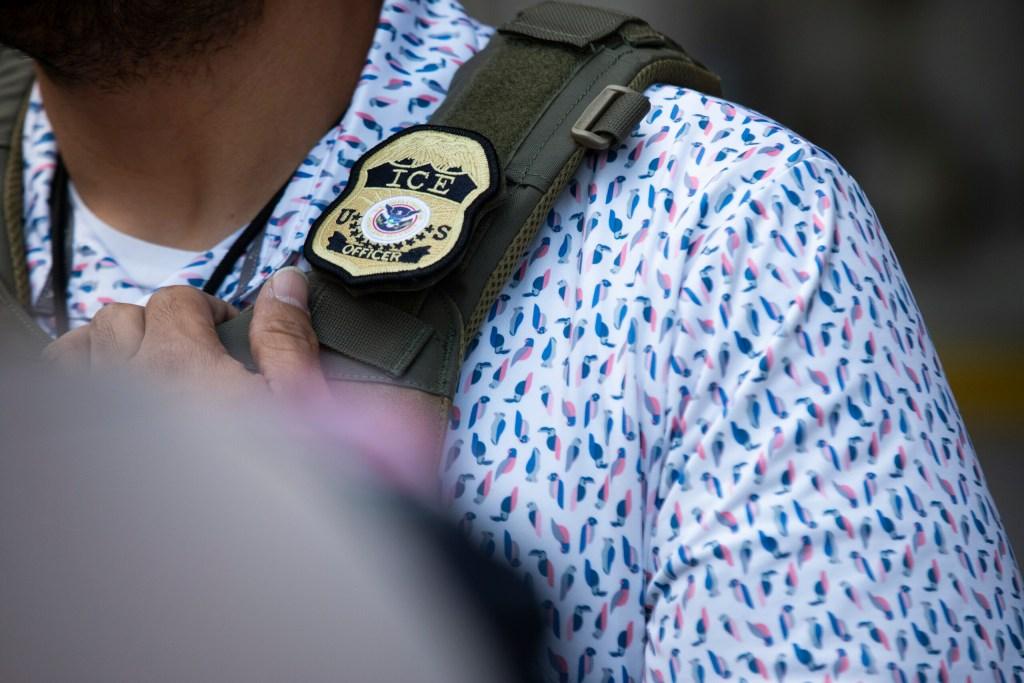
A 56-year-old Mexican man, Emiliano Andrade-Covarrubias, passed away on Saturday while in the custody of U.S. Immigration and Customs Enforcement (ICE). The agency confirmed his status as a lawful permanent resident following a report on his death by a local news outlet.
Andrade-Covarrubias was discovered unconscious in his bed at the Rio Grande Processing Center on Saturday morning. ICE personnel attempted to revive him through chest compressions and summoned emergency services, but he was pronounced dead approximately 20 minutes later. He had been detained since June.
As of Monday, the cause of Andrade-Covarrubias’ death remains undetermined, with an autopsy still pending from the Webb County Medical Examiner. ICE stated that he had received appropriate medical care during his detention and had been attended to by medical professionals.
According to ICE, Andrade-Covarrubias was detained on June 26 after returning to Texas from Mexico at a port of entry in Laredo. Officials indicated that he was suspected of obtaining his legal status in the U.S. through fraudulent means, as he failed to disclose a 2004 theft arrest during his application process.
ICE is in the process of deporting him and he was involved in removal proceedings before an immigration judge. Records indicate that Andrade-Covarrubias was scheduled to appear at a court hearing on November 2.
His daughter, Estefani Andrade, asserted that her father did mention his criminal history when applying for his green card, which immigration authorities ultimately approved.
Having lived in Dallas for many years, Andrade-Covarrubias raised three children, all born in the U.S. He worked as a painter and was reportedly planning to return to Mexico, where he often traveled to build a house.
Estefani noted that her father suffered from a heart condition, diabetes, and high blood pressure. He had brought his medications with him upon detention, but she claimed that the facility staff did not provide them to him.
Concern heightened when he reported feeling ill and experiencing a cough, particularly since he had been hospitalized for COVID-19 in 2021, which had lasting effects on his health. Despite reaching out to medical staff for assistance, he expressed frustration that his concerns were dismissed.
U.S. Representative Henry Cuellar, a Democrat from Laredo, visited the detention facility on Sunday and inquired about its medical protocols. However, the staff were unable to share specific details regarding Andrade-Covarrubias’ situation due to the ongoing investigation. Cuellar has since submitted written questions to ICE seeking further clarification.
“Any death in federal custody is a serious matter, and we need to know what happened,” Cuellar stated in a recent announcement.
Andrade-Covarrubias marks the seventh individual to die in ICE custody in Texas this year, following the death of Geraldo Lunas Campos, whose passing was ruled a homicide by the El Paso Medical Examiner in January.
He is also the second person to die in an ICE facility in Laredo this year; Felix Alcorta-Rodriguez, a 63-year-old Mexican national, died on June 19 after being found unresponsive while detained at the Webb County Detention Center.
Earlier this year, the U.S. Supreme Court ruled that Customs and Border Protection officers at entry points may prevent lawful permanent residents from reentering the country if they have any criminal history. In a 6-3 decision led by Justice Clarence Thomas, the court established that immigration officials do not require “clear and convincing evidence” of a crime involving moral turpitude to detain such individuals. Ultimately, immigration judges retain the authority to decide on the potential deportation of these residents.
Justice Ketanji Brown Jackson, in her dissent, expressed concerns that the ruling undermines the protections associated with having a green card and effectively grants the government excessive power to place lawful residents in an uncertain immigration status.