








In a significant ruling, a federal appeals court has determined that immigrants who entered the United States illegally do not have the right to seek bond while in custody during deportation proceedings, regardless of their established ties to the country. This decision was made by the 5th U.S. Circuit Court of Appeals in New Orleans, which ruled 10-7 in favor of the federal government’s position.
The court concluded that existing immigration laws permit the federal government to detain undocumented immigrants until their deportation, even when those individuals have built lives in the U.S. and have no criminal records. Judge Cory Wilson, appointed by former President Trump, emphasized that undocumented immigrants are entitled only to the rights explicitly granted by Congress under immigration law. He stated that these individuals could avoid detention simply by agreeing to leave the country.
Judge Andrew Oldham also concurred with Wilson’s opinion, asserting that undocumented immigrants, by virtue of their legal status, possess the same due process rights as those who entered through legal channels, which are determined solely by congressional legislation.
In dissent, Judge Leslie Southwick, appointed by George W. Bush, expressed concern that the ruling has erected a barrier between constitutional protections and long-term residents living in the U.S.
Rebecca Cassler, a senior litigation attorney with the American Immigration Council, who represented the case before the court, criticized the ruling as a violation of constitutional due process rights, traditionally afforded to all individuals residing in the U.S., irrespective of their immigration status. She remarked that the decision undermines the fundamental right to due process, rendering it ineffective for immigrants in Texas, Louisiana, and Mississippi, and posited that such a ruling could have broader implications for all residents.
The case originated from the arrests of three men in Texas—Ignacio Sosnava Rodriguez, Miguel Angel Gomez Alvarado, and Alejandro Villegas Angel—during routine traffic stops by state troopers between November 2025 and February 2026. All three men had lived in the U.S. for over 14 years, worked, and had children who are American citizens. After their detainment by U.S. Immigration and Customs Enforcement (ICE), federal judges found that the denial of bond hearings constituted a violation of their due process rights, leading to their eventual release.
The Trump administration’s appeal was based on a policy implemented in July 2025, stating that undocumented immigrants could be held without bond until deportation. The ruling has been celebrated by administration officials as a victory for their immigration enforcement strategy.
Gracie Willis, an attorney with the National Immigration Project representing the detained men, expressed alarm at the court’s stance, suggesting it reflects a dangerous precedent allowing indefinite detention without justification. She characterized the ruling as a rejection of due process and an alarming move toward criminalizing immigrants.
Willis indicated that her organization is currently evaluating potential legal responses to the ruling and has not yet decided whether to appeal to the U.S. Supreme Court. Immigration attorneys are also considering how this ruling will influence district courts, many of which have upheld the right to bond for immigrants deemed not to be flight risks or dangers to the community.
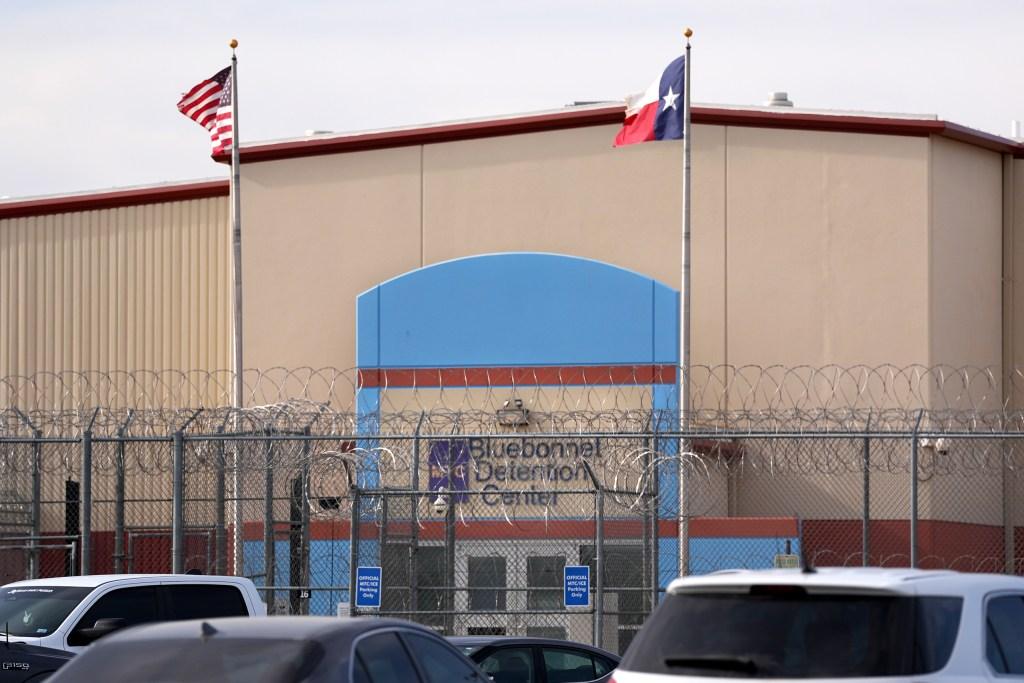
Although the ruling applies specifically to the 5th Circuit, which encompasses Texas, Louisiana, and Mississippi, the Trump administration has been transferring many immigrants from other states to Texas detention facilities.
Under federal immigration law, individuals apprehended shortly after crossing the U.S.-Mexico border can be swiftly deported without the opportunity for bond hearings. However, those who have resided in the U.S. for an extended period were previously permitted to challenge their detention. The Trump administration’s policy shift in July 2025 eliminated the right to bond for all arrested by ICE, regardless of their length of residence.
A related case has recently been accepted by the U.S. Supreme Court, which will scrutinize the Trump administration’s mandatory detention policy. Reports indicate that immigrants filed more habeas corpus petitions—legal challenges to detention—during the initial 13 months of the second Trump administration than during the entirety of the previous three administrations.
Since January 2025, more than 89,000 petitions have been lodged against the Trump administration’s policies, seeking release from detention. While Friday’s ruling does not prevent other detainees who entered the country legally from filing habeas corpus petitions, it has raised concerns about the rights of those detained under the new policy.
Analysis reveals that over 400 federal judges from both major political parties have ruled in favor of immigrants’ due process rights in more than 5,000 cases since the policy change, while only 41 judges have supported the administration’s interpretation in 250 cases. The administration’s appeals of these rulings have resulted in conflicting decisions across different courts.