








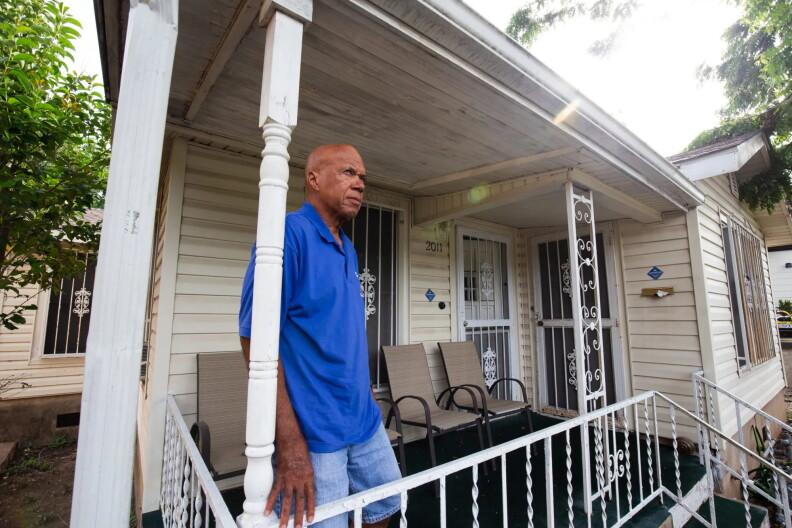
The Lions Municipal Golf Course, affectionately known as Muny, is once again in the spotlight as the City of Austin explores the possibility of acquiring the historic 141 acres. Volma Overton Jr., a longtime advocate for the course, recalls his childhood memories of the site where he played and caddied over the past seven decades. Muny is renowned not only for its stunning landscape but also as the first desegregated golf course in the South, hosting approximately 75,000 rounds of golf annually.
“I believe we are finally moving in the right direction,” said Overton, now 78 years old. “There are many who recognize this as a pivotal moment for both the city and the golf course.”
The announcement made by Mayor Kirk Watson on October 14 regarding the city’s potential ownership of Muny was met with enthusiasm from its supporters. Currently, the University of Texas (UT) owns the land and has leased it to the city for nearly 90 years, with a recent shift to a month-to-month arrangement.
In a significant development, UT has tentatively agreed to transfer ownership of the golf course to the city in exchange for a substantial donation from anonymous benefactors, alongside modifications to the longstanding Brackenridge Development Agreement. This agreement governs the development of the adjacent 190 acres of university property.
These proposed changes could drastically alter regulations concerning building heights, environmental standards, and other development criteria that have been in place for decades. Concerned community members, researchers, and environmental advocates have already expressed their apprehensions regarding the potential impact of future developments on the area.
Holly Reed, a board member of The Muny Conservancy and the West Austin Neighborhood Group, emphasized the need for transparency regarding the development agreement. “Many people think, ‘Save Muny at all costs,’ but we need a comprehensive plan that considers the future,” she remarked.
A Civil Rights Milestone
Muny’s history dates back to 1910, when George W. Brackenridge gifted 500 acres to the University of Texas, which included the land for the golf course. After leasing the land to the Lion’s Club in 1924, the City of Austin took over operations in 1937.
During its early years, the course was exclusive to white players, yet Black golfers played there discreetly after hours. This changed in 1950 when two Black youths boldly played during the day, prompting a pivotal moment in its history. Following a brief discussion, then-Mayor Taylor Glass permitted their play, signaling the course’s integration.
Overton, son of civil rights leader Volma Overton Sr., recalls the increase in Black players at Muny, illustrating the course’s significance in the civil rights movement. Today, it is recognized on the National Register of Historic Places for its role in this pivotal struggle.
Uncertain Prospects
Despite its rich history, Muny has faced uncertainty since the 1970s when UT announced plans to terminate the lease. Community pushback led to an extension of the lease, and in 1989, the city and UT Board of Regents formalized an agreement to regulate development on the surrounding Brackenridge Tract. However, this agreement did not ensure Muny’s long-term security.
Efforts to preserve Muny as a public golf course have continued, with Mayor Watson reflecting on past threats to its existence. He recalled a 2009 proposal for a high-density development that would have engulfed the course.
Watson also authored Senate Bill 2553, which established the Save Historic Muny District, paving the way for ongoing advocacy to protect the course. With the latest developments, Overton remains cautiously optimistic, stating, “I’ve been involved for a long time. I won’t celebrate until it’s finalized.”