








On Tuesday, the Texas Senate Republican primary will shed light on voter sentiments following nearly a year of intense rivalry and over $95 million in expenditures among prominent figures in Texas and national politics.
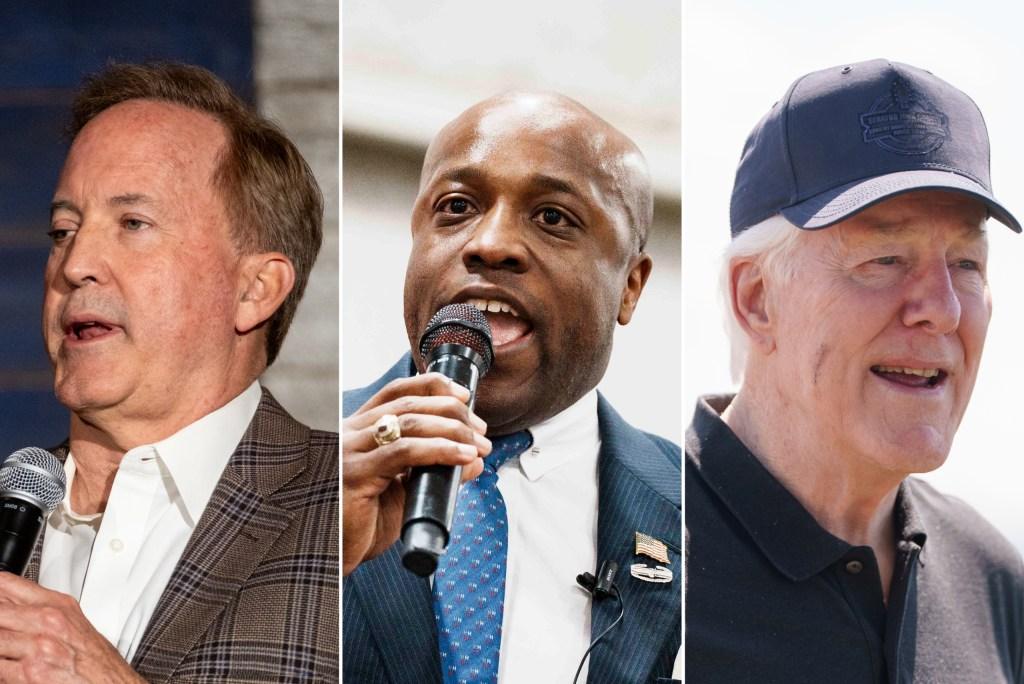
U.S. Senator John Cornyn, Attorney General Ken Paxton, and U.S. Representative Wesley Hunt are vying for the Republican nomination ahead of the November election. The implications of this contest are significant, not only for Texas but also for Washington, where the GOP establishment is heavily invested in ensuring Cornyn retains his seat.
In a midterm year that has seen Democrats energized, the Republican nominee will play a crucial role in leading the party’s campaign and supporting down-ballot candidates across Texas, from Brownsville to San Antonio to Houston. This primary represents a critical test for Republicans in Washington, who have poured millions into Cornyn’s reelection efforts, fearing that a Paxton candidacy could jeopardize the party’s grip on the Capitol. The primary is a manifestation of the ongoing struggle within the Republican Party as various factions vie for dominance in a state deemed vital by national party leaders.
Democrats Mobilize
Unlike previous election cycles, the general election will not be a straightforward affair for the primary winner. Democrats are actively engaged in their own primary, featuring state Representative James Talarico and U.S. Representative Jasmine Crockett, who are competing for what many operatives believe is their best chance to secure a statewide victory since Beto O’Rourke’s narrow defeat in 2018. Early voting statistics reveal that Democrats are currently outpacing Republicans.
Cornyn, who has maintained an unblemished electoral record for over 35 years, has been instrumental in fostering Republican dominance in Texas, navigating the shift from the Bush era to Trump’s influence while many party stalwarts have exited the scene. First elected to the Senate in 2002, he ranks among the longest-serving senators in Texas history, having held significant leadership roles within the Republican Party in Washington.
However, Cornyn faces a formidable challenge from Paxton, a prominent figure in the MAGA movement, who has survived various ethical controversies to become a leading voice for the party’s far-right faction. A staunch Trump supporter, Paxton spearheaded efforts to contest the 2020 election results and has positioned the attorney general’s office as a hub for conservative legal activism, placing Texas at the forefront of national debates on issues like abortion, religious freedom, and LGBTQ+ rights.
Paxton’s ascent has been marred by a decade-long history of ethical concerns. Accused of securities fraud during his first term, he has faced multiple allegations, including abuse of office and bribery. Despite these challenges, he has won statewide office three times, including during his indictment. The felony charges against him were dropped in 2024. Paxton advocates for a candidate who can rally grassroots support, particularly among less frequent Trump voters, to counteract Democratic enthusiasm.
Complicating the dynamics further is Hunt, a second-term congressman from Houston who entered the race in October, likely ensuring a runoff on May 26. Hunt positions himself as a fresh alternative for those skeptical of both Cornyn and Paxton, promoting his youthfulness and alignment with Trump’s agenda as advantages over his older counterparts.
Despite his friendship with all three candidates, Trump has refrained from endorsing anyone in this race. The Texas Senate primary stands out as one of the few contests where the former president has not taken a side.
Record Spending
The Texas Senate primary has become the most expensive in U.S. history, with substantial financial backing from both parties. Cornyn and his supporters have invested heavily to enhance his public image, particularly given early polling that indicated Paxton’s strong lead. Although Paxton’s campaign has significantly lagged in fundraising compared to Cornyn, they have opted to conserve resources, believing that the attorney general is well-known and well-regarded among Republican voters.
In the final weeks leading up to the primary, allies of both campaigns have targeted Hunt in a bid to suppress any potential late momentum he might gain. Cornyn has criticized Hunt for his record of missed votes, a narrative that has gained traction as Hunt has campaigned extensively across Texas instead of attending votes in Washington.
As the primary draws near, Cornyn has launched an ad campaign heavily criticizing Paxton on moral grounds, focusing on his ongoing divorce, alleged infidelities, and financial dealings while in office. The ad frames the race as a choice between “the wife cheater and fraud or the Texas workhorse.”
Conversely, Paxton has opted for a more positive campaign approach, featuring his family in an advertisement that underscores his commitment to conservative values. “Unlike John Cornyn, who’s become a desperate shell of a man clinging to power, my campaign is not about attacking someone else’s family,” Paxton asserted. “It’s about protecting America.”
Current polling indicates that Cornyn and Paxton are likely to advance to a runoff, prolonging the contest by nearly three months. With Paxton consistently leading or tying for first in most polls, he could benefit from a runoff electorate that typically favors more conservative candidates.
While the primary may not culminate on Tuesday, the results will provide a critical benchmark for understanding Texas GOP voters’ sentiments after nearly a year of campaigning, closely monitored by supporters and donors of both candidates. The outcome could also influence whether the White House chooses to intervene, although Trump has thus far resisted calls for involvement from all factions.
Campaign Dynamics
Senate Majority Leader John Thune has actively advocated for Cornyn, but his efforts have met with limited success. The intensity of such lobbying highlights the importance Washington places on this primary. “Almost every time we talk, we talk Texas,” Thune remarked to reporters this week.
When Paxton launched his campaign in April, he framed Cornyn as insufficiently conservative and not aligned with Trump’s agenda. He pointed to controversies during the Biden administration that had alienated Cornyn from some party activists, such as his bipartisan collaboration on a gun safety bill following the Uvalde shooting and his previous doubts regarding Trump’s electability.
Paxton positioned himself as the true MAGA candidate, quickly becoming a favorite in early polling. In response, Cornyn emphasized his loyalty to Trump, spending millions on advertising touting his voting record that aligns with Trump over 99%. He frequently praised the former president and enlisted members of Trump’s inner circle to support his campaign.
As the race tightened, pro-Cornyn super PACs shifted their focus from promoting his strengths to attacking Paxton. Aaron Whitehead, the executive director of one such PAC, noted their strategy evolved as the election landscape changed. “We always saw the election as very fluid,” he said.
Hunt’s entry into the race in October, bolstered by statewide advertisements, disrupted the dynamics significantly. He aggressively targeted Cornyn, echoing many of Paxton’s criticisms and arguing that the senator’s time has passed. John Wittman, a Republican consultant, observed that Hunt’s candidacy initially appeared to favor Paxton.
As the contest progressed into winter, spending escalated, with Cornyn’s allies investing nearly $70 million to bolster his position while also highlighting Paxton’s vulnerabilities. Despite this financial advantage, Cornyn has struggled to achieve more than 40% support in most polls, with many surveys indicating a tight race between him and Paxton.
Paxton’s campaign has operated on a significantly lower budget, with his team arguing that national Republicans are misallocating resources that could be better utilized in other states. “Are they going to allow money to be spent in states that need it more?” questioned Sam Cooper, a strategist for the pro-Paxton Lone Star Liberty PAC.
In the final stretch of the primary, super PACs from both sides have launched negative campaigns against Hunt, with nearly $6 million spent on anti-Hunt advertisements in the past month. Hunt claims this influx of cash indicates his rising threat to both Cornyn and Paxton.
“It means I must be right over the target zone,” he told supporters at a recent rally.
Voter Turnout Trends
While the Republican primary has attracted fewer voters than the Democratic primary, GOP turnout has exceeded that of the 2022 midterm elections. Over 850,000 ballots had been cast in the Republican primary as of February 25, nearing the total from the 2024 presidential election.
Wittman noted that a larger primary electorate could bode well for Cornyn, as candidates on the far-right typically perform better in lower-turnout scenarios dominated by the most committed party members. “If it’s a much larger electorate in the primary, then obviously Cornyn has a better opportunity to pick those folks up,” he explained.
The impending runoff is expected to escalate tensions further, with negative ads already becoming more prevalent as the primary date approaches. Both Cornyn and Paxton’s teams plan to intensify their attacks on each other.
For