









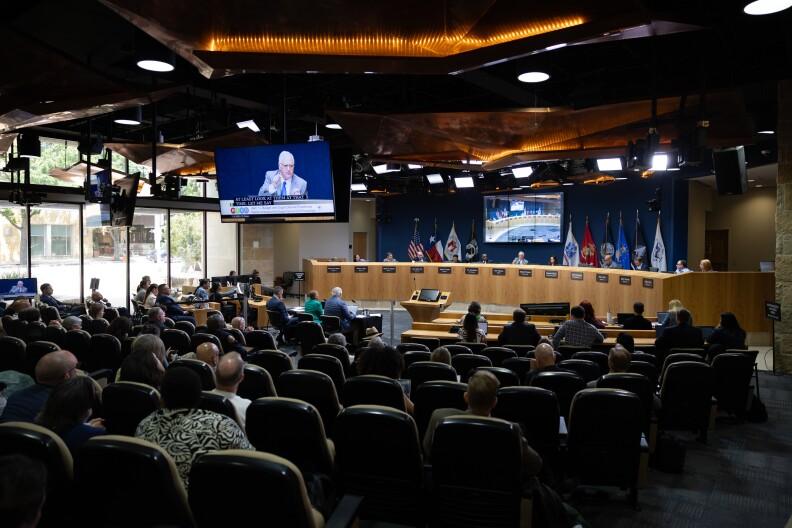
The Austin City Council is set to cast its vote on Thursday regarding a proposal to extend its partnership with Texas Gas Service for another decade, despite ongoing complaints from residents about the rising costs of the utility’s services.
Two years ago, the prospect of renewing the contract seemed uncertain. Tensions between the city and Texas Gas Service, the for-profit company responsible for providing natural gas, had escalated following a series of rate increases that frustrated customers. The city council had even broached the possibility of seeking an alternative utility or transitioning to a public gas service system.
“Please, work with the city, our representatives, and the outside stakeholders to meet the moment,” Council Member Ryan Alter urged utility representatives in 2024. He expressed concerns about the potential for the council to reconsider the partnership if issues persisted.
Fast forward to the present; gas bills continue to rise, public discontent remains, yet a new contract seems likely. The primary concern now revolves around the terms of the agreement.
“This [contract] is going to be well discussed before we reach the finish line. And we’ll hopefully have a product in place that protects customers and limits these rate increases,” Alter stated.
The upcoming vote will determine whether the proposed agreement, negotiated between city staff and Texas Gas Service, can proceed. If approved, this contract would maintain the utility as the exclusive gas provider for both residential and commercial customers in Austin.
Under such arrangements, local governments typically permit utilities to operate on their land in exchange for a “franchise fee,” which grants them sole service rights in the area.
Prior to the vote, some council members expressed skepticism about earlier proposals to sever ties with Texas Gas Service, which quickly proved impractical. “Buying out the utility and making it publicly owned would be an incredibly expensive proposition,” remarked Council Member Marc Duchen. He estimated that acquiring Texas Gas Service’s local pipeline distribution system could cost billions, questioning the source of such funds.
Alter noted that city staff had not thoroughly explored the possibility of establishing a franchise agreement with other for-profit utilities in the region. However, he acknowledged that pursuing such alternatives may also have been cost-prohibitive. “Instead, we wanted to see how far we could push Texas Gas Service in this franchise agreement to achieve some of the improvements we wanted,” he explained, highlighting advancements like enhanced assistance for low-income bill payers, improved leak detection reporting, and increased oversight on capital project spending as significant gains.
Despite the apparent momentum toward a 10-year renewal, some advocates for ratepayers are urging the City Council to delay the vote. They contend that further negotiations could yield more advantageous terms.
The Resource Management Commission recently submitted a list of suggestions to City Council members, advocating for enhanced low-income assistance, a more robust conservation program, and substantial changes in how Texas Gas Service finances its infrastructure expansion. Commissioner Raphael Swartz emphasized that current customers should not subsidize the company’s growth into new areas.
Duchen expressed agreement with many of the commission’s recommendations. Representatives from his office indicated that he would support postponing the vote if there was sufficient council consensus. Alter is also contemplating this option, though he fears it could jeopardize the relationship with the gas utility and result in a less favorable deal than the one already negotiated.
“Did we get as far as we wanted? No,” Alter admitted. “But we’ve got things in this franchise agreement that you won’t find anywhere else in the state of Texas, which is a pretty meaningful win.”
In a statement, Texas Gas Service affirmed its belief that the existing franchise structure is robust enough to ensure safe and reliable service for Austin residents.
Regardless of the outcome of Thursday’s vote, Alter reassured that there will be ample opportunity for further public input and council discussion. Franchise ordinances necessitate three readings at council meetings and cannot be finalized until at least 30 days after the initial vote.