






Earlier this year, a 16-year-old student in Los Angeles was eagerly anticipating the start of his junior year and hoped to try out for the varsity tennis team. Coming from a family of college psychology professors, his future seemed bright.
However, in April, U.S. Immigration and Customs Enforcement (ICE) officers apprehended the family, who had immigrated from Iran over a decade earlier, following directives from U.S. Secretary of State Marco Rubio to revoke their permanent legal status. ICE subsequently separated the family, placing them in different detention centers in Texas.
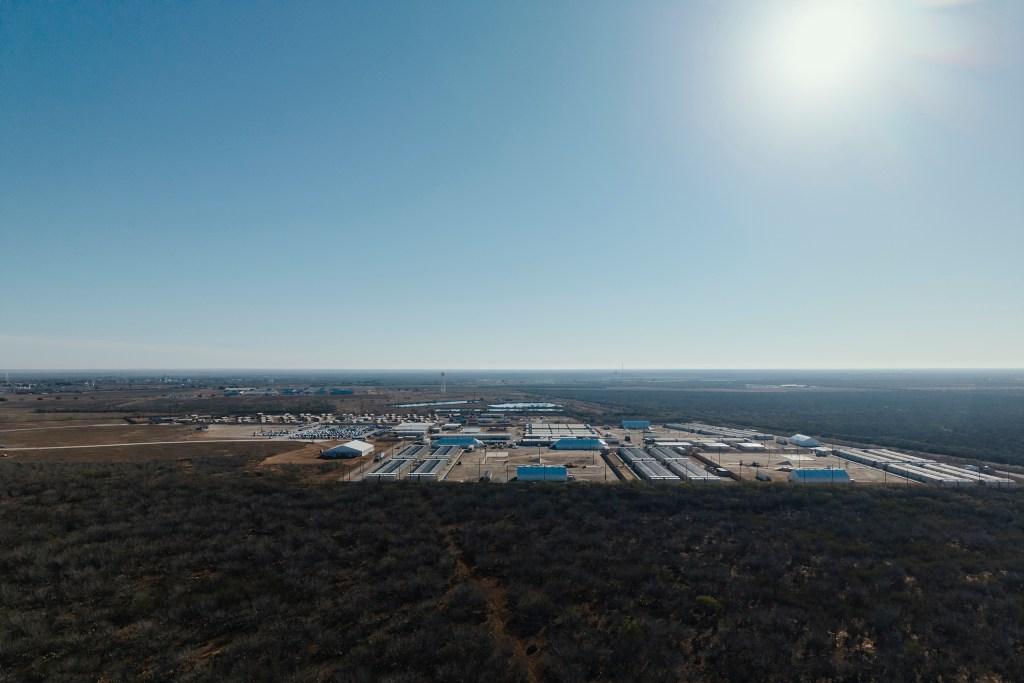
For the past 123 days, the teenager and his mother have been confined in an immigrant detention facility in Dilley, where they endure conditions infested with cockroaches, spiders, and mosquitoes, as detailed in a sworn affidavit. Meanwhile, his father remains at the South Texas ICE Processing Center in Pearsall.
Maryam Tahmasebi, his mother, expressed their ordeal in an article, stating, “We have been put through hell for the past four months, and our physical and mental health have deteriorated in ways that might not be reversible for years.” She highlighted the limited communication with her husband, restricted to 10 minutes every two weeks under supervision.
The teenager, referred to by his initials S.M.H., is among at least 60 children who have been held at the Dilley detention center for over 100 days, significantly exceeding the 20-day limit for detaining immigrant children, according to an analysis of federal data.
Typically, children at Dilley spend an average of 25 days in detention; however, during a six-month period ending in December, that average rose to 47 days, indicating a troubling trend.
In his court declaration, S.M.H. described the experience of being arrested and detained as “terrifying,” noting he has lost 10 pounds since the incident.
The family’s attorneys argue that S.M.H.’s four-month detention is illegal, citing the Flores settlement, a legal agreement established through a 1985 class-action lawsuit that prohibits prolonged detention of immigrant children. U.S. District Judge Dolly M. Gee, who oversees the settlement, has indicated plans to appoint a monitor to ensure compliance with the agreement, which is currently under review by the 9th Circuit Court of Appeals.
During President Trump’s first term, the administration sought to terminate the Flores settlement, and it continues to argue that the agreement is “outdated” and represents excessive judicial control over immigration policy.
The Department of Homeland Security has referred to the settlement as “a tool of the left that is antithetical to the law and wastes valuable U.S. taxpayer funded resources.”
ICE has claimed that the increasing length of stay at Dilley is due to a small number of detainees classified as national security risks, among other factors.
In the first year following the Dilley facility’s reopening in March 2025, around 3,000 children were detained for deportation, with more than half held for longer than 20 days.
The Biden administration had previously ceased the practice of detaining families and closed the Dilley facility before it was reopened as part of the Trump administration’s mass deportation strategy.
U.S. Representative Joaquin Castro, a Democrat from San Antonio, has repeatedly called for the closure of the Dilley facility, stating that it is in constant violation of the law. Castro has visited the detention center seven times to document conditions.
Advocates for immigrant children’s rights have intensified their legal efforts against the federal government, asserting that the conditions and extended confinement at Dilley violate the Flores settlement. Testimonies from families, including children, have described experiences of rotting food, non-potable water, and inadequate medical care.
Seyed Eissa Hashemi, S.M.H.’s father, entered the U.S. on a student visa in 2014. His wife and young son followed a year later. Hashemi found employment teaching psychology at The Chicago School, while Tahmasebi teaches psychology and statistics at Los Angeles Pierce College. The family obtained their green cards in 2016.
S.M.H. identifies as an “average American kid,” with a room decorated with anime posters, reflecting his interests in Japanese culture. He enjoys reading comic books and playing video games outside of school.
Yet, to the Trump administration, the family’s presence in the U.S. poses a foreign policy risk. Their arrests occurred shortly after the U.S. and Israel initiated military action against Iran. Rubio’s memo to immigration officials suggested their green cards should be revoked, citing a rarely invoked immigration law that allows for deportation for foreign policy reasons.
Rubio argued that their presence could have “serious adverse foreign policy consequences” and undermine U.S. interests, referencing an incident from 47 years prior involving S.M.H.’s grandmother, who was associated with a group that held American citizens hostage during the Iranian revolution.
“It is shameful that Secretary Rubio takes the position that children should be held accountable for the acts of their parents and grandparents,” remarked Curtis Morrison, part of the family’s legal team.
Tahmasebi stated that neither she, her husband, nor her son have faced any legal accusations during their time in the U.S. “Not even a traffic ticket,” she noted, expressing her bewilderment at their situation.
The family’s lawyer has filed a petition for their release, emphasizing that California is the only home S.M.H. has ever known, where he is closely connected to his family, friends, school, and community.
While the U.S. State Department did not respond to inquiries, it did release a statement following the family’s arrest, asserting that the administration “will never allow America to become a home for foreign nationals tied to anti-American terrorist regimes.”
A spokesperson for DHS indicated that the family “posed a clear threat” to U.S. foreign policy and national security, and countered complaints about conditions at Dilley, asserting that detainees are provided with adequate meals, clean water, clothing, bedding, and hygiene products.
Ryan Gustin, a representative for CoreCivic, which operates the detention center, defended its practices and stated that the facility has no control over the duration of children’s detention. He asserted that the facility is regularly cleaned and that staff consumes the same water as detainees, which is tested for quality.
Despite these assurances, attorneys representing detained children have dismissed the reports as “a fiction of compliance.”
O.S., another teenager who experienced prolonged detention at Dilley, described his ordeal as “a nightmare.” Arrested alongside his mother and siblings due to his father’s criminal actions, O.S. and his family were held for 323 days before their release.
“This prolonged detention has and continues to destroy our lives,” he wrote in a letter, expressing the lasting impact of their confinement.
Similar to S.M.H., O.S. reported issues with the quality of food and the lack of adequate medical care for his younger sister, who suffered from untreated dental issues while detained. His family experienced the emotional toll of their time at Dilley, with many reporting deteriorating mental health and distressing living conditions.
A 13-year-old girl, previously living in Miami, shared her feelings of confinement after being detained during a routine check-in. She characterized her time at Dilley as “horrible,” expressing the emotional burden of feeling imprisoned.
The psychological effects of detention can linger long after release. O.S. noted the challenges of returning to normalcy, stating, “Being at Dilley distances kids from the real world and takes away all the normalcy from everything.”
Democratic lawmakers and advocates for immigrant rights have called for the closure of the Dilley facility, arguing that detaining children in such conditions inflicts harm on innocent families. Representative Castro has documented the dire conditions faced by detainees, noting that the majority have no criminal records, questioning the justification for their treatment.
“People were very desperate and traumatized, and you can see it in their faces,” Castro remarked, highlighting the emotional toll on children, who often appear either withdrawn or overwhelmed.
Leecia Welch, a lawyer with Children’s Rights, noted that children in detention often experience severe emotional distress, with some crying throughout the night or isolating themselves. She emphasized that the longer children remain in custody, the more extreme their emotional challenges become.
Sural Shah, chair of the American Academy of Pediatrics’ Council on Immigrant Child and Family Health, echoed concerns regarding the detention of children, asserting that there is no humane way to confine a child.
Tahmasebi expressed that her son is struggling to comprehend why the only country he considers home is treating him in this manner, particularly after being in detention for 100 days at the time of his affidavit.
S.M.H. criticized the staff