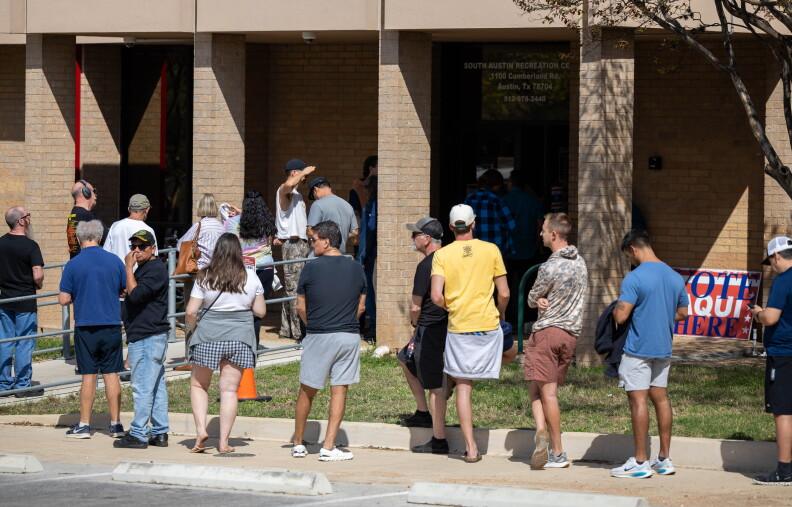








Austin’s Parks and Recreation Department has decided to outsource the management of certain adult sports leagues rather than canceling them outright. This decision comes after significant pushback from the community, particularly from players who frequent the Austin Recreation Center.
In the wake of the city’s recent $6.6 billion budget approval, the parks department initially announced plans to eliminate city-operated adult indoor basketball and volleyball leagues, aiming to save approximately $400,000 annually. This move was part of broader cuts that also affected various youth and teen outreach programs, along with certain recreational and senior initiatives, despite an overall increase of $5 million in the parks budget primarily allocated for salaries and administrative costs.
However, following community outcry, city officials have reversed their decision. The basketball and volleyball leagues will continue to operate under city management for the time being, with plans to outsource them at a later date. “The city needs additional time to find a suitable third-party vendor, so the leagues will continue until further notice,” stated a city representative.
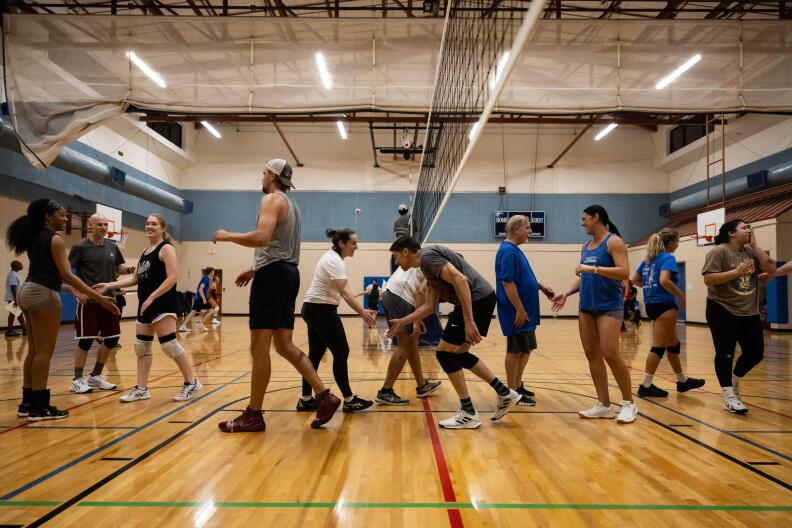
For players like Leslie Ivey, who has dedicated her Monday nights to indoor volleyball at the Austin Recreation Center for 25 years, the leagues represent much more than just a game. “We started playing at an outdoor sand Friday night fun league, and we were looking for something more competitive,” Ivey explained. As her family grew to three children, she noted the importance of maintaining this commitment. “It’s a date night for us. It’s a cheap date night too, because if you look at the cost per league per person, it’s 5, 6, 7 bucks a night to play. You can’t get a cheaper date than that.”
The social benefits of the league extend beyond mere recreation. Players form deep connections, sharing significant life events with one another. “The team that I currently play with, we’ve played together for almost three years now,” shared Alina Scott, emphasizing the bonds formed within the league.
Despite the city’s assurances, players express concern about the potential financial implications of outsourcing. Currently, an eight-week season of indoor volleyball costs $250 per team, which translates to about $42 per player. Concerns arise that private companies, like Austin Sports and Social Club or Sportskind, could significantly hike fees. “Those leagues and companies tend to charge a lot more money,” cautioned Pete Signore, captain of a volleyball team. “Austin has had an affordability issue for many years, and it feels like things are ramping up even worse.”
Comparatively, a team participating in a Sportskind league currently pays $725, while those in the Austin Sports and Social Club face fees of $529. KrystaLea Phillips lamented the potential shift, stating, “Austin has already changed so much. Keep Austin — just a little piece of it — weird.”
Many players reported feeling blindsided by the decision to outsource the leagues, noting they hadn’t been given an opportunity to provide input. Parks Director Jesús Aguirre clarified that the decision was not solely his, but rather a collaborative process involving the city manager and the council.
The timeline for outsourcing remains unclear, as registration for fall leagues won’t open until later in September. Players are left contemplating their options moving forward. Bri Longoria expressed uncertainty within her team about whether to continue playing or to boycott the leagues once a third-party company is selected, highlighting the ongoing dilemma. “We want to continue to play to stay healthy, to stay active, for our mental health and our physical health,” she said.
As the city navigates the complexities of this situation, the future of the leagues hangs in the balance, pending council approval and the search for a suitable management company.