








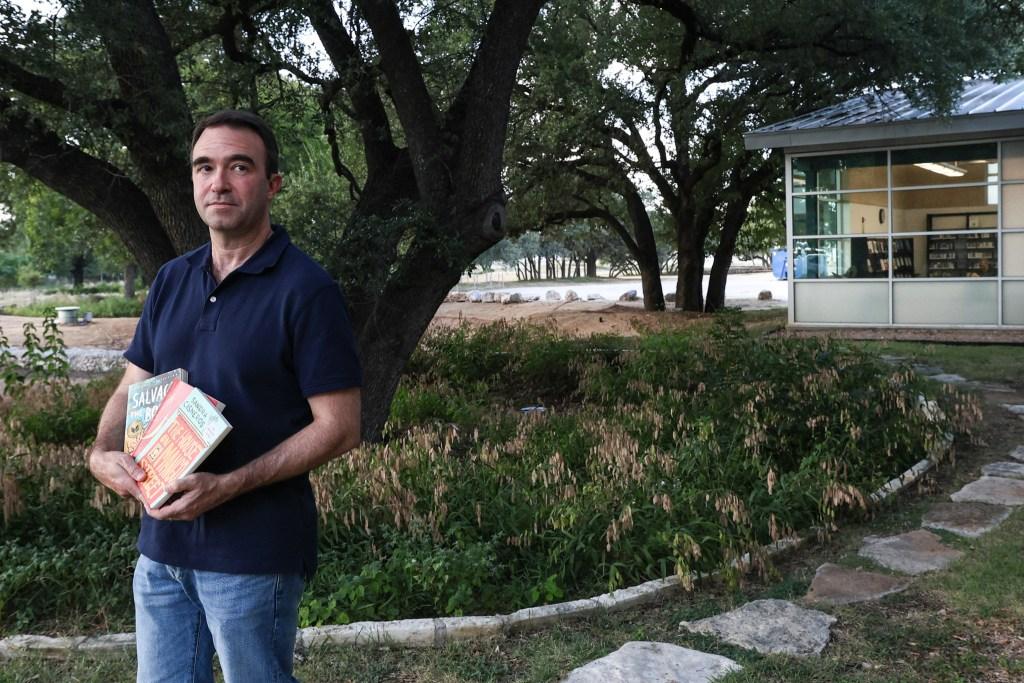
Seven years ago, Frank Strong added 20 copies of “I Am Not Your Perfect Mexican Daughter” to his classroom library. Over time, the coming-of-age story featuring a Mexican immigrant girl began to vanish from his shelves, leaving only two copies behind. This, he chuckles, is a testament to the book’s impact on his students, who become so attached that they cannot bear to return it.
“This is something that happens when you’re a teacher,” shared Strong, now in his twelfth year of teaching English at an Austin charter school. “Students borrow the book, form a bond with it, and ultimately keep it. Losing books like this is a price I’m willing to pay.”
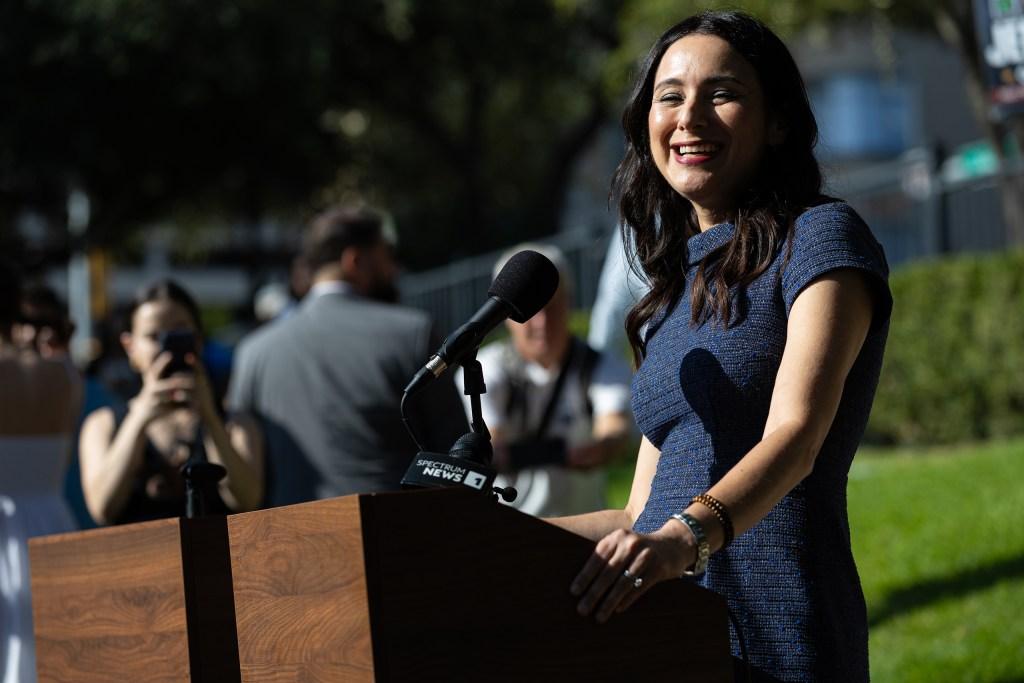
However, Strong now fears that he may soon have to remove even the remaining copies of this cherished book from his classroom. This concern arises as Lt. Gov. Dan Patrick has recently called for the removal of nearly 2,200 books from school libraries, labeling them as “vulgar.”
In August, Patrick pressured school administrators to eliminate these materials from educational institutions, referring to an extensive list created by Recover America, a Christian conservative activist group. He characterized the titles on the list as “filthy” and “pornographic.”
Librarians and educators argue that this push for censorship complicates their mission of instilling a love of reading in students. Many now hesitate to purchase new books or recommend certain titles, which is often the passion that drives them to become librarians in the first place.
“When you’re meticulously cataloging every single book, it really makes you think, ‘Am I willing to risk my job over this particular title?'” Strong commented. “This is a genuine concern for teachers across the state.”
Strong emphasized that “I Am Not Your Perfect Mexican Daughter” is a favorite among his students. It appears on the same list that Patrick has urged Texas schools to reconsider. Some books on Recover America’s list, such as “Hatchet” by Gary Paulsen and “I Know Why the Caged Bird Sings” by Maya Angelou, have long been staples in Texas classrooms, while others, like “Lolita” by Vladimir Nabokov and “Fifty Shades of Grey” by E. L. James, raise questions about their inclusion.
Patrick’s demand for stricter book access restrictions coincides with the efforts of conservative activists and lawmakers aiming to reshape education in Texas. This includes the recent overhaul of required reading lists by the State Board of Education, which now includes certain Bible stories. Last year, new laws mandated that public schools display the Ten Commandments in classrooms and establish procedures for challenging library materials.
Libraries are increasingly becoming targets for Republicans seeking greater control over book availability. Various book bans have emerged, predominantly focusing on LGBTQ+ literature and works addressing racial issues. Patrick’s latest directive represents an ongoing struggle regarding the content accessible to students.
Senate Bill 13 grants school boards the authority to approve or remove books based on complaints, resulting in librarians facing a more arduous process for cataloging and acquiring materials. To mitigate potential conflicts, some districts have temporarily ceased purchasing new books, as revealed by public information requests submitted by Carolyn Foote, co-founder of Texas FReadom Fighters, a grassroots organization advocating for librarians.
Foote’s outreach to numerous school districts highlighted the impact of the new regulations on book acquisitions. For instance, Lubbock ISD reported no new book orders from August 2025 to February 2026 due to the implications of SB 13.
The stakes are exceedingly high, according to librarians. Foote, who helped establish Texas FReadom Fighters amid rising book ban debates, emphasized the crucial need for solidarity among librarians during this challenging time.
“Librarians have become scapegoats for political agendas,” she remarked. “They’re being used to stir up votes and create controversy.”
Foote pointed to Lubbock ISD as an example of how districts are cautiously navigating the new laws. The day before Patrick’s announcement, a local chapter of Turning Point USA publicly criticized the district for having books like “Crank” by Ellen Hopkins and “Me and Earl and the Dying Girl” by Jesse Andrews. Following this, the school board convened to address appeals for the removal of literature deemed inappropriate for young adults.
During that meeting, Lubbock ISD Superintendent Kathy Rollo defended the books, specifically Andrews’ novel about rekindling childhood friendships amidst a cancer diagnosis. Rollo asserted that it had been classified as a “legacy book” by a local committee prior to the enactment of the new law. While it was removed from elementary and middle school libraries, it remained accessible in high schools.
“This policy aligns with current law, and parental rights and transparency are central to our approach,” Rollo stated.
Shirley Robinson, executive director of the Texas Library Association, noted that districts statewide are inundated with similar appeals, consuming valuable time for administrators.
Some advocacy groups have submitted hundreds of book challenges, significantly altering the landscape of librarianship in Texas, according to Robinson.
Patrick, who is facing reelection in November, is advocating for a new law that would impact a school’s annual academic accountability ratings based on student performance on the STAAR test. Failure to meet standards over consecutive years could lead to state intervention in a district.
“It’s the law, and we expect compliance,” he stated regarding SB 13. “We are after the books.”
Patrick contends that this initiative does not equate to a ban, as the books remain accessible elsewhere. He insists that taxpayer money should not fund access to such materials for students.
At a news conference announcing this policy shift, Patrick was joined by Bonnie Wallace, Recover America’s legislative liaison. While Patrick claimed he does not possess a specific list of books to be removed, he referred to Recover America’s compilation as a guideline for schools to follow.
In a podcast episode preceding his announcement, Patrick discussed the topic of school libraries with Wallace for nearly half an hour, describing the books as a threat to family values.
Wallace reinforced this sentiment, stating, “They hate God. They hate family. They hate the traditional family structure.”
The duo characterized the targeted literature as “horrific,” “ugly,” and “extremely sexually explicit.” Patrick expressed strong disapproval of allowing his own children and grandchildren to read such materials.
Contrarily, Strong and others argue that many books on the list do not contain explicit content but are instead included due to political motivations.
“These were labeled as obscene, yet many are clearly not included for their sexual themes,” he pointed out.
Similar to other conservative lists of objectionable literature, Recover America’s compilation includes titles addressing LGBTQ+ and racial issues. However, some librarians were taken aback to find popular books like “A Tree Grows in Brooklyn” by Betty Smith and “The Poet X” by Elizabeth Acevedo included.
Smith’s novel, regarded as a classic, follows a young girl’s struggles with her alcoholic father, while Acevedo’s work tackles themes of body objectification and self-expression through poetry in Harlem.
Both alcoholism and sexualization are challenging subjects, Foote acknowledged, but they resonate with many teenagers.
Identifying with characters in literature can validate students’ experiences, and books often guide readers through difficult situations. “Most young adult novels conclude with a resolution and a positive outcome,” Foote noted, emphasizing their potential to provide guidance during tough times.
She fears that the ongoing scrutiny of specific books, combined with increased pressure on librarians, may dissuade them from acquiring new titles or, in more severe cases, push them out of the profession.
“There’s a hesitance to introduce new titles that explore complex topics, as well as to retain existing ones,” she explained.
In addition to acquiring books, librarians are tasked with hosting classes and teaching reading comprehension, often requiring a master’s degree and two years of teaching experience in Texas. Finding the perfect book for students is a rewarding aspect of the role, but new regulations are detracting from these meaningful interactions.
“Instead of engaging with students about books, you end up spending countless hours ensuring compliance with various laws,” Foote lamented. “Then another law comes along, and it continues.”
Even though librarians specialize in connecting students with appropriate literature, retired Mesquite ISD librarian Mary Woodward remarked, “We understand that not every book will resonate with every individual.”
This dialogue should occur between librarians, students, and their parents, not politicians, she asserted. “Elected officials seem to imply that we are putting harmful materials into kids’ hands, suggesting that we intend to cause harm. That’s simply not true, and it instills fear in librarians trying to do their job.”
Strong has personally invested hundreds of dollars to build his classroom library, as his school lacks a dedicated library. Serving primarily immigrant students, he recognizes the importance of representation in literature for his students.
When a book captivates students, he observes their enthusiasm grow, leading to more dynamic discussions and improved writing outcomes. “For me, that’s one of the most rewarding aspects of teaching. But I believe many recent developments in Texas are making this increasingly challenging,” he concluded.