









Austin-Travis County EMS had ambitions to enhance the efficiency of its emergency response operations. However, the recent defeat of Proposition Q has placed those initiatives on indefinite hold.
In a recent incident, a six-member team comprised of Austin-Travis County EMS medics and Austin firefighters worked together to assist a 78-year-old man who had fallen outside his home. After three days of crawling inside, he realized he needed medical assistance and called 911.
The medics treated him in the ambulance, administering IVs and monitoring his vital signs. They also assessed his injuries after noticing that he could not bend one of his knees before transporting him to the hospital.
Despite the successful response, the EMS department indicated that this situation could have been managed by a smaller team and vehicle—something they are looking to implement moving forward. EMS Commander Selena Xie highlighted that calls requiring medical attention without the necessity for an ambulance are among the most frequent types received by ATCEMS.
Xie, who is currently campaigning for a seat on the Austin City Council against incumbent Paige Ellis, pointed out that critical emergencies such as heart attacks, strokes, and car accidents constitute only about 10% of EMS calls. Regardless of the nature of the call, an ambulance staffed with medics is dispatched, she noted.
ATCEMS Chief Robert Luckritz emphasized that this approach might not be the most efficient use of resources. He advocated for alternative programs, such as basic life support ambulances, mental health responders, and single-unit responders, which could provide care using fewer personnel and smaller vehicles. Luckritz believes that expanding these programs would help reserve ambulances for more serious emergencies.
Nonetheless, these expansions are unlikely to materialize in the near future following the rejection of Proposition Q, which aimed to increase property taxes by $110 million to bolster the city’s budget.
Luckritz acknowledged that implementing such programs would not happen overnight, as staffing challenges persist, and there is still a need to fill positions in newly expanded programs. He stated, “Prop Q would have been a long-term transition to those programs.”
Under the revised budget, ATCEMS has secured approximately $3 million to cover overtime costs, which will enable the department to respond to calls in a timely manner. Luckritz mentioned that they continue to train and recruit cadets while exploring other methods to meet the community’s needs within the current financial constraints.
“We’ve added several ambulances, community health paramedics, and mental health responders over the last few years,” he noted. “We need to rethink how we can grow effectively—not only to keep pace with the existing department but also to accommodate the larger, evolving department.”
Following the failure of Proposition Q, Austin City Manager T.C. Broadnax informed council members that they would need to reassess the city’s funding capabilities.
Some critics argue that the fundamental issue lies not in the city’s financial resources but rather in how the City Council prioritizes its spending. Attorney Adam Loewy has voiced concerns over the city’s allocation of funds for homeless services and rebranding efforts.
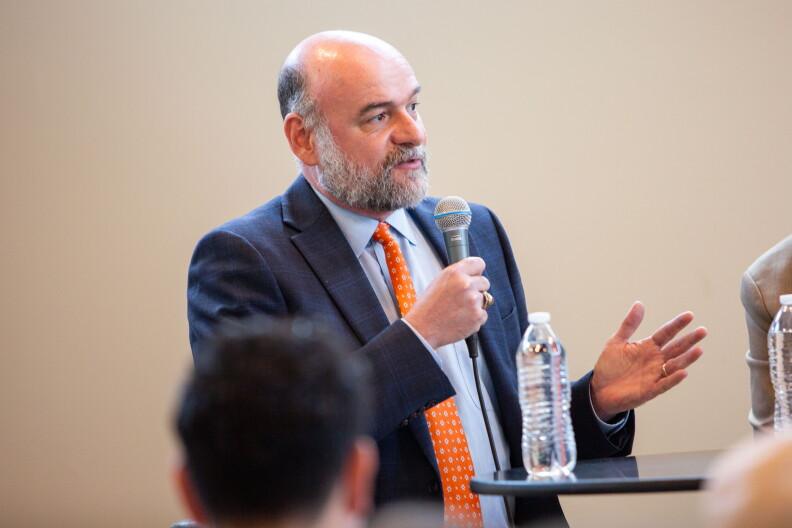
“Regardless of political affiliation, we can all agree that we need a strong EMS,” Loewy remarked during a panel hosted by the Texas Public Policy Foundation. “People are realizing that EMS funding exists within the current budget, yet it is being allocated to questionable initiatives instead of increasing their budget.”
In response, Broadnax stated that the city is conducting an internal audit of its expenditures to identify potential savings. He and his team are also exploring ways to generate new revenue, which could support EMS and other essential services.