







In the wake of the recent defeat of Proposition Q, Austin’s city leaders are contemplating another appeal to voters, this time for a bond package aimed at funding essential city projects, including improvements to roads and public safety. This comes just months after residents rejected a proposed property tax increase.
Austin City Council Member Krista Laine has expressed concern that it may be premature to seek additional funds from voters, given the recent outcome of Proposition Q. Laine emphasized the need for the city to demonstrate tangible savings and efficiencies that could help fund its priorities. “What we need to do as a city is not just talk about but deliver savings that come from increased efficiencies that allow us to fund our priorities,” she remarked. She believes that voters need to witness progress before being asked for more financial contributions.
Evaluating the Bond Proposal
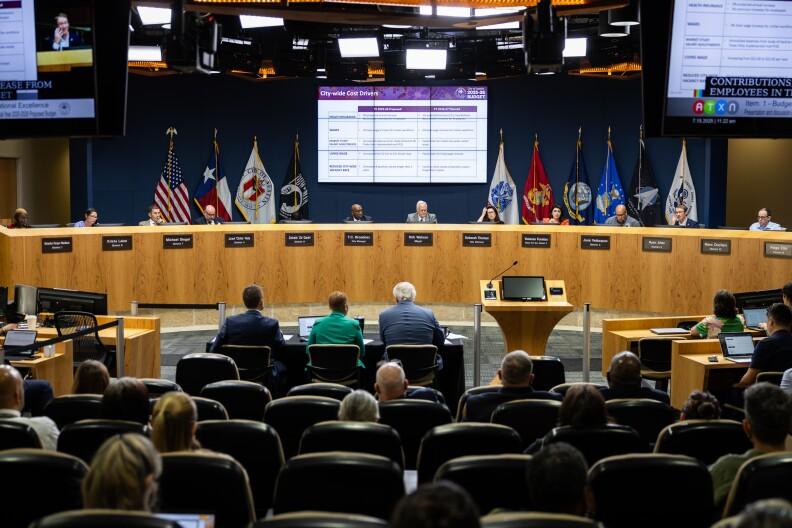
Over the coming months, the Austin City Council will deliberate on whether to present a bond package to voters and the amount to be requested. The initial proposal outlines nearly $4 billion worth of projects, including alleviating space constraints at the Austin Animal Center, expanding library services, and renovating public safety facilities.
Other potential projects under consideration include redesigning the Sixth Street entertainment district, enhancing parkland, and increasing emergency shelter space for the homeless. However, this extensive list will need to be streamlined, with city staff suggesting a bond package capped at $750 million to lessen the tax burden on residents.
According to Kim Olivares, the city’s financial services director, the average homeowner, whose property is valued at approximately $495,000, currently contributes about $450 annually towards the city’s debt. This amount is expected to rise as previously approved bond funds are allocated to projects. Should a new bond be issued, homeowners could see an increase of $14.34 per year for every $100 million the city decides to borrow, which translates to an estimated additional $108 annually for a $750 million bond, though this figure may vary with property valuations and other conditions.
Community Concerns
As discussions about the bond package unfold, residents and advocates have voiced apprehensions regarding the city’s spending practices. Steven Brown, a candidate for the District 1 City Council seat, has publicly stated his opposition to a bond at this time, criticizing the council’s fiscal responsibility and the erosion of public trust, particularly in light of the backlash over the Project Connect tax initiative. He advocates for a “healthy conversation” about the city’s financial direction before requesting additional funds from taxpayers.
“To me, it doesn’t show how serious the city is about [the impacts on] working families and [addressing] affordability,” Brown commented. “I’m not saying that these investments wouldn’t have benefits. But before any projects are done, we need to make sure families are stable.”
Strategies for Rebuilding Trust
In an attempt to restore public confidence, the City Council is developing a process to ensure that any funds requested are utilized efficiently. Mayor Kirk Watson is spearheading an initiative to implement a decision tree framework and conduct a city-wide efficiency audit every three years. Watson views the audit as a chance to assess city services and identify opportunities for improvement that can save taxpayer money. While the cost of the audit remains uncertain, some council members are seeking estimates before proceeding. The City Council may vote on the audit as soon as February.
“We ought to all believe in efficient government, we ought to all believe in best practices, and we ought to believe in saving taxpayer dollars everywhere we can,” Watson stated.
The decision tree framework aims to guide city officials in making informed choices with consideration for the financial impact on taxpayers. Watson hopes that the audit and the framework will demonstrate the council’s commitment to responsible spending and help to rebuild trust within the community.
Olivares also highlighted the importance of examining bond election outcomes across Texas from November 2025, noting that out of 14 cities that held bond elections, only 30% of the $852.7 million proposed was approved by voters.
Austin has traditionally shown support for bond packages, with the latest being an affordable housing initiative in 2022. The last major bond package approved was in 2018, when voters authorized $925 million for various projects, including affordable housing, park enhancements, and public safety improvements, although two other propositions failed that year.
The community will have the opportunity to provide feedback before final recommendations are prepared in August.