







Steep fees, bureaucratic hurdles, and prolonged approval processes are increasingly pushing small business owners out of Austin or deterring them from starting businesses altogether.
Several neighborhoods in Austin that were once celebrated for their vibrant local businesses have experienced significant changes in recent years. For example, South Congress Avenue, which was previously home to numerous independent shops, is now predominantly taken over by national brands with substantial financial resources. While the rising costs of construction and rent have played a key role in this transformation, a recent report presented to city officials highlights that cumbersome permitting processes are also a major factor at play.
Ava Mouton-Johnston, the city policy coordinator for the Institute for Justice, the public interest law firm behind the report, stated, “Austin’s process is so complex that the only entrepreneurs who could make it through easily are those who can hire permit navigators or who can withstand the opportunity cost of delays. These small local entrepreneurs were getting started and succeeding despite the city, not because the city was actually supporting them in their policies and rules.”
The report indicates that the permitting process for opening a restaurant in Austin can incur costs nearing $9,000 and may involve up to 105 steps, leading to delays that disproportionately impact those with fewer resources.
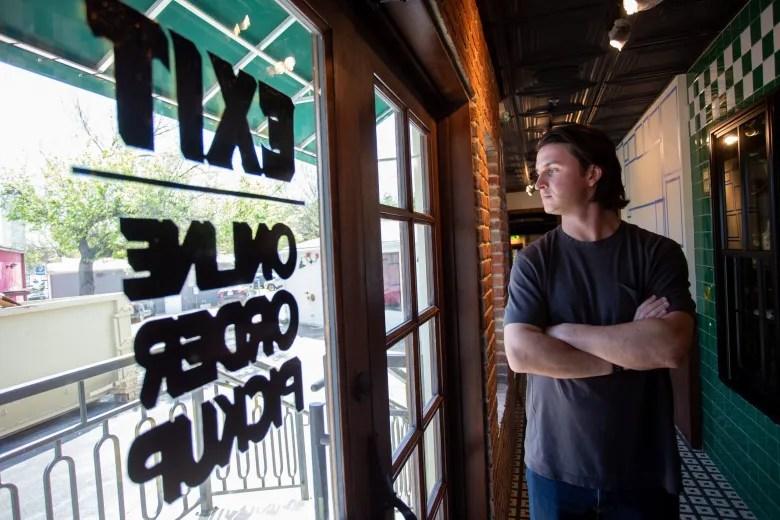
Justin Shugrue, the owner of Shug’s Bagels, expressed frustration over the extended timeline for opening his new location near North Lamar Boulevard and West 12th Street. “We’re on day 410 or 420 of a 140-day proposed contract with the general contractor,” he explained. “The biggest thing is the lost revenue … I know we would have been busy.”
Shugrue, who launched Shug’s Bagels in Dallas during the pandemic and has since opened additional locations, has found the process in Austin to be the most difficult yet. He anticipates that the launch of his Austin location will take about six months longer than his previous ventures, resulting in significant financial losses. He also moved staff from Dallas with the expectation of opening in fall 2025, but now faces uncertainty about when he will finally be able to sell bagels in Austin.
Many of the delays, he noted, are linked to setbacks from utility providers like Austin Energy and Texas Gas Service. “Should I have been hounding my general contractor more? Should I have been hounding my electrician more about staying on top of it? Sure, hindsight is 20/20,” Shugrue reflected. “This has definitely been a unique experience here in Austin. … You need to really stay on top of it.”
Mouton-Johnston pointed out that the requirements for opening a restaurant in Austin are the most intricate among the 25 cities her organization has examined, which include San Antonio, Boston, Seattle, and San Francisco. “Austin has the best of intentions with trying to make sure everything is safe, supporting the environment, building good spaces for individuals,” she stated, “but they have overlooked the fact that this takes so much time and money, especially for those entrepreneurs who are under-resourced.”
The report recommends that Austin consider waiving or reducing fees for new businesses during their initial years of operation, streamlining food permits for vendors to require only one annual permit instead of separate ones for individual events, and expanding zoning regulations to permit businesses to operate from “accessory commercial units.”
In recent years, Austin has enacted policies aimed at facilitating homeowners’ ability to construct secondary residences, known as “accessory dwelling units,” on their properties to enhance density and affordability. Mouton-Johnston believes that similar principles could be applied to support small businesses. “It would allow for front yard businesses, which would be an accessory commercial unit, [that] serves the neighborhood,” she mentioned.
This potential change could soon be realized, as the Austin City Council is set to vote on a resolution that would permit businesses to operate in residential areas. If the measure passes, the city manager will be tasked with developing an implementation plan within 90 days.
“I do think the city is headed in the right direction,” Mouton-Johnston concluded. “Being able to have those small neighborhood community storefronts or front yard businesses will be a way to attract more people into Austin and to make those neighborhoods have that character.”
Shug’s Bagels remains unopened at the intersection of Lamar Boulevard and Parkway in Austin as of March 23, 2026.