






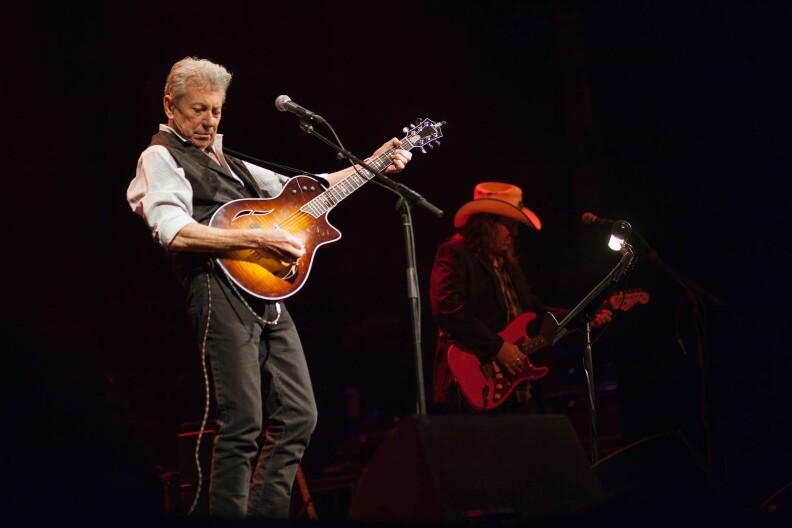
On a recent evening spent among friends at a neighborhood park, I found myself grappling with a heavy thought that I couldn’t shake off. When asked how I was feeling, I unexpectedly shared the news that echoed in my mind: “Joe Ely has died.”
At 78 years old, Ely was not just an iconic figure in Texas music; he was the vital link that connected the past and present from the likes of Willie Nelson to the Big Boys. With his innate curiosity and instinctive creativity, Ely consistently forged new paths in his musical journey.
His beginnings were humble. A few years younger than fellow Lubbock songwriters Jimmie Dale Gilmore and Butch Hancock, Ely absorbed the essence of their barren landscapes while closely observing their artistic processes. The Flatlanders, a group that included Gilmore on vocals, recorded an unsuccessful album in 1972 that didn’t feature a single Ely-written song and found its way mostly to eight-track tapes at truck stops. It wasn’t until a decade later that a British vinyl reissue helped bring The Flatlanders into the spotlight, by which time the members had ventured onto different paths.
In Austin, songwriter Jerry Jeff Walker played a crucial role in helping Ely secure a deal with MCA Records. Ely’s 1977 debut album showcased not only covers of Hancock and Gilmore’s work but also his own captivating stories, including the standout track “I Had My Hopes Up High,” a nod to The Flatlanders’ legacy. His impressive four-album sequence—comprising Joe Ely, Honky Tonk Masquerade, Down on the Drag, and Musta Notta Gotta Lotta—solidified his status as a significant artist in the genre.
Ely’s extensive recording career was marked by a spirit of experimentation, especially after he began releasing music independently. His 1984 synthesizer album caught MCA off guard and puzzled many fans. Yet, Ely remained undeterred, following his artistic instincts and embracing the occasional misstep along the way.
When I interviewed The Flatlanders for Texas Monthly during their reunion album recording in 2002, it was evident that the dynamics had shifted. Joe Ely had taken the reins, demonstrating his leadership in the group.
Despite the many remarkable moments captured in his recordings, it was Ely’s talent for performance that truly set him apart. Charismatic and engaging, his dynamic bands—initially featuring Jesse Taylor, Lloyd Maines, and Ponty Bone, and later with David Grissom, Jimmy Pettit, and Davis McLarty—created an electric atmosphere wherever they played.
Countless memorable nights at Liberty Lunch, a venue teetering on the brink of collapse yet alive with energy, showcased Ely’s ability to push his band into exhilarating territories of sound. Songs like “Boxcars,” “Fingernails,” and “Cool Rockin’ Loretta” were performed with a palpable sense of rightness, reminiscent of witnessing musical legends like Elvis, Buddy Holly, or Little Richard in their prime. Ely’s collaborations with icons such as The Clash and Bruce Springsteen, who would invite him on stage, served as a testament to his undeniable talent and the lasting impact he made in Austin and beyond.