






In a noteworthy display of political dynamics, several Senate Republicans this week aligned with Democrats to oppose a contentious nominee from former President Trump, as well as to reject the president’s proposed “anti-weaponization fund” and plans for an East Wing ballroom. This marks the latest instance of GOP moderates, retiring members, and incumbents facing electoral challenges diverging from party lines.
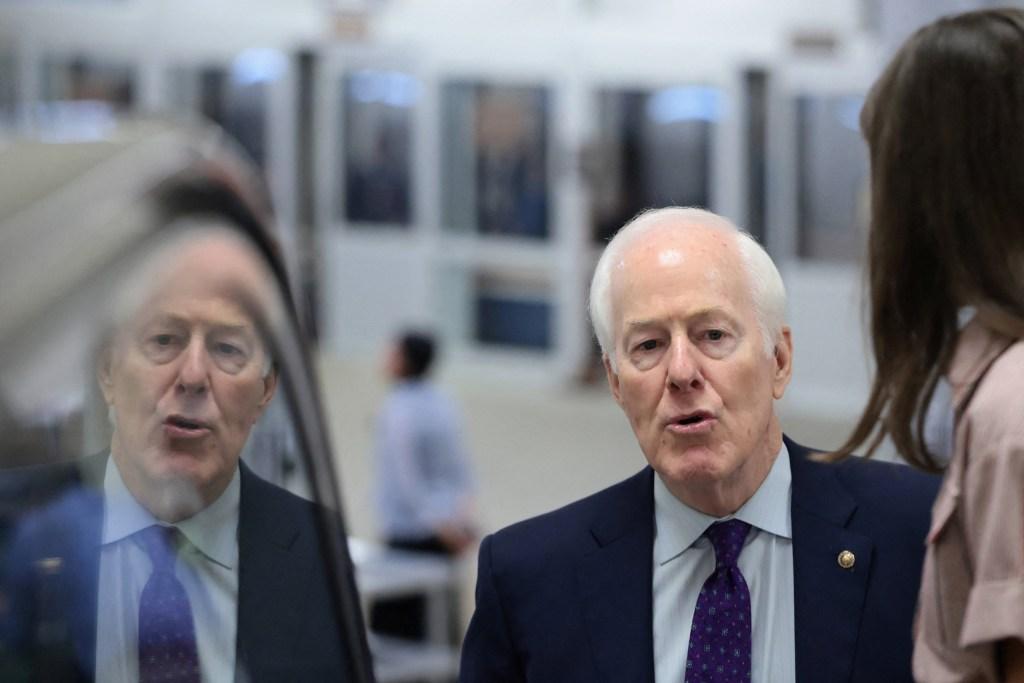
Notably, Senator John Cornyn of Texas did not join this group of dissenters. Following his defeat in the primary to Attorney General Ken Paxton, speculation arose about Cornyn potentially aligning himself with the so-called YOLO Caucus, a group of Republicans unrestrained by electoral concerns who have occasionally broken ranks with Trump.
Despite the shifting allegiances among his colleagues, Cornyn voted with the majority of his party to successfully defeat an amendment proposed by Senator Chuck Schumer aimed at halting a GOP immigration funding bill tied to the Department of Justice’s settlement fund. He also supported the party line against prohibiting construction on Trump’s White House ballroom project without congressional approval, even as seven Republicans sided with the Democrats. Furthermore, he opposed an amendment that sought to block Bill Pulte, Trump’s selection for interim director of national intelligence, from taking the position.
Alongside GOP leadership and most Republican senators, Cornyn backed a budget bill designed to fund immigration enforcement agencies through 2029. This legislation served as a vehicle for a series of contentious votes on additional issues.
Eight Republicans crossed party lines to support at least one Democratic amendment during this process, including Senator Bill Cassidy of Louisiana, who, like Cornyn, recently faced a primary loss to a Trump-endorsed challenger. Other dissenters included senators facing challenging reelection campaigns such as Jon Husted of Ohio and Dan Sullivan of Alaska, as well as moderates like Susan Collins of Maine and Lisa Murkowski of Alaska. Cornyn, however, remained steadfast in his support for party unity.
Senate Majority Leader John Thune remarked on the importance of cohesion among Republican senators, emphasizing that they either succeed or fail as a collective. He acknowledged the challenges posed by Trump’s endorsements against certain incumbents but reiterated the commitment of Republican senators to ensure the party’s success in the Senate.
Since his primary loss, Cornyn has expressed skepticism about Pulte’s qualifications for the intelligence role, stating he sees “no evidence of any qualifications for that job,” while remaining open to discussion. He has also voiced concerns regarding the DOJ’s taxpayer-funded settlement fund, which has been criticized by some as a potential slush fund for Trump’s allies, including individuals involved in the January 6 Capitol riots.
Over the weekend, Cornyn sparked interest with a social media post referencing the fable of the scorpion and the frog, suggesting it serves as a metaphor for the political climate in Washington rather than targeting any individual specifically.
Despite the controversies and potential for dissent, Cornyn did not break from party lines on critical votes this week. Prior to the Senate votes, he reiterated his intent to maintain a constructive and productive approach to legislation, emphasizing a case-by-case decision-making process.
Several senators have been more willing to challenge President Trump and his administration in public forums, with the YOLO Caucus including figures like Cassidy and retiring senators Mitch McConnell and Thom Tillis. With Republicans holding a 53-47 majority in the Senate, only four GOP senators need to join all Democrats to effectively block Republican legislation or pass Democratic proposals requiring a simple majority.
For instance, Senate Democrats were able to pass a resolution last month compelling Trump to end the Iran war after Cassidy, shortly after his primary loss, shifted his vote to support the resolution, joining nearly all Democrats along with Collins, Murkowski, and Senator Rand Paul of Kentucky.
Cornyn’s return to the Senate post-runoff coincides with heightened tension between the White House and Senate Republicans, who have expressed frustration over Trump’s actions against incumbents and his efforts to reimburse alleged victims of political maneuvers. His recent primary defeat has drawn increased media scrutiny, as is often the case for outgoing senators.
Unlike some of his colleagues, Cornyn has never been characterized as a moderate. He has not publicly opposed Trump in the manner that Cassidy did during Trump’s impeachment trial following the January 6 events. Cornyn has held various leadership positions within the Senate GOP, which has required him to maintain party discipline among dissenting members.
Those who have attempted to associate him with the YOLO Caucus have been met with his pointed dismissal, as he advised such individuals to “get a life.”
Republican senators have displayed open hostility toward the $1.8 billion anti-weaponization fund aimed at compensating alleged victims of the Justice Department under the Biden administration. Following a court order, the White House announced its compliance in temporarily halting the fund, while acting Attorney General Todd Blanche testified that the department would not proceed with it. Nevertheless, both Democrats and some Republicans remain keen to prevent its reestablishment.
Schumer’s amendment aimed to permanently ban the DOJ from establishing such a fund. While Collins, Husted, and Sullivan supported the amendment, Cassidy joined the majority of Republicans to defeat it. Cornyn also opposed a Democratic amendment that sought to prevent any anti-weaponization payouts from going to individuals involved in the January 6 riots, which saw eight Republican senators break ranks.
Another amendment intended to redirect funds to provide settlements to law enforcement officers present at the Capitol that day attracted support from seven Republicans, while a Republican-led effort by Tillis to allocate the funds to the DOJ’s anti-fraud division received only 15 votes of support, with Cornyn among the 12 Republicans who voted in favor.
In a brief interview before the vote, Cornyn expressed a preference for individual tort claims from those who believe they have been wronged by the government, rather than a collective fund like the anti-weaponization initiative. He suggested that both parties have grievances regarding this issue, noting, “I just think this wasn’t very well thought out.”
Additionally, Cornyn voted with the GOP majority to incorporate the SAVE America Act, a controversial voting restrictions bill that became a point of contention during the primary, into the immigration bill, which was ultimately rejected by all Democrats and some Republicans.
The recent amendment votes serve as an enlightening reflection of Cornyn’s intentions for the remaining months of his Senate career, casting doubt on speculation that he might join the ranks of those distancing themselves from Trump. Senator Ted Cruz had previously suggested that Cornyn might be inclined to break from the party if he lost the primary, indicating that Cornyn might be “pissed.”
Cruz similarly voted against all Democratic amendments to the immigration bill, reinforcing party loyalty.
However, Cornyn seemed to retreat from his earlier proposal to rename U.S. Route 287 as Interstate 47 in honor of Trump, stating that the bill may not be a priority for him in the upcoming months.