








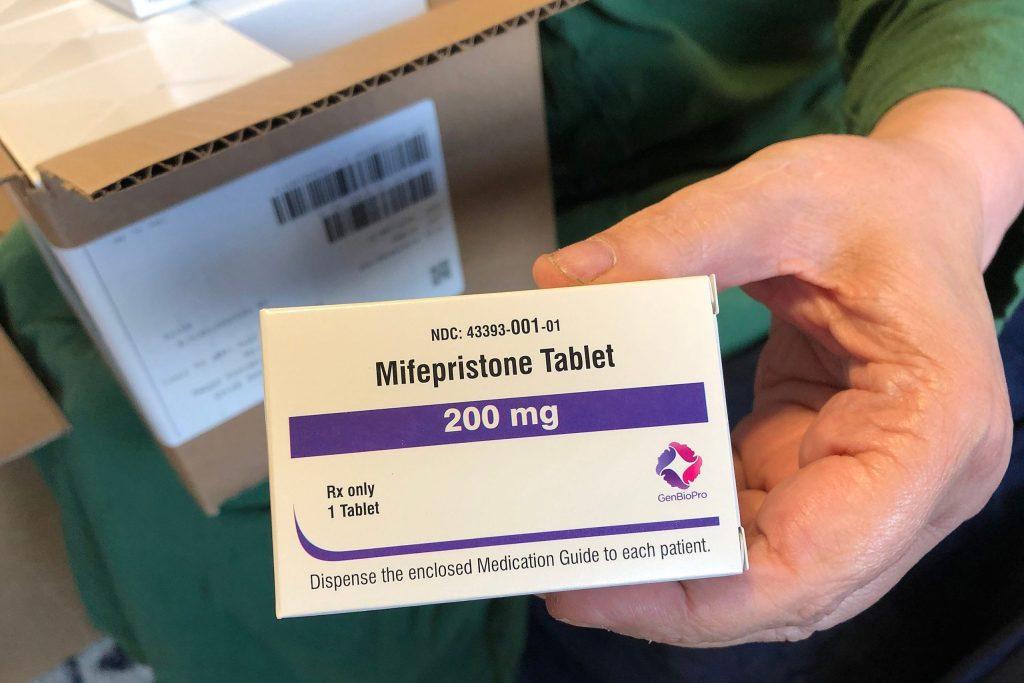
The 5th U.S. Circuit Court of Appeals issued a ruling on Friday that effectively blocks a 2023 regulation from the Federal Drug Administration permitting the mailing of mifepristone to patients. This regulation had been utilized as a workaround to Texas’ stringent abortion laws.
This 2023 regulation enabled healthcare providers to prescribe mifepristone remotely, allowing patients—including those in Texas—to receive the medication via mail from states where abortion remains legal. However, with the 5th Circuit’s recent decision, mifepristone can now only be obtained in person from medical professionals or pharmacies.
The court’s ruling is expected to significantly reduce the number of telehealth prescriptions for abortion pills distributed monthly to states that prohibit abortion. It will also limit the drug’s availability for other medical uses. Mifepristone, when combined with misoprostol, is the most widely utilized method for managing abortions and treating miscarriages in the U.S. According to the Society of Family Planning, one in four abortions in 2024 were conducted via telemedicine.
National abortion advocates condemned the ruling, viewing it as a broader assault on remote abortion access across the country, particularly in states like Texas, where mifepristone would be inaccessible without telehealth services. “Anti-abortion politicians are aware that their policies lack public support, prompting them to exploit every governmental avenue,” stated Mini Timmaraju, CEO of the reproductive rights organization Reproductive Freedom for All. “The case built in Louisiana relies on discredited science. The safety of mifepristone has never been under question.”
Mifepristone was approved by the FDA in 2000, with a generic version following in 2019, and a second version introduced last October. Research has consistently demonstrated the drug’s safety and efficacy. Texas, along with Florida, has filed lawsuits against the FDA regarding the initial approval of mifepristone, contending that proper safety evaluations were not conducted.
Many anti-abortion organizations, including the nonprofit Live Action, hailed the ruling as a significant advancement toward permanently prohibiting the mailing of mifepristone and similar medications. “These drugs are intended to terminate the life of an unborn child, and they have been responsible for the loss of millions of unborn lives, often administered without a doctor’s presence,” asserted Live Action Founder Lila Rose in a statement.
Under House Bill 7, enacted last year, healthcare providers who prescribe or distribute abortion-inducing medications like mifepristone face potential lawsuits for up to $100,000. However, 22 states that frequently prescribe the medication have enacted “shield laws,” which protect healthcare providers from civil and criminal liability when assisting patients from states with restrictive abortion laws. Individuals seeking abortions or using abortion pills are exempt from legal repercussions under these laws.
The implications of Friday’s ruling on ongoing lawsuits aimed at fining out-of-state healthcare providers who have prescribed mifepristone remain uncertain. This includes three cases initiated by Attorney General Ken Paxton against medical professionals in California and Delaware. The lawsuit against the California provider invokes the new provisions established under HB 7, while the Delaware case does not.