









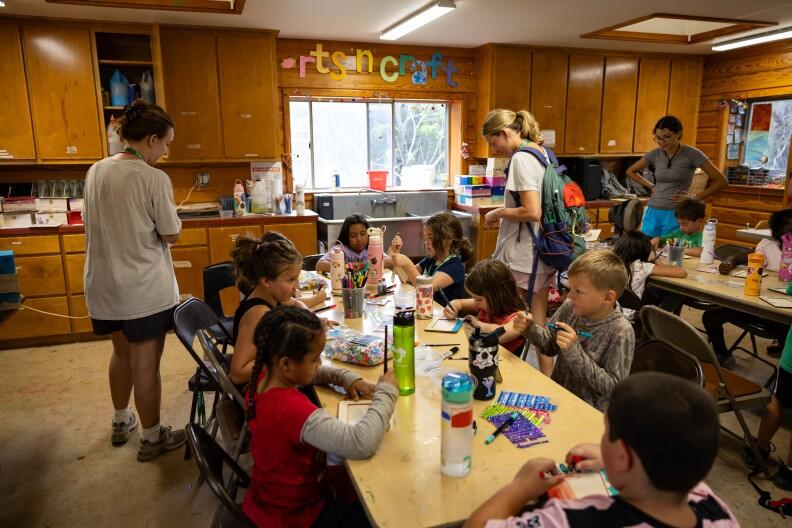
At Hospice Austin’s annual summer camp, children find solace and camaraderie after the loss of loved ones. Camp Brave Heart, located at John Knox Ranch in Fischer, Texas, offers a unique experience for kids and teens navigating their grief.
On a sunny Friday in mid-June, a group of middle school students eagerly awaited their turn to tackle a high ropes course, a signature activity of the camp. Among them was 13-year-old Alisa, who bravely volunteered to go first. Strapped into a safety harness, she slowly made her way along the ropes suspended 30 feet above the ground.
“You are rocking this!” encouraged a counselor from below as Alisa approached the finish line. “Take a moment to look at the view!” Alisa, visibly thrilled yet surprised by the height, laughed out loud, exclaiming, “Oh, Jesus Christ!” With guidance from her counselor, she leaned back and was safely lowered to the ground, greeted by cheers from her peers.
Esmerelda Huerta, the camp director, emphasized that the high ropes course offers more than just excitement; it provides a platform for children to cultivate trust in themselves, which aligns perfectly with the ethos of Camp Brave Heart. “They have to learn how to trust themselves,” Huerta stated. “Life presents challenges, and it’s essential to believe in your own abilities to overcome them.”
Huerta’s role as program manager at Hospice Austin enables her to help run Camp Brave Heart, which has been providing free summer camp experiences for nearly three decades. She views the camp as an integral part of the organization’s mission. “Our support extends beyond the hospice care we provide after a loved one passes. We continue to offer assistance to both adults and children.”
The campers, ranging from second graders to tenth graders, often arrive with mixed emotions—anxiety about discussing their grief and hesitation about engaging with others. Parents frequently contact the camp, expressing a desire for their children to open up about their feelings. However, Huerta notes that children often seek a space to simply be kids, without the pressure to articulate their grief immediately.
“They want to navigate this on their own terms,” Huerta explained. “Their lives are already filled with challenges.” She pointed out that the camp’s activities—such as the ropes course, archery, arts and crafts, and swimming—can provide therapeutic benefits, allowing kids to enjoy themselves in a supportive environment. “It’s not all gloom and doom and sadness,” she added.
While the opportunity to discuss feelings is always available, the staff and volunteers are trained to help children cope with their emotions in healthy ways. Angela Baucom, a social worker who has been a counselor at Camp Brave Heart for five years, shared her personal connection to the camp. “I lost my mother when I was young, and it felt like I was drowning,” Baucom recounted. “Being here allows me to support kids going through similar experiences, acting as the person I needed when I was their age.”
Children quickly bond over shared experiences. For instance, Dashona, 13, overcame her initial nerves about meeting new peers during a pool party on the first night of camp, where laughter and synchronized swimming routines helped her connect with others. “We’ve made such great bonds,” she said, referring affectionately to her new friends by their nicknames.
Throughout the camp, children are grouped with others who have faced similar losses, whether through illness, suicide, or accidents. Each camper brings unique stories about their loved ones. Dashona, for example, came to Camp Brave Heart after her grandmother passed away. “She was one of my favorite people,” Dashona shared, recalling her grandmother’s warmth and understanding.
As part of the camp experience, children create personalized memory boxes to honor their lost loved ones. Each box reflects the individuality of its owner, adorned with symbols and messages. On the final night, campers share their boxes during a memorial service, discussing what they plan to keep inside as a cherished reminder of their loved ones. Huerta highlighted the significance of these rituals, which provide lasting comfort as campers return to their everyday lives.
Dashona expressed gratitude for her memory box and the valuable insights she gained at camp. “I learned that it’s okay to be sad, and that you’re not alone in this process,” she said. Additionally, she plans to maintain her newfound friendships through group chats and birthday invitations, taking home not just memories but a supportive network.