






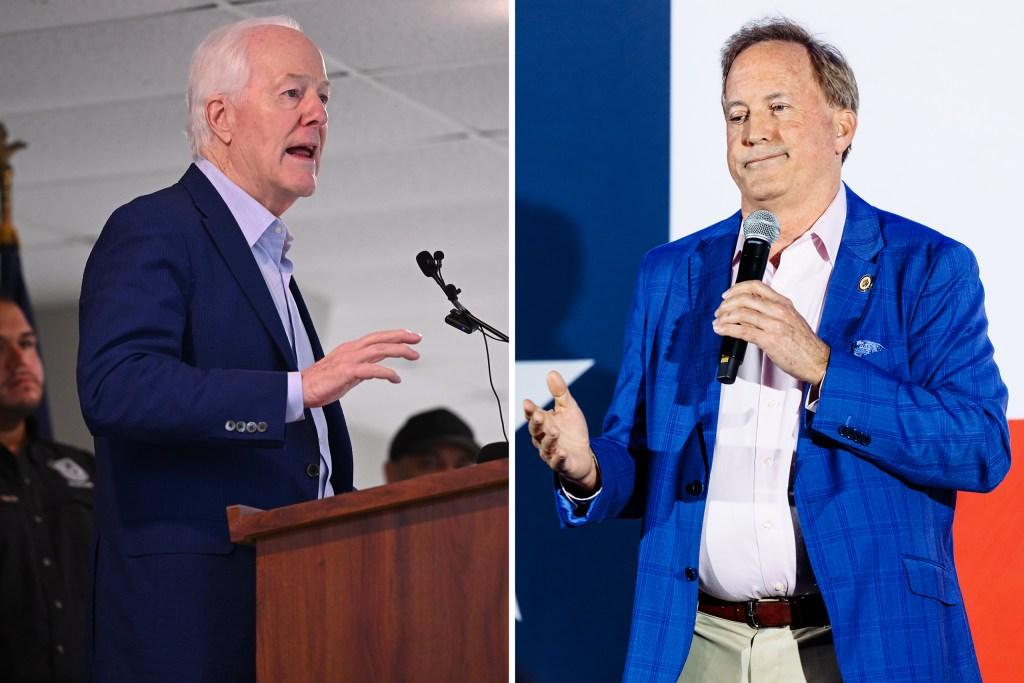
After 13 months of intense campaigning, which included an investment of $135 million, numerous endorsements, countless AI-generated advertisements, and a barrage of personal attacks, the highly contentious primary race between John Cornyn and Ken Paxton is set to culminate on Tuesday.
While the contest officially began in April 2023, its roots trace back to earlier events. Cornyn questioned former President Donald Trump’s electability, while Paxton faced impeachment proceedings from fellow Republicans. This rivalry has echoed through the past few election cycles, challenging the Texas Republican Party’s traditional power structure.
The outcome of this runoff will significantly influence the party’s direction and establish the GOP candidate who will face Democratic nominee James Talarico in the upcoming general election.
Tuesday’s runoff represents a critical test for Texas Republican voters, weighing the choice between an established figure and self-identified Reagan Republican, Cornyn, and a fervent “MAGA warrior,” Paxton, whose controversial past has garnered him both fervent supporters and vocal critics within the party.
Earlier this week, Trump endorsed Paxton, highlighting the attorney general’s loyalty during challenging times, while criticizing Cornyn’s reliability. This endorsement came despite opposition from Senate Majority Leader John Thune and the broader Republican establishment, which had invested heavily in support of Cornyn.
In the March 3 primary, Cornyn emerged with 42% of the vote, narrowly defeating Paxton, who garnered 40.5%. However, with U.S. Rep. Wesley Hunt receiving 13.5%, no candidate secured enough votes to claim the nomination outright, leading to a runoff between Cornyn and Paxton.
Runoff elections typically attract a more ideologically driven electorate, favoring Paxton. Cornyn, however, is banking on leveraging his financial resources to re-engage his supporters and bombard Paxton with negative advertising.
Despite the challenges posed by the runoff demographic, operatives indicate that Cornyn still has a viable path to victory. However, the dynamics of the runoff electorate, particularly after Trump’s endorsement, have created a significant advantage for Paxton.
Throughout the campaign, both candidates have consistently communicated their messages to voters. Cornyn has emphasized his electability, claiming he is the best candidate to maintain the GOP’s statewide success in what is expected to be a challenging election cycle. He argues that rejecting his candidacy could jeopardize the Senate majority needed to advance Trump’s agenda.
Conversely, Paxton has positioned himself as a champion against the Republican establishment, criticizing Cornyn for his adherence to traditional legislative practices, while asserting his own commitment to shake up the status quo.
In light of Trump’s endorsement, Paxton has shifted focus toward the general election, launching positive advertisements that highlight his backing from the former president. This pivot follows a rally where Paxton showcased his confidence, humorously testing nicknames for Talarico and discussing his political journey.
Meanwhile, Cornyn has concentrated on broadening the electorate, urging registered voters who skipped the primaries to participate in the runoff. He views this election as unprecedented in significance and has mobilized efforts to attract a more diverse voter base.
The origins of this runoff can be traced back to Paxton’s rising profile and Cornyn’s early skepticism regarding Trump’s electability. Following Paxton’s successful defense against impeachment, he gained political momentum and confidence from grassroots activists, setting the stage for his candidacy.
As the election draws near, both candidates have faced scrutiny through a barrage of negative ads, with Paxton leveraging anti-establishment sentiments while Cornyn emphasizes his long-standing political alliances and reliability.
Early voting trends suggest that turnout will be the critical factor in determining the runoff’s outcome. The impact of Trump’s endorsement may resonate particularly with Hunt’s supporters, who could sway the election in favor of Paxton.
As the final votes are cast, both candidates remain focused on their strategies, aware that the stakes are higher than ever in this pivotal race for the future of the Texas Republican Party.