






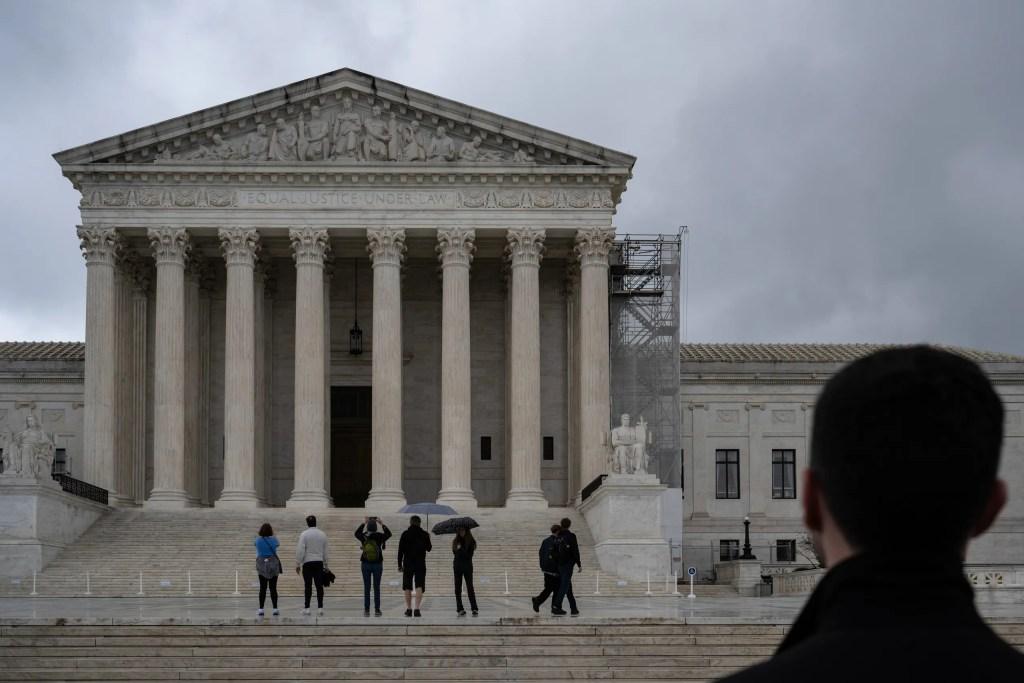
The recently redrawn congressional map of Texas has received official approval for use, following a ruling from the U.S. Supreme Court that overturned a previous lower court decision on Monday.
In November, the Supreme Court temporarily permitted the implementation of the map. The latest ruling upholds that temporary status, confirming that the new district lines will be utilized in the 2026 midterm elections. This decision brings an end, at least for the moment, to a protracted legal dispute surrounding Texas’ initiative to create as many as five additional Republican seats in the U.S. House.
This mid-decade redistricting effort was initiated over the summer, spurred by then-President Donald Trump’s call for the state to bolster the GOP’s slim majority ahead of what is anticipated to be a challenging midterm election for the party. This initiative faced considerable opposition, particularly from state House Democrats, who temporarily left Texas to prevent the chamber from achieving the necessary quorum to pass the map.
Once the Democrats returned, the map was passed, leading to immediate legal challenges. Several civil rights organizations, already engaged in litigation regarding Texas’ 2021 maps, filed new lawsuits, alleging that the 2025 map was racially discriminatory.
In November, Judge Jeff Brown concurred with these concerns, asserting in a detailed 160-page opinion, which was supported by Judge David Guaderrama, that there was “substantial evidence” indicating that the new map was racially gerrymandered. Brown, a Trump appointee, faced criticism from Judge Jerry Smith, the sole dissenting voice on the panel, who described the opinion as the “most blatant exercise of judicial activism that I have ever witnessed.”
Lawyers representing the state subsequently petitioned the Supreme Court to block Brown’s ruling and allow the map’s use in the upcoming 2026 primaries. In early December, the court sided with Texas, indicating that the state was likely to prevail on the merits of the case.
Justices Elena Kagan, Sonia Sotomayor, and Ketanji Brown Jackson dissented, expressing that the temporary ruling “disrespects the work of a District Court that did everything one could ask to carry out its charge — that put aside every consideration except getting the issue before it right.”
Monday’s decision followed a similar ideological split. Kagan, Sotomayor, and Jackson reiterated their dissent, but no further commentary from the justices was included in the ruling’s summary.
As the 2026 election season is set to commence with the new map in place, the extent to which it will yield the desired results for Republicans remains uncertain. Some of the newly established GOP stronghold districts were drawn in response to a significant shift of Latino voters toward the right in 2024; however, polling indicates that this fragile coalition may be weakening due to concerns over immigration policy and the economy. Additionally, both California and Virginia have enacted maps aimed at increasing Democratic representation, which could counteract any gains made by Texas.
State Representative Gene Wu, a Democrat from Houston and chair of the Texas House Democratic Caucus, criticized the justices for supporting what he described as “Greg Abbott’s racist map.” He noted, however, that his caucus has mitigated the impact of the ruling by inspiring action in blue states.
“While this defeat is painful, Greg Abbott should not mistake this ruling for a victory,” Wu stated. “When we broke quorum last year, Texas House Democrats exposed his power grab. Now, California and Virginia have responded, leveling the playing field, and Democrats nationwide continue to resist.”
Some Republican lawmakers expressed their satisfaction with the ruling, including state Senator Mayes Middleton from Galveston, who is campaigning for attorney general.
“The Big Beautiful Map stands!” Middleton proclaimed on social media. “I’m proud to have fought for this law, and now let’s work to elect those five additional Republican Congressional seats we designed!”