





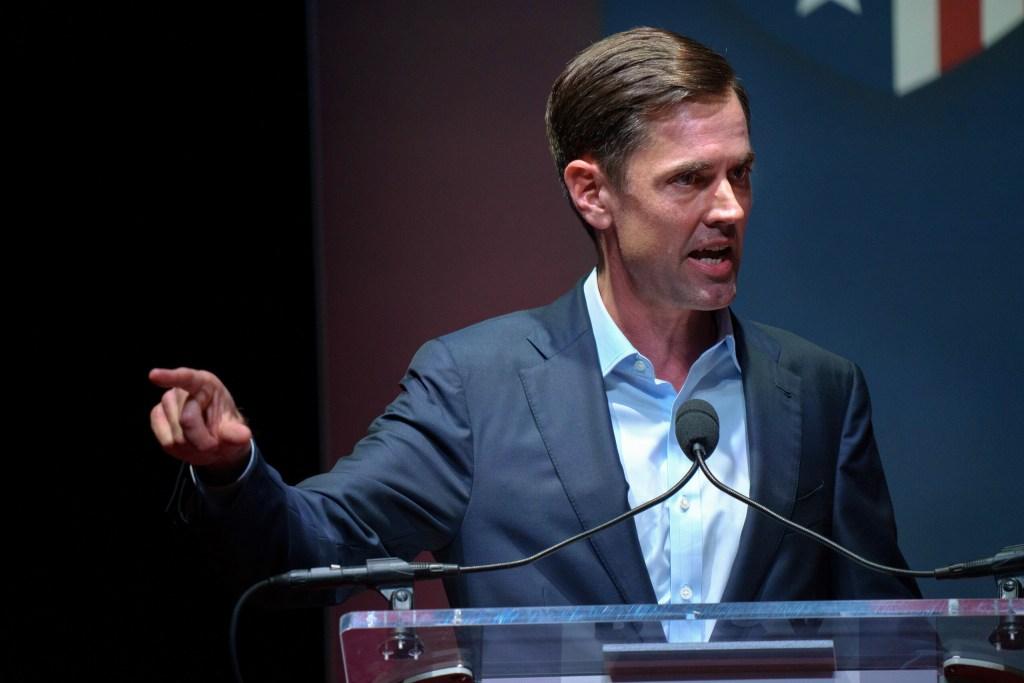
Over the past 15 years, Mayes Middleton has emerged as a significant financial force within the GOP, channeling millions from his oil and gas wealth into conservative candidates and initiatives. His financial contributions have played a crucial role in the growth of the House Freedom Caucus and have subtly supported challenges to Attorney General Ken Paxton.
Most notably, Middleton’s investments have propelled his own political ascent, transforming him from a little-known heir to a state legislator and now a frontrunner to succeed Paxton. After securing the top spot in the March primary, Middleton, a senator from Galveston, is set to compete against U.S. Rep. Chip Roy in a runoff scheduled for May 26.
To date, Middleton has committed over $16 million of his personal wealth to his campaign, a figure that significantly surpasses any of his past political expenditures. Roy and his supporters charge that Middleton is attempting to “buy” the election through an overwhelming volume of television advertisements and endorsements from candidates and organizations he has previously backed, despite having a limited legal background and credentials for the position.
“The amount of money my opponent is throwing around, along with the endorsements he’s receiving, raises questions about conflicts of interest,” Roy remarked during a recent campaign event in Dripping Springs. “It just doesn’t feel right to me.”
Middleton did not provide a response to a request for comment. His supporters, many of whom have benefited from his financial backing, assert that their allegiance stems from shared political ideologies and a belief that he is the most suitable candidate for the role.
Tarrant County Commissioner Matt Krause, who has served alongside Middleton in the Legislature and received over $300,000 from him over the years, dismissed the notion that Middleton expects anything in return for his contributions.
“I view it positively; this individual has been willing to financially support all these people because it was the right thing to do,” Krause stated. “He approached it more as, ‘Hey, we’ve been in this fight together, you know my beliefs and values, and I would appreciate your support.’ And people like me are more than willing to offer that.”
Funding the Freedom Fighters
Middleton’s father, John Gregg Middleton, was an active participant in the civic affairs of Chambers County, serving on the city council and local bank and country club boards. He was appointed to the Trinity River Authority by Governor Bill Clements, the first Republican to hold a statewide office in Texas since Reconstruction, according to his obituary.
Following his father’s death in 2013, Mayes Middleton inherited the family oil company, along with its wealth, and took on a new role in civic engagement, albeit on a much larger scale.
Entering the political arena at a time of significant division within the Texas Republican Party, Middleton aligned himself with a more hardline faction aiming to unseat the moderate, business-oriented establishment that had recently regained power from Democrats.
He made a splash by contributing over $300,000 to Empower Texans PAC, a burgeoning influence at the Capitol that mobilized substantial oil and gas funding to shift the GOP further to the right. Under the leadership of Michael Quinn Sullivan, Empower Texans invested heavily in primaries to challenge Republican legislators deemed insufficiently ideological, ultimately ushering in a new wave of staunchly conservative representatives.
Middleton’s financial support also extended to individual candidates within the arch-conservative movement. When the Texas House Freedom Caucus was established in 2017, three-quarters of its founding members had received funding from Middleton, who would go on to support all but one of them. The caucus emerged from the tea party movement as a direct counter to then-Speaker Joe Straus, a Republican from San Antonio representing the more moderate faction of the party.
“If you weren’t part of that movement, there wasn’t much institutional support available to you,” said Krause, a founding member of the caucus. “Mayes earned a great deal of respect because he was willing to contribute to candidates who weren’t as popular in Austin but were fighting for ideals he believed in.”
In 2014, Middleton made two contributions totaling $3,500 to Wayne Faircloth, who represented Middleton’s home district in Galveston. Just four years later, he decided to challenge Faircloth directly, stepping into the political arena as a candidate for the first time.
During that election cycle, the average winning campaign for the Texas House cost $354,000, according to TransparencyUSA. Middleton spent $2.3 million, predominantly from his own finances, outpacing the second most prolific candidate by over $700,000.
He emerged victorious and joined the Freedom Caucus he had initially supported financially. His contributions continued as he remained active in the chamber, providing substantial donations to a variety of conservative lawmakers and organizations, including Texas Values, Texas Right to Life, and the Texas GOP.
“It speaks volumes when someone chooses to invest in the work we do, rather than just offer verbal support,” commented Jonathan Saenz, president of Texas Values Action, the political arm of the organization backing Middleton’s attorney general campaign. “Some individuals, even within our party, won’t attend our events, but with Middleton, people recognize the authenticity of his commitment to our mission and values.”
Funding Paxton Opponents
While campaigning for a state Senate seat, Middleton also took an interest in the attorney general race. In 2022, as Paxton sought reelection, his ongoing legal issues began to raise alarm among party leaders. An FBI investigation into allegations of abuse of office was underway, following complaints from eight of Paxton’s top aides, and he remained under felony indictment for securities fraud.
Krause, a longtime ally of Paxton, joined the growing list of primary challengers aiming to unseat the incumbent, with Middleton as his primary financial backer.
“We have worked closely together in the House, and I believe he recognized my principles and how I would approach the office if elected,” Krause noted.
However, Krause withdrew a few weeks later as U.S. Rep. Louie Gohmert entered the race. Middleton subsequently contributed $300,000 to Gohmert and requested that Krause pass on an additional $250,000 to Gohmert’s campaign.
Though Paxton was pushed into a runoff against Land Commissioner George P. Bush, he ultimately secured a third term. The following year, he faced impeachment by the Texas House. Middleton was reported to be among several senators contemplating a vote to convict Paxton, though he eventually sided with the majority in acquitting him.
Any lingering tension between Paxton and Middleton over these disputes appears to have faded. Leaked audio obtained by Texas Bullpen indicated that Paxton plans to support Middleton in the upcoming race.
“From what I gather, they have communicated not just once, but several times since then,” Krause remarked. “I’m sure those discussions have been challenging, especially for Attorney General Paxton initially, but he is open to having those conversations.”
Money Where His Mouth Is
Middleton officially entered the attorney general race last spring, as the field began to take shape. Almost immediately, he received a flurry of endorsements from legislative colleagues, many of whom had previously benefited from his financial support.
Roy has criticized Middleton for allegedly “buying endorsements” and for the substantial amount of money he has injected into the campaign. Recently, a few prominent donors have rallied behind Roy, spurred by dissatisfaction with Middleton’s use of personal wealth to secure the position.
“They felt compelled to support me, not only to level the playing field but also to win,” Roy stated.
However, Joshua Blank, research director of the Texas Politics Project, observed that this line of attack may not resonate with voters outside the donor community. Politicians often contribute to allies who share their interests, and such financial support is typically sourced from campaign funds, he noted.
“Voters likely do not care about the origin of the money, whether it comes from a federally regulated PAC with clear donor listings or from a prominent Republican donor,” Blank explained, citing instances where Governor Greg Abbott has utilized his financial resources to challenge lawmakers opposed to school vouchers.
Roy has also labeled Middleton as unqualified for the position. While Roy has experience as a federal prosecutor and served as Paxton’s first assistant in the attorney general’s office, Middleton has a law degree and has been licensed in Texas since 2008, albeit working exclusively for his family business. Supporters of Middleton argue that he possesses the temperament and executive leadership skills necessary to lead the agency.
“People are familiar with him and trust his ability to lead. He has demonstrated a commitment to engage with constituents and connect with the party throughout the state,” Saenz asserted. “His track record is what is motivating voters to participate. Success in politics requires more than just the ability to fund a campaign.”
Historically, self-funded campaigns tend to underperform compared to traditional fundraising efforts, as engaged donors often activate their networks. However, Middleton has defied this trend,