






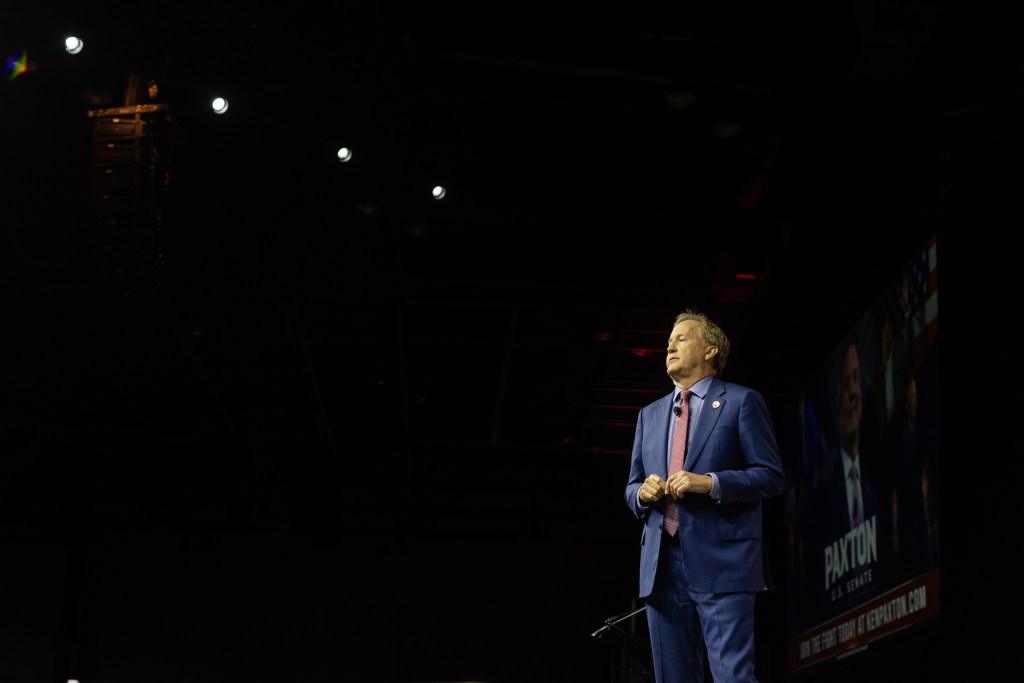
Ken Paxton, the Republican U.S. Senate nominee and current Attorney General of Texas, has distanced himself from the Texas GOP’s stance against in-vitro fertilization (IVF), declaring himself a “strong supporter” of the fertility treatment. In a statement, Paxton emphasized the importance of strong families, asserting, “Every child is a blessing, and every family hoping to welcome a child deserves support and compassion.”
This position aligns Paxton with former President Donald Trump, while simultaneously placing him at odds with the official stance of the Republican Party of Texas. At a recent Houston convention, the state party adopted a platform that advocates for the protection of fetal life, explicitly opposing practices such as IVF and commercial surrogacy.
The Texas GOP’s platform also denounces public funding for procedures that they believe destroy embryonic life, including IVF, and calls for regulations to prevent embryo discarding and the commodification of human life. Despite this, Paxton’s campaign has pledged to defend IVF if he wins a seat in the U.S. Senate. He supports the IVF Protection Act, proposed by Senators Katie Britt and Ted Cruz, which aims to prohibit Medicaid funding for any state that bans IVF. Paxton has committed to co-sponsoring this legislation if elected.
Paxton has faced scrutiny from Democratic nominee James Talarico’s campaign regarding the Texas GOP’s opposition to IVF. Public opinion polls indicate that IVF is widely supported, with a recent Pew Research Center survey revealing that 70% of Americans view access to IVF positively, while only 8% hold negative views. Although prominent Republicans, including Trump, back IVF, the subject remains contentious among conservative activists and anti-abortion advocates.
The political landscape surrounding IVF shifted notably in 2024 when the Alabama Supreme Court ruled that frozen embryos qualify as children under a state law that extends rights to “unborn children.” This decision led to a chilling effect on IVF accessibility in Alabama, prompting several providers to suspend treatments. In response, Trump and Alabama’s Republican Legislature moved swiftly to protect IVF practices, passing legislation that shields IVF providers and patients from liability related to embryo destruction.
Following the Alabama ruling, many Texas Republicans, including Governor Greg Abbott, voiced their support for IVF access. Trump incorporated the protection of IVF into his presidential campaign, vowing to make the treatment more affordable either through insurance mandates or government funding. However, during his presidency, he has not enacted significant measures, aside from signing an executive order for policy recommendations and proposing to incentivize employers to offer fertility benefits.
Despite interest from bipartisan senators in safeguarding IVF, legislative action has been lacking. A Democratic proposal to establish a nationwide right to IVF was rejected, and Britt and Cruz’s bill aimed at removing Medicaid funding from states that ban IVF did not advance due to objections raised by Democratic Senator Patty Murray regarding its failure to address fetal personhood laws and embryo disposal practices.
A faction of the religious right opposes IVF on ethical grounds, arguing that the creation of multiple embryos—some of which may be discarded—constitutes a form of abortion. This viewpoint is shared by some Texas Republican delegates, who believe that the destruction of embryos should be prohibited. The Texas GOP’s platform maintains that life begins at fertilization, labeling IVF as destructive and advocating for mandatory reporting on embryo creation and disposal, while promoting “ethical alternatives” to infertility treatments.
The Texas GOP platform, which is revised every two years by party delegates, serves as a guiding document for state legislators but often reflects more conservative views than those of the party’s general electorate and candidates.
In other news, the TribFest lineup has recently expanded to include notable speakers such as Kevin Stitt, Sherrilyn Ifill, and Karl Rove, among others. The Texas Tribune Festival is set to take place from September 24 to 26 in downtown Austin.