








MCALLEN — Neuroscientist Kelsey Baker often finds herself rushing indoors with her dog when she hears the unmistakable drone of planes overhead in the Rio Grande Valley. This sound signals the return of crop-dusters, who spray pesticides on the citrus, melon, and other crops surrounding her community.
Baker, an assistant professor and assistant dean at the University of Texas Rio Grande Valley, resides in McAllen, a city nestled in one of Texas’s most fertile agricultural areas, spanning over 4,000 square miles and nourished by the Rio Grande.
Since moving to the region in 2018 to continue her research on strokes and spinal cord injuries, Baker has uncovered a concerning prevalence of Parkinson’s disease among local residents. This progressive neurological disorder has long been associated with pesticides and environmental toxins. Notably, research indicates that over 80% of Parkinson’s cases lack genetic origins, pointing instead to environmental causes, with pesticide exposure significantly increasing the risk of developing the disease.
Parkinson’s disease, which has no known cure, manifests through symptoms such as tremors, slow movement, stiffness, and balance issues. Accompanying these physical symptoms can be depression and cognitive difficulties. It is the fastest-growing neurological disorder globally, with projections suggesting that more than 25 million individuals could be affected by 2050.
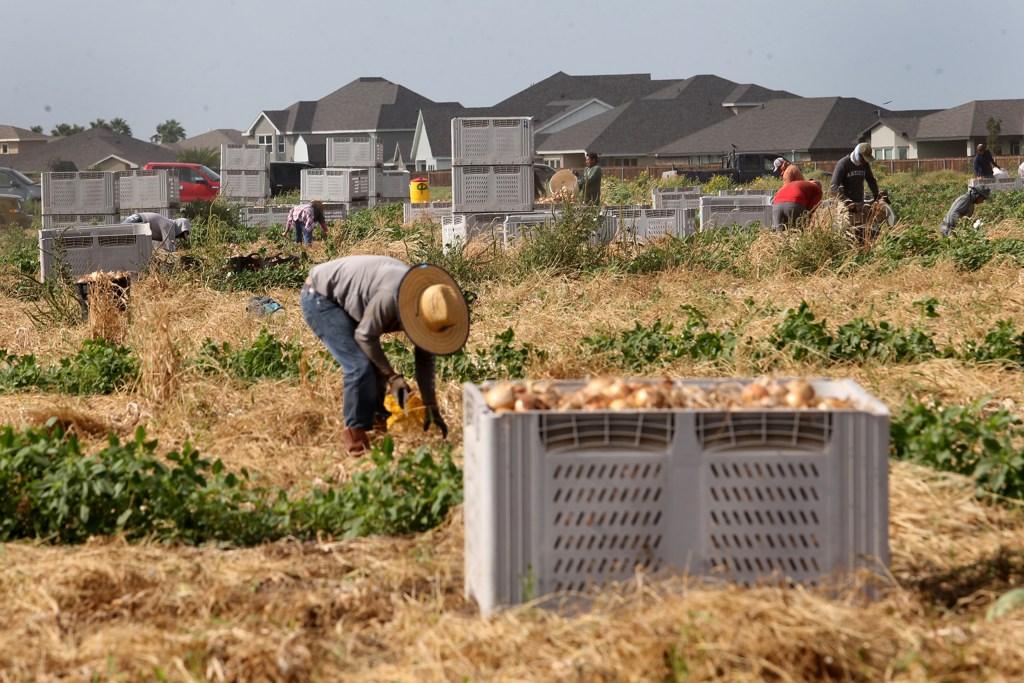
Baker, trained as a biomedical engineer, began examining maps of the Valley and was alarmed to discover that homes and schools were often surrounded by agricultural fields — a stark contrast to farming areas in other regions of the country. While farmworkers are at heightened risk due to direct pesticide exposure, Baker realized that residents living near these farms are also vulnerable.
A recent analysis from the U.S. Environmental Protection Agency (EPA) highlighted the dangers of paraquat, a herbicide closely linked to Parkinson’s disease. The findings suggested that the chemical could disperse in the air, potentially exposing individuals within a 20-square-mile radius to harmful levels. Despite being banned in at least 74 countries, paraquat use has surged in the U.S., largely due to the increasing resistance of weeds to other herbicides.
Reflecting on her decision to live in the area, Baker expressed regret: “In hindsight, would I have chosen where I live if I knew as much as I know now? Probably not.”
In a small study, Baker found that individuals with significant pesticide exposure exhibited more brain abnormalities compared to those without such exposure. This research has prompted her to initiate a larger study aimed at developing better diagnostic tools for Parkinson’s disease.
Tracking Parkinson’s prevalence among the Valley’s 1.4 million residents poses significant challenges. Current estimates suggest that 2% to 3% of Medicare and Medicaid enrollees in the area have the disease, but this data does not account for the uninsured population, which includes many undocumented workers.
In 2022, Baker sought to investigate whether the brains and bodies of Parkinson’s patients exposed to pesticides differed from those who were not. Her preliminary findings revealed that those with higher pesticide exposure showed more pronounced brain abnormalities and differences in bodily communication.
Dr. Ray Dorsey, director of the Center for the Brain and Environment at the Atria Health and Research Institute in New York, emphasized the urgency of addressing the link between Parkinson’s and environmental toxins. He compared the evidence to early studies connecting cigarette use to cancer, advocating for immediate action to prevent needless suffering caused by chemical exposures.
Leo Armando Ramirez, Sr., a former Texas Teacher of the Year, was diagnosed with Parkinson’s disease in 2022 at the age of 71. His family has a tragic history with the disease, having witnessed three relatives suffer from its effects. Ramirez recalls his childhood spent working in fields, earning money for school supplies while exposed to pesticides.
Despite not knowing the specific chemicals they encountered, Ramirez’s family lived near Superfund sites associated with harmful substances linked to Parkinson’s. Following a fall that resulted in a broken arm, he moved into a nursing home, where he continues to navigate the challenges of the disease.
Esmeralda “Myla” Garza, a retired nurse who also worked in the fields during her youth, experienced similar challenges. After noticing tremors in her hand, she sought medical help that ultimately led to a Parkinson’s diagnosis. The Rio Grande Valley, however, suffers from a shortage of neurologists, complicating access to specialized care.
Garza’s condition has progressively worsened, impacting her mobility and daily activities. Nevertheless, she remains determined to stay engaged, attending a monthly support group where she connects with others facing similar challenges.
Dr. Beate Ritz, an epidemiologist at UCLA, has spent nearly three decades investigating the relationship between pesticides and Parkinson’s disease. Her research indicates that living or working near areas where paraquat has been applied significantly increases the risk of developing the condition.
Despite the alarming evidence, the EPA has yet to take decisive action against paraquat. A decade-long review concluded that the evidence linking paraquat to Parkinson’s was insufficient. Advocacy groups have since filed lawsuits against the EPA, urging stronger regulatory measures.
In 2025, the EPA announced new findings suggesting that paraquat could drift further than previously thought, prompting calls for immediate suspension of its use until further studies are completed. Meanwhile, the pesticide continues to be used on numerous crops, including cotton, which poses significant risks to farmworkers.
Elizabeth Rodriguez, a farmworker advocate, highlighted the inconsistent enforcement of safety regulations, leaving many workers unprotected and vulnerable to pesticide exposure. The lack of accessibility to protective equipment and training exacerbates the risks faced by farmworkers, particularly undocumented individuals who may fear seeking medical assistance.
Rodriguez shared a personal tragedy involving a cousin’s son, who succumbed to health issues linked to pesticide exposure. This tragic event underscores the urgency of addressing the health risks faced by those working in agricultural communities.
As Rodriguez continues her advocacy, she reflects on her experiences in the fields and the helplessness faced by workers. On one occasion, while observing a crop duster preparing to spray, she was struck by the potential dangers posed by the chemicals in the air.
The ongoing debate surrounding pesticide regulation and its implications for public health continues to unfold in the Rio Grande Valley, where residents and advocates strive for safer environments and better health outcomes.