








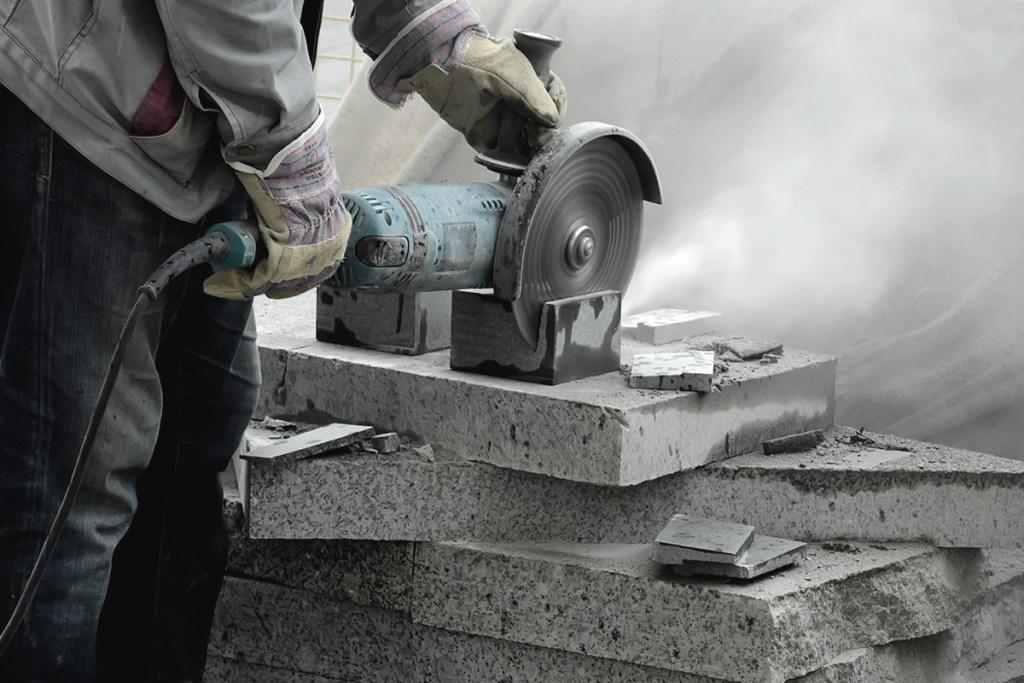
In Texas and throughout the United States, engineered stone has emerged as a popular choice for kitchen and bathroom countertops, celebrated for its strength, ease of maintenance, and cost-effectiveness. However, as the use of this material has surged, a troubling issue has come to light: an increasing number of workers involved in cutting and fabricating these surfaces are being diagnosed with silicosis, a chronic and irreversible lung disease.
The first documented case of silicosis among countertop workers in Texas was reported in 2014, and since then, the number of affected individuals has escalated in tandem with rising sales of these products.
Why Are Construction Workers Falling Victim to Silicosis?
Artificial stone countertops can contain up to 95 percent pulverized crystalline silica, combined with resins, adhesives, and pigments, which is significantly more than natural stones such as granite or marble. When workers cut, polish, or grind these slabs, they release extremely fine silica dust into the air. Once inhaled, these particles can become lodged in the lungs, resulting in inflammation, scarring, and lasting respiratory damage.
“It’s heartbreaking to see young workers in their thirties and forties facing such severe health issues,” stated attorney Camille Hunt of Waters Kraus Paul & Siegel, a law firm operating in Dallas and Los Angeles that advocates for workers diagnosed with silicosis. “While minor cases of silicosis can be managed, those with serious conditions often have no choice but to seek a lung transplant for survival.”
The law firm represents over 70 countertop workers afflicted with silicosis. In these instances, workers have reported that the manufacturers of these products provided no warnings regarding the hazards of silica exposure or any advice on how to safeguard themselves during the fabrication, cutting, polishing, or installation processes.
The lawsuits allege that certain manufacturers were aware of the health risks yet failed to inform workers. Companies named in the litigation have denied any wrongdoing or have refrained from commenting publicly.
“The tragedy is that manufacturers have long been aware of the dangers, and the risks these workers face are preventable,” Hunt emphasized.
In 2024, a jury in Los Angeles awarded a stoneworker $52 million after determining that several companies, including Caesarstone, were responsible for his illness. That verdict has since been appealed by the defendants.
A Vulnerable Workforce
Many of those diagnosed with silicosis are undocumented workers who may hesitate to report early symptoms related to their health. Advocates believe the actual number of cases is likely much higher than what has been officially recorded. Families are often left to cope with a serious medical condition that may necessitate extensive long-term care. Lung transplants typically exceed $1 million, and younger patients may need multiple transplants throughout their lives.
“You can live for decades with mild silicosis,” Hunt remarked. “However, if you suffer from severe silicosis, your only chance of survival is a lung transplant.”
Artificial stone countertops, also referred to as engineered quartz, are marketed under various brand names, including Caesarstone, Cambria, Silestone, and Vicostone.
A Modern Disease with Old Roots
Historically, silicosis was predominantly associated with mining and natural stone cutting. However, the engineered stone industry has revived this threat due to the material’s exceptionally high silica content, as well as the synthetic resins and dyes used in its production.
A 2023 study published in JAMA Internal Medicine identified 52 countertop workers—most of whom were immigrants—who developed silicosis after prolonged exposure to silica dust. Nearly half of these individuals had advanced disease, over a dozen had been referred for lung transplants, and ten had died. Researchers cautioned that as many as 100,000 stone fabrication workers across the nation could be at similar risk. The median age of these workers was 45, and all but one subject in the study were Latino.
Nationwide, the U.S. stone fabrication industry comprises nearly 9,000 establishments employing close to 100,000 individuals, according to the Bureau of Labor Statistics. As more cases continue to emerge, medical and workplace safety experts are raising concerns that existing regulations may be insufficient to protect workers from this modern manifestation of an age-old occupational disease.
Waters Kraus Paul & Siegel is a national law firm representing plaintiffs in cases involving serious injuries, toxic exposure, product liability, sexual abuse, and more.
SPONSOR CONTENT FROM WATERS KRAUS PAUL & SIEGEL Learn more about WATERS KRAUS PAUL & SIEGEL