







Sign up for The Brief, a daily newsletter designed to keep readers informed about the most important news in Texas.
The chief financial officer of Texas has officially established rules for the state’s private school voucher program. This announcement clarifies funding details for pre-kindergarten students and sets specific timelines for applications from schools and families. However, certain aspects related to special education and additional reporting requirements remain unchanged.
Private schools and providers currently involved in an existing state program for students with disabilities can begin their applications on December 9. Applications for other eligible entities will follow shortly thereafter.
Families will be able to start submitting their applications on February 4, a date agreed upon between Texas’ finance chief and Odyssey, the finance and technology partner overseeing the program. The application period will stay open until mid-March, as per the established agreement. The state plans to provide updates on the status of approved students by early May.
The program, which will be administered by the Texas comptroller’s office, is set to officially launch at the beginning of the 2026-27 academic year.
Families participating in the program can expect to receive approximately $10,300 annually in state funds for each eligible student. These funds can be utilized to cover educational expenses or tuition at accredited private schools approved by the comptroller’s office. Additionally, home-schoolers can access $2,000, while students with disabilities may qualify for up to $30,000.
The finalized rules have resolved a previous inconsistency between the draft regulations and the legislation that established the voucher program. Initially, it was proposed that children in private preschool programs would only receive $2,000—similar to home-schoolers—rather than the intended amount of over $10,000 for other students. The new rules clarify that preschoolers who meet the state’s free public pre-K criteria are eligible for the full funding amount.
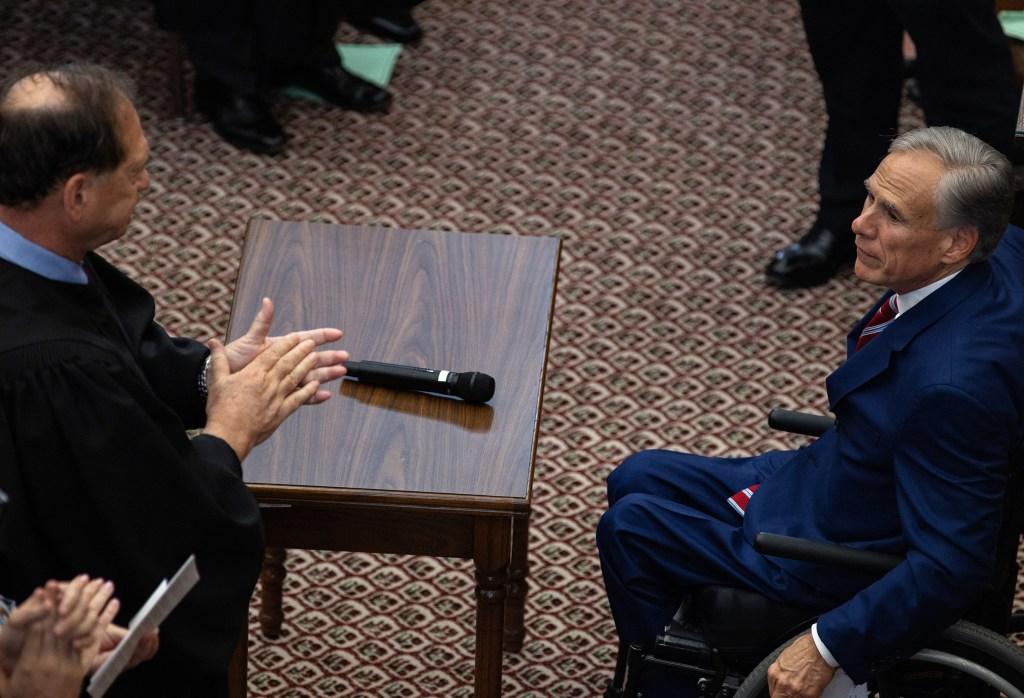
These regulations lay the groundwork for the voucher program, which was signed into law by Governor Greg Abbott earlier this year after numerous unsuccessful attempts. The Texas Legislature designated the comptroller as the program’s overseer.
A budget of $1 billion has been allocated for the program, which will operate through education savings accounts—digital platforms that allow families to pay for tuition and educational supplies from approved vendors. The tuition payment system is expected to launch in early July.
Acting Comptroller Kelly Hancock and his team held a public hearing regarding the draft rules in September, receiving written input from about 200 individuals. Aside from inquiries related to pre-K eligibility, two key concerns emerged: special education provisions and reporting requirements for program applicants and recipients.
To establish a child’s disability, the rules permit the submission of a Social Security determination letter or a physician’s note. Disability rights advocates argue that these documents do not meet federal or state standards, as they do not replace the necessity for a comprehensive evaluation of a child’s educational needs. This could potentially lead to the prioritization of children without a genuine need for special education services.
The comptroller’s office disagrees with the assertion that applicants must undergo the same evaluations required for public school students. They have chosen to continue accepting the additional documentation as proof of disability for the voucher application process.
If the number of applications exceeds available funding, the comptroller will prioritize applicants in the following order:
- Students with disabilities from families earning at or below 500% of the federal poverty level, which includes four-person households making less than approximately $160,000.
- Families at or below 200% of the poverty level, encompassing four-person households earning less than roughly $64,300.
- Families with incomes between 200% and 500% of the poverty level.
- Families earning at or above 500% of the poverty level, which will be limited to 20% of the program’s budget.
This priority system does not guarantee access to the program. Participating schools are not required to alter their admissions processes, allowing them to deny entry to any student who does not fulfill their criteria. Moreover, they are not obligated to adhere to the same laws that mandate public schools to provide accommodations for students with disabilities.
State law mandates that students participating in the program—those who gain admission to both the program and a private school—must undergo a comprehensive educational evaluation before they can access additional funding designated for children with disabilities. Public schools are required to conduct these evaluations within 45 days upon request from families.
During the draft phase, the rules did not introduce significant changes to the reporting requirements established by state law for the voucher program. This law obligates the comptroller’s office to collect and publish annual data, including the number of applications received and accepted, participant satisfaction, and the program’s impact on private school capacity and Texas’ public education system. Additionally, the report must specify any gifts, grants, and donations received. The comptroller is also expected to provide demographic information about participants, such as age, race, and sex.
Public education advocates have sought more comprehensive data to analyze the program’s outcomes, including information on donors, available private school spots by grade, and the financial recovery from ineligible expenses. Some advocates have also called for private schools to disclose their students’ graduation rates, academic progress, and readiness for postsecondary education.
However, in the final rules, the comptroller’s office declined these suggestions, stating that they would adhere only to the reporting and auditing requirements specified in state law.
“These requested additions fall outside the scope of the proposed rules, represent a departure from logical progression, and would significantly alter the issues raised in the proposed rules,” officials stated. “Implementing such changes would deny affected parties fair notice and the opportunity for meaningful and informed participation in the rulemaking process.”
Discover more about the policies of The Texas Tribune, including our collaboration with The Trust Project to enhance transparency in news.
You’ve read articles this month. You still have unlimited free articles available as we do not maintain a paywall.
Texans deserve accurate information. Help us report it.
Independent journalism in Texas relies on your support. The Texas Tribune is committed to delivering fact-based reporting for Texans, by Texans. Our community of members, who contribute donations, make our work possible. Help us continue providing in-depth news and information. Will you support our nonprofit newsroom with a donation of any amount?
Support Independent Texas News. Become a member. Join today. Independent reporting in Texas needs your assistance. The Texas Tribune provides fact-based journalism for Texans, by Texans. Our community of members allows us to deliver in-depth news and information. Will you support our nonprofit newsroom with a donation of any amount?
$18 $20 $25 Other Donate Now. You’ve read articles this month. You have unlimited free articles remaining since we do not have a paywall.
Texans require the truth. Help us report it.
Independent journalism in Texas requires your help. The Texas Tribune delivers fact-based journalism for Texans, by Texans. Our community of members, the readers who donate, make our work possible. Help us provide you and millions of others with in-depth news and information. Will you support our nonprofit newsroom with a donation of any amount?
Support Independent Texas News. Become a member. Join today. Independent reporting in Texas needs your support. The Texas Tribune delivers fact-based journalism for Texans, by Texans. Our community of members allows us to deliver in-depth news and information. Will you support our nonprofit newsroom with a donation of any amount?
$18 $20 $25 Other Donate Now.
Tagged: school vouchers Jaden Edison Public Education Reporter jaden.edison@texastribune.org x Jaden Edison is the public education reporter, having previously worked as a reporting fellow during the summer of 2022. Before returning to the Tribune full-time, he served in the justice system.