








ODESSA — A bipartisan group of Texas lawmakers has expressed concern over the Texas Railroad Commission’s recent decision to eliminate general public testimony from its monthly meetings.
A Texas House committee is set to discuss this issue on September 15.
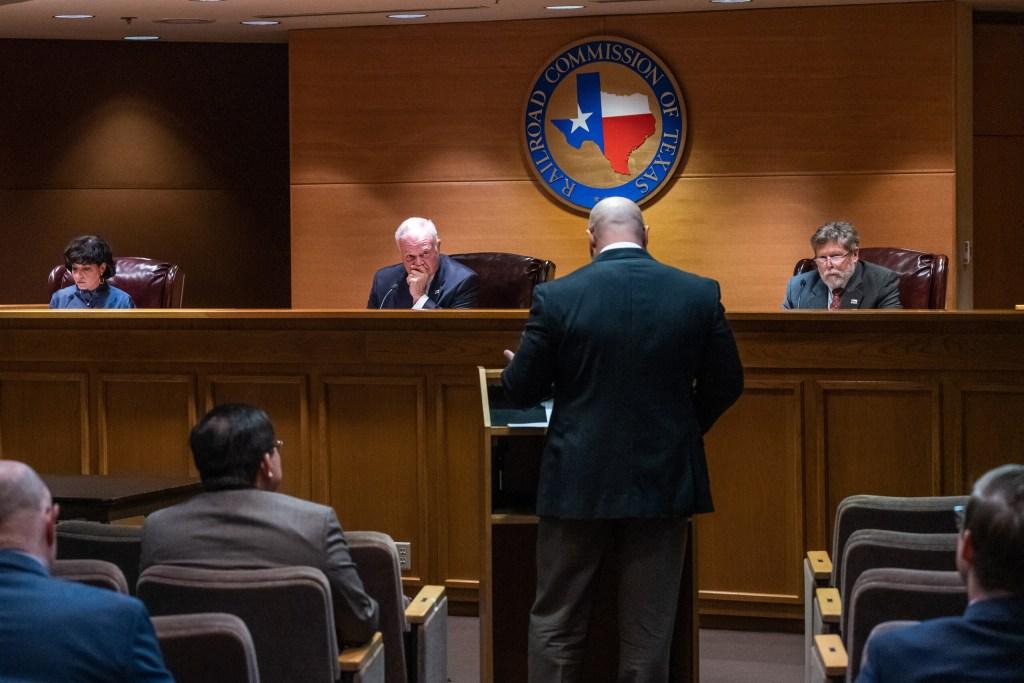
The Railroad Commission, which oversees the state’s oil and gas industry, has removed the opportunity for public comments during its monthly meetings unless requested by a commissioner. In contrast, the commission has stated its commitment to offering “meaningful, accessible opportunities for public participation and engagement” through listening sessions and outreach events that do not require the attendance of elected commissioners.
This significant policy shift was first highlighted by Inside Climate News.
Commissioners wield considerable power over the oil and gas sector, making decisions on critical issues related to fossil fuel production, pollution, and regulation. They are tasked with managing an industry that has consistently broken production records over the past six years, including supplying half of the nation’s oil in 2025. Additionally, they must navigate challenges such as the management of underground wastewater, which poses potential risks to oil production and raises environmental and public health concerns for landowners.
This move marks the first known instance of a state regulatory agency reversing a policy designed to ensure public engagement with its officials. A review found that similar agencies in Texas, such as the Public Utility Commission, the Texas Water Development Board, and the State Board of Education, still allow public comments on issues within their jurisdiction.
Despite the changes, experts have noted that the new policy does not contravene state open meeting laws, as these regulations do not mandate public comment segments during agency meetings.
In light of this decision, state lawmakers are voicing their concerns. State Representative Drew Darby, a prominent Republican from San Angelo and chair of the House Natural Resources Committee, has called for a hearing on the issue.
In a letter to Railroad Commissioner Wayne Christian, who implemented the new policy, Darby praised the agency for increasing its outreach across Texas but emphasized that such efforts do not replace the need for the public to have direct opportunities to address the commissioners who make the final decisions. He expressed that while reasonable guidelines are acceptable, the new approach lacks sufficient public input before its implementation.
“The Railroad Commission has revoked a 21-year guarantee and replaced it with a discretionary process that offers no assurance at all,” Darby stated. “Discretion at the outset is not equivalent to a sitting majority retracting a commitment relied upon by the public for two decades.”
State Representative Terry Canales, a Democrat from Edinburg who played a role in revising the state’s open meeting laws in 2019, has called for lawmakers to expand these provisions to include state agencies in the upcoming legislative session. Canales argued that Texans should have the right to engage with their elected officials, regardless of their location.
“Texans deserve the right to address the public officials making decisions on their behalf, no matter which building those officials work in,” he asserted.
In response to the criticism, Christian defended the commission’s decision, stating that public input has not been canceled or restricted. He emphasized that the change aims to enhance access to the agency and provide greater flexibility during meetings, drawing parallels to the public testimony process in the Texas House and Senate.
Under the previous policy, the public had the ability to comment on any general issue during a designated time. The new regulations limit public comments to specific agenda items, similar to practices in the statehouse.
Christian argued that previous public comment opportunities often required individuals to travel long distances to Austin, while the new policy facilitates engagement through outreach events and listening sessions. However, he did not clarify if commissioners would be present at these events.
He also pointed out that the previous policy was underutilized, noting that since 2022, only 20 individuals registered for public comment at 37 open meetings, with a significant percentage of comments coming from just two people and a watchdog group.
“State resources should never be used to advance political agendas,” Christian asserted. “Public input should focus on genuine concerns from Texans, rather than on individuals traveling great distances to participate.”
Virginia Palacios, the Executive Director, countered Christian’s defense by stating that if the numbers were indeed low, it would be feasible to allow public input at every meeting and facilitate remote participation.
“It’s not hard to do,” Palacios remarked. “And it’s only fair for individuals who live in oil-producing areas far from Austin.”
Concerns regarding the decision have also been echoed by government transparency advocates and candidates seeking positions on the commission.
<p“Public business should be conducted in a manner that allows public participation and oversight,” stated Chip Stewart, a journalism professor and attorney. “Limiting public commentary runs contrary to the principles of a representative government.”
The Railroad Commission, a century-old agency, has faced increased scrutiny this year following the defeat of incumbent Railroad Commissioner Jim Wright by conservative activist Bo French in the Republican primary elections last March. French will face oil field engineer and four-term state Representative Jon Rosenthal, a Democrat from Houston, in the upcoming general election.
On Tuesday, Rosenthal condemned the commission’s decision as an “egregious attack on Texans’ right to address their elected officials,” promising to reverse the policy if he wins the election.
“This type of unacceptable behavior is why I launched my campaign in the first place,” he declared.
French did not respond to requests for comment.
The Texas Open Meetings Act does not mandate that government agencies allow public comment on agenda items, a gap that Canales sought to address in 2019 when he advocated for greater transparency and accessibility at local government meetings. His legislation required local agencies to permit public comments, but state agencies were exempted.
Jim Hemphill, an attorney specializing in media and open government laws, commented on the 2019 statute, noting that while it was beneficial for local governments, it could have been improved by including state agencies.