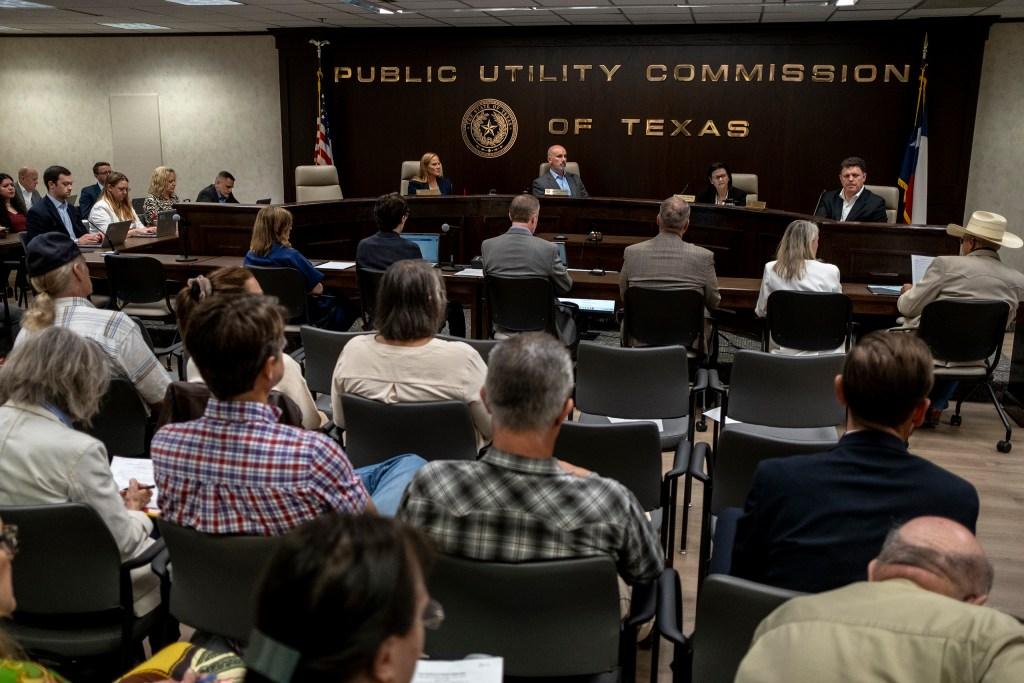








Confusion continues to surround a far-reaching law intended to prevent Texas cities from implementing progressive policies, three years after its enactment, as both supporters and critics voiced concerns during a Texas House Joint Committee on Government Oversight meeting.
The 2023 legislation, referred to as the “Death Star” bill, prohibits cities and counties from enacting local ordinances that exceed certain broad provisions of state law. Proponents, including Texas Republicans and business groups, have argued that this law is necessary to eliminate a “patchwork” of local regulations that complicate business operations and to curtail progressive policies in urban areas. However, local officials have criticized the law as overly broad and vague, claiming it undermines important protections such as water breaks for construction workers, payday lending regulations, and noise control measures.
During Thursday’s hearing, it became evident that uncertainty persists regarding which local regulations are considered illegal under the new law. This ambiguity has led to a chilling effect on cities, which are hesitant to pursue certain ordinances for fear of potential lawsuits. Meanwhile, supporters of the law expressed concern that cities are not actively reviewing and removing ordinances that may conflict with it, leaving enforcement largely reliant on individual lawsuits filed by residents.
Some Republican lawmakers proposed enhancing the law to increase accountability for cities, including granting the attorney general greater authority to penalize violators. This suggestion, however, was previously dismissed by legislators during last year’s session.
James Quintero, the policy director at the conservative Texas Public Policy Foundation’s Taxpayer Protection Project, reported that when he surveyed various cities and counties about their compliance efforts, many indicated they had taken no action. “Sometimes the Legislature can pass a law, but it doesn’t necessarily translate into local action,” Quintero noted, highlighting a disconnect between legislative intent and local implementation.
Critics countered that there is no substantive evidence indicating that local governments have openly defied the law. Bill Longley, general counsel for the Texas Municipal League, emphasized that the law has instead led to a cautious approach among cities, with some opting to modify or repeal ordinances to circumvent expensive legal disputes. He pointed out that cities are now meticulously reviewing any new proposals to ensure compliance, but the law’s broad language may deter them from addressing pressing issues altogether.
Adding to the confusion is the ongoing legal limbo surrounding the law. While it remains in effect, a constitutional challenge initiated by Houston, El Paso, and San Antonio is still unresolved. Meanwhile, a lawsuit from a group of Dallas residents seeks to compel the city to eliminate several ordinances, including LGBTQ+ protections, which they claim violate the law. The outcome of this case is currently pending before the 15th Court of Appeals.
State Representative Erin Zwiener, a Democrat from Driftwood, questioned the motivation for local governments to comply with a law they perceive as unconstitutional. The law permits private citizens to initiate lawsuits, which can become protracted due to lengthy appeals. State Representative Mitch Little from Lewisville suggested that the Texas Attorney General should be allowed to sue cities directly when evidence of noncompliance is present and fast-track those legal actions for quicker resolutions, recognizing that many residents and businesses lack the financial resources for extended legal battles.
Lawmakers also discussed other potential measures, such as requiring cities to audit their ordinances for compliance or imposing financial penalties on those that violate the law. Quintero pointed to a recent state law that freezes property taxes for cities not adhering to state financial requirements as a possible model. However, Democratic members of the committee expressed concerns that such penalties ultimately burden taxpayers.
The law represents a culmination of a prolonged effort by Republican state lawmakers to restrict the regulatory powers of urban areas, which tend to lean more liberal. State Representative Richard Peña Raymond, a Democrat from Laredo, expressed partial support for the law, citing low voter participation in municipal elections as a rationale for state intervention. Nevertheless, he voiced skepticism about whether cities were intentionally violating the statute.
Others argued that Texas cities have unique needs that should be addressed without state interference. “Why even have a city council?” asked state Representative Armando Walle from Houston. “Why even have a mayor if Austin is going to dictate what you can and can’t do?”