



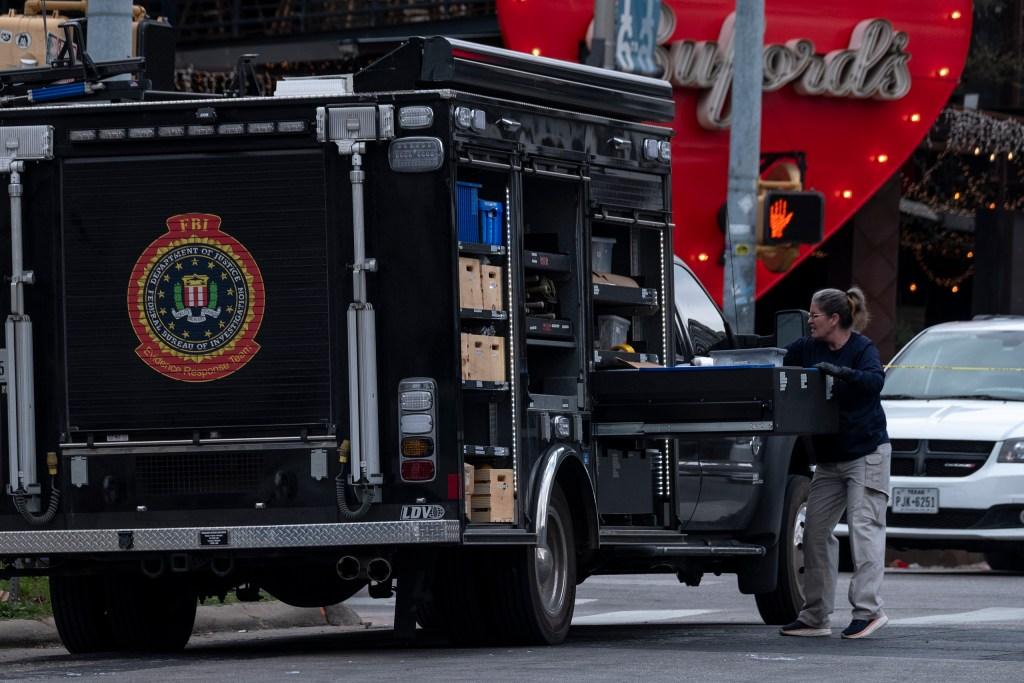
The recent tragic shooting in downtown Austin has ignited a political firestorm, with Texas elected officials and candidates swiftly seizing the opportunity to voice their positions. Republicans have criticized the country’s naturalization process in light of the incident, while Democrats are advocating for more stringent gun control measures.
The shooter, identified as 53-year-old Ndiaga Diagne, was killed by police shortly after the attack, which occurred around 2 a.m. at a popular bar on West 6th Street, leaving two people dead and 14 others injured. Media reports indicate that Diagne was a naturalized citizen from Senegal, who entered the United States on a tourist visa in 2000, became a lawful permanent resident through marriage in 2006, and was naturalized in 2013.
In the wake of the shooting, many Texas Republicans, including Governor Greg Abbott, suggested that the gunman should not have been granted citizenship and raised concerns about his background checks. However, specific details on what should have barred his naturalization were not provided. The Department of Homeland Security revealed that Diagne had a prior misdemeanor arrest in Texas in 2022 but did not elaborate on any criminal history leading up to his citizenship.
Reports indicate that Diagne had faced multiple arrests for various offenses, including illegal vending in New York City in 2001, but many of these cases remain sealed. As calls for action grew, Aaron Reitz, a GOP candidate for attorney general, proposed an audit of legal immigrants’ documents, stating on social media that “all ‘legal’ immigrants’ papers” should be scrutinized.
The shooting’s aftermath also sparked discussions about political agendas, particularly surrounding Islam. The gunman was reportedly seen wearing a sweatshirt that read “Property of Allah” and a shirt featuring the Iranian flag. The timing of the shooting coincided with recent U.S. and Israeli military actions in Iran, prompting the FBI to investigate the incident as a potential act of terrorism.
The Texas chapter of the Council on American-Islamic Relations condemned the attack, emphasizing that one individual’s actions should not reflect on an entire community. They called for unity among officials and community members to support the victims’ families and reaffirm a commitment to public safety.
A heated exchange occurred on social media between Governor Abbott and state Representative James Talarico, a Democrat running for the U.S. Senate. Abbott referenced the need to prevent “unvetted immigrants” from entering the country, while Talarico countered with a call for more stringent measures to ensure that dangerous individuals do not possess firearms.
Despite the ongoing debate, Austin Police Association President Michael Bullock criticized the politicization of the tragedy, urging a focus on the victims rather than political campaigns. He emphasized the importance of waiting for complete information before making policy decisions.
U.S. Representative Chip Roy, also pursuing the GOP nomination for attorney general, echoed concerns about the immigration system’s effectiveness, attributing the issue to lax policies from previous administrations. He called for a pause in immigration, suggesting that it is contributing to national safety concerns.
Denise Gilman, director of the Immigration Clinic at the University of Texas at Austin, clarified that the naturalization process involves extensive vetting, including criminal background checks. She noted that while arrests may be considered when assessing an applicant’s moral character, not all arrests lead to disqualification for citizenship.
In the most recent fiscal year, approximately 818,500 individuals were naturalized, with nearly 10% residing in Texas. However, this represented a 7% decrease compared to the previous year. From 2022 to 2024, more than 2.6 million individuals have gained citizenship through naturalization.
Texas Senator John Cornyn highlighted the shooting as a reflection of the need for rigorous vetting, attributing the incident to radicalization and criticizing current immigration policies. Meanwhile, Texas Democrats have called for enhanced gun control measures but have yet to propose specific changes that could have prevented the shooter from acquiring firearms.
U.S. Representatives Greg Casar and Lloyd Doggett expressed their opposition to gun violence, reiterating the need for legislative action to address the epidemic. Casar emphasized the right of Americans to enjoy public spaces without fear, while Doggett called for Republicans to take a stand against the influence of the National Rifle Association to prevent future tragedies.