








Sign up for The Brief, a daily newsletter that provides readers with essential updates on Texas news.
Texas officials are mandating that youth camps implement weather alert systems, develop emergency preparedness plans, and establish various communication channels to ensure the safety of children and their families this summer. However, some camp leaders argue that a crucial aspect is still lacking in the state’s plan—initiatives aimed at addressing the mental health of those returning to a place marked by tragedy.
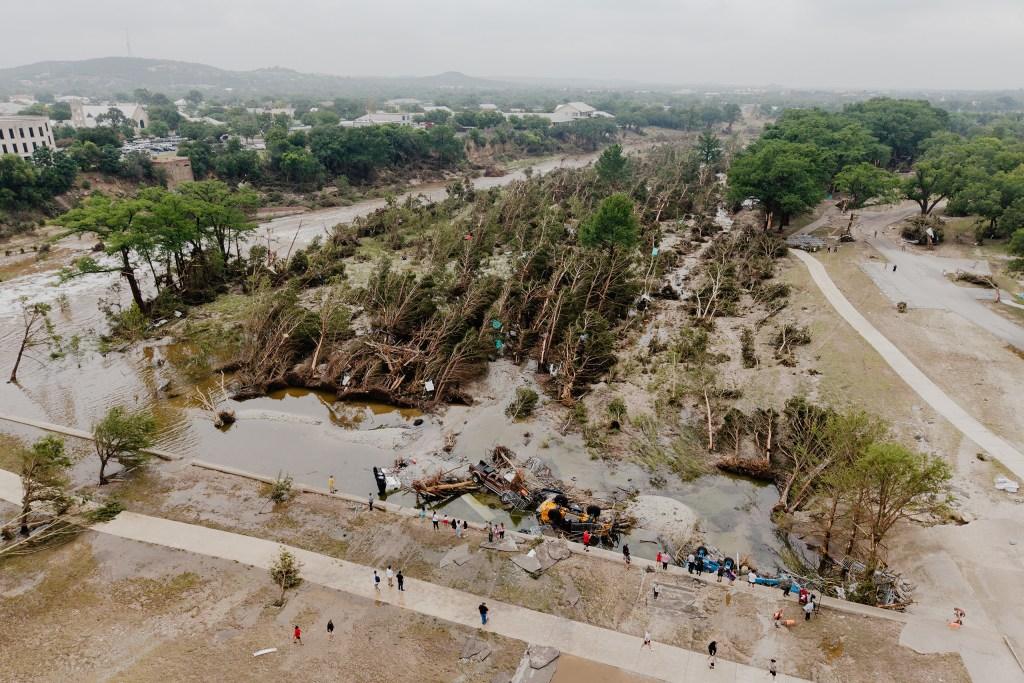
Following the catastrophic floods in the Texas Hill Country on July 4, which claimed the lives of at least 137 individuals, including 27 campers and counselors from Camp Mystic, many who are set to return to Texas camps this summer may be grappling with anxiety related to water, heightened emotions during weather events, recurring nightmares, and more.
“In the aftermath of the flooding, we received feedback from parents and schools indicating that even a simple rainstorm caused significant distress among many children,” shared Julie Kaplow, a licensed clinical psychologist and executive vice president of trauma and grief programs at The Meadows Mental Health Policy Institute in Dallas.
One of the key challenges in meeting the mental health needs of campers, staff, and their families lies in their geographical dispersion across the state, as they only come together during the summer months. While resources have been allocated to Texas Hill Country for flood victims, this assistance does little for families living far away.
Camp owners argue that it is imperative for camps to be better prepared for the return of these campers. “I fully support the focus on physical safety; however, this emphasis has somewhat overshadowed the importance of addressing other facets of wellness,” stated Brandon G. Briery, chief program officer at Camp Camp in Centerpoint.
This summer, state lawmakers passed House Bill 1 and Senate Bill 1, which require camps to implement various safety measures, including emergency preparedness plans and communication systems. However, there was no guidance provided on how to address the mental health needs of campers and staff.
Keli Rabon, a Houston mother whose sons survived the flood at Camp Junta, expressed her concerns to lawmakers during a committee hearing three weeks after the disaster. She described how her son now meticulously scans every room for higher ground, constantly checks the weather, and suffers from nightmares involving water dripping from the ceiling. Rabon has been struggling to find mental health resources to assist him.
“I have reached out to the camp and FEMA, but the response has been the same: ‘We’re sorry, we don’t know how to help you. You’re in Houston,’” Rabon stated, emphasizing the need for mental health care to be a prioritized and funded part of the state’s disaster response. “… I should not have to depend on a Facebook group of volunteers to secure trauma care for my children.”
Senators Pete Flores of Pleasanton and Charles Perry of Lubbock, who chaired the flood investigation committee and sponsored SB 1 and HB 1, did not respond to requests for interviews regarding mental health resources. Questions directed to Governor Greg Abbott’s office about mental health support for camps were forwarded to Texas Health and Human Services, which did not provide information by the time of publication.
Even before the floods, the mental well-being of campers and staff had been a growing concern among camp leaders. As youth mental health has deteriorated in Texas and nationwide over the past six years, camp directors have reported an increasing number of campers exhibiting signs of anxiety and other mental health issues, along with staff—typically college students and young adults—showing signs of depression and more severe mental health challenges.
This situation has prompted organizations like the American Camp Association, in collaboration with the Alliance for Camp Health and supported by the H.E. Butt Foundation, to establish a six-hour mental wellness training program called CampWell. This program aims to equip staff with the skills to listen and manage their emotions, benefiting both campers and themselves.
Briery, whose six-year term on the state’s Youth Camp Program Advisory Committee concluded in August, reported that he and others have been advocating for the state’s camp licensing board to consider implementing higher training standards for staff to address mental health issues. A work group was established to tackle this topic and was scheduled to convene after the summer camp season; however, plans were postponed due to the July 4 floods—exactly when they were most needed.
<p“While the physical safety of our camp community is at the forefront of everyone's minds following the July events, we must also consider the overall safety of individuals, which encompasses mental wellness,” Briery emphasized.
Weather-related trauma has become a significant concern. When news of the tragedy at Camp Mystic reached Laity Lodge Youth Camp in Leakey, staff members felt as though their world had been turned upside down. They mourned the losses as if they were their own while addressing the anxious inquiries of their young campers. The nearby East Frio River, once a source of joy, now served as a constant reminder of the tragedy that transpired just 36 miles away.
“I divide the summer into two segments: pre-flood and post-flood, because everything changed. There was a palpable heaviness after the event,” remarked Blayze Sykes, a camp associate at Laity Lodge.
Over the last decade, Texas has endured a series of natural disasters, including Hurricane Harvey in 2017, the Bastrop Complex Fire in 2011, the winter storm of 2021, and most recently, the devastating flash flood in the Hill Country.
Kaplow noted that an increasing number of Texas children are becoming survivors of natural disasters, leading to a generation filled with weather-related anxiety.
A study conducted by the Society for Research in Child Development found that up to 50% of children report symptoms of post-traumatic stress after experiencing a disaster, including recurring thoughts about the event, hypervigilance, and difficulties with sleep or concentration. Children exposed to natural disasters often experience depression and anxiety symptoms as well.
Research in the Greater Houston area from 2019 to 2023 revealed that successive weather disasters significantly impacted emergency department visits for depression and anxiety, with distinct seasonal patterns indicating increased demand for mental health services during specific times.
Diagnosing weather-related mental health issues in children can be complex, as their behaviors may resemble symptoms of ADHD, according to Kaplow. Children suffering from weather-related trauma may display hypervigilance, which can be mistaken for distractibility.
Other indicators might include a child appearing exhausted at their desk, displaying obvious signs of crying, or exhibiting aggression towards peers.
“It’s insufficient to intervene only in the immediate aftermath. We need to recognize that this will require a long-term effort to support children in their healing process,” asserted Kaplow.
Governor Greg Abbott initiated a free statewide counseling service for those impacted by the floods, known as the Texas Flooding Emotional Support Line. However, camp directors argue that more proactive measures are necessary.
Experts advise that one of the most effective ways policymakers can support children affected by disasters is to improve access to mental health services, including therapists, school counselors, grief therapy, and medication.
While camp cannot replace professional mental health care, studies indicate that well-structured mental health programs at camps can address issues related to depression, anxiety, feelings of hopelessness, and challenges in forming positive peer relationships among youth.
“The moment is now. If there was ever a time to prioritize mental well-being at camps and foster an environment where it can flourish, it is now,” emphasized Cary Hendricks, executive director of Laity Lodge Camping Programs.
One method to incorporate mental health into camps involves acknowledging that families seeking to disconnect their children from technology have long viewed summer camps as a means to immerse them in nature. Mental health experts have also highlighted the emotional benefits of nature-focused camps for children.
However, what occurs when the outdoors becomes a source of grief?
“We know, and often take for granted, that many camps are situated outdoors, providing a restorative benefit for campers and staff. The events of July 4 reminded us that these natural elements can also pose hazards,” noted Laurie Pearson, senior director of innovation and learning for the American Camp Association.
Camps throughout Texas are grappling with the challenge of maintaining the traditional summer camp atmosphere for campers and staff who are now acutely aware of the dangers that surround them.
“We already have campers enrolled who have experienced traumatic events, so our focus is on what we can do to support them,” expressed Meg Clark, owner of Camp Waldemar.
Pearson highlighted the CampWell program, a six-hour skills-based training course designed to build resilience. This program teaches staff and campers how to manage their emotions, such as fear and anxiety, through techniques like breathing exercises, engaging activities, conversations, and other non-medical approaches.
Camps that participate in CampWell training strive to create a supportive and connected environment among staff, who can then model and impart relevant skills to campers. This in-person program assesses a camp’s culture, including its training and screening processes, to ensure