






Recent analysis of federal data reveals that Immigration and Customs Enforcement (ICE) agents in Texas and nationwide have increasingly focused on arresting individuals who are not already in custody. This trend has been particularly pronounced in Houston, where the recent killing of an immigrant by an ICE agent has drawn national attention.
In Houston, the monthly rate of ICE arrests occurring outside of detention facilities has surged more than fourfold, even as arrests of individuals already in custody remain more frequent. Under former President Joe Biden, the monthly average of arrests in public spaces and homes was around 150. However, this figure skyrocketed to over 640 during the first 13 months of the Trump administration. By early March 2026, these arrests accounted for nearly a third of all ICE arrests in the city, up from 16% under Biden.
Statewide, the proportion of arrests made in communities increased from 14% to 36% of all arrests. In contrast, the nationwide increase was more modest, rising from 34% to 43%.
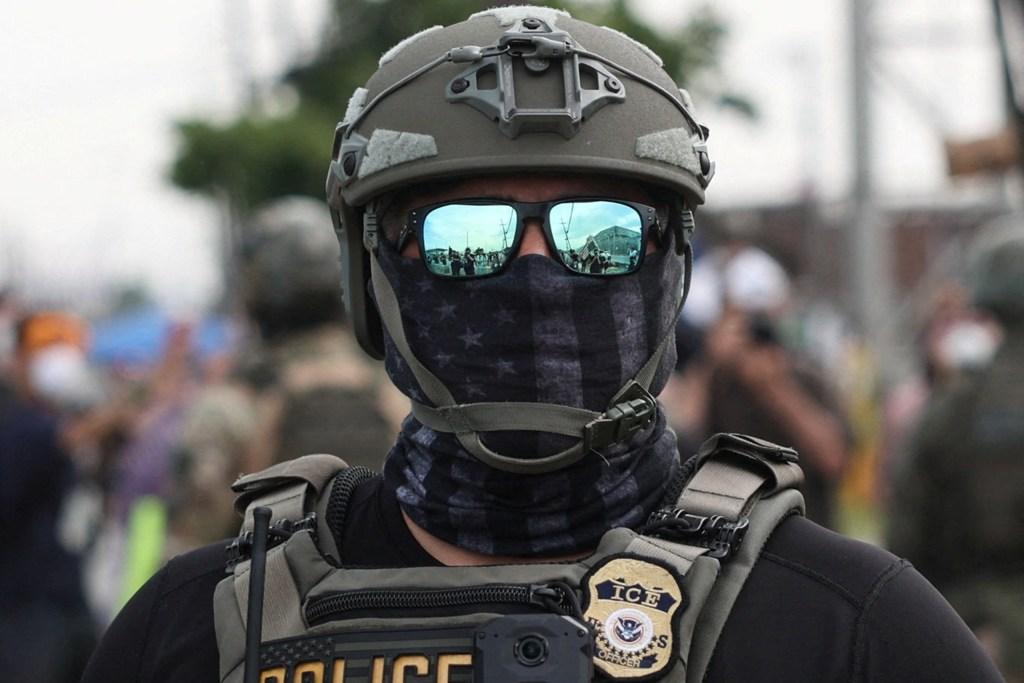
This strategic shift from detaining individuals in jails to making arrests in open public spaces raises concerns about potential violent confrontations, as warned by experts in immigration law. The recent shooting of 52-year-old Lorenzo Salgado Araujo by ICE agents in Houston exemplifies these dangers.
“The tragic shooting of this individual in Houston underscores the risks associated with on-the-street interactions between ICE and local residents, which are becoming more frequent and increasingly violent,” remarked César Cuauhtémoc García-Hernández, an immigration law professor at Ohio State University.
Salgado Araujo, a father of three and a Mexican citizen who had resided in Houston for 35 years without a criminal record, was stopped by ICE agents in unmarked vehicles while driving to work. Notably, he was not the intended target of the operation, and his son indicated that Salgado was in the process of obtaining legal residency.
A further examination of federal immigration data through early March 2026 revealed a significant decline in the percentage of arrests involving individuals with criminal convictions in Houston, decreasing from 61% during Biden’s administration to just 39% under Trump.
Overall arrests made by ICE in Houston and throughout Texas have risen markedly over the past year. In February 2026, approximately 7,100 arrests were recorded, with 1,660 occurring in Houston alone. This represents a sharp increase from February 2025 when nearly 4,200 arrests were made, one-third of which were in Houston.
The analysis conducted by the Deportation Data Project, which aggregates data from government immigration agencies via Freedom of Information Act requests, has been contested by the Department of Homeland Security. A spokesperson stated that the project’s data is selectively presented to support a misleading narrative, asserting that DHS and ICE have not verified its accuracy or methodology.
The local criminal justice system has historically been a convenient avenue for immigration agents to apprehend undocumented immigrants. However, experts suggest that federal officers have adapted their tactics to satisfy the current administration’s demand for thousands of daily ICE arrests.
“Immigrants are statistically less likely to commit crimes than U.S. citizens,” García-Hernández explained, indicating that ICE may face a “mathematical limitation” in its operations. “To fulfill the aggressive deportation commitments made by the Trump administration, ICE must begin targeting individuals who are not already on local law enforcement’s radar.”
As the administration increasingly employs “non-custodial” ICE arrests, which involve detaining individuals not already in custody, Houston-based immigration lawyer Paúl Pirela cautioned that this strategy could lead to heightened risks of violent confrontations.
“Public raids and non-custodial arrests in crowded areas can result in mistakes, endangering lives,” Pirela stated, also highlighting the potential for increased racial profiling and violence.
Salgado was shot in Houston’s predominantly Latino east end, an area where ICE presence and raids have notably intensified, particularly in other Latino neighborhoods in Harris County, including north Houston and Humble.
García-Hernández attributed the significant increase in non-custodial arrests in Texas to the state’s large immigrant population, which provides federal agents with ample targets for apprehension. Texas, home to the second-largest undocumented immigrant population in the United States—over 1.6 million out of an estimated 13.7 million—has become a focal point for the Trump administration’s ambitious deportation agenda.
Harris County alone is estimated to harbor more than 600,000 undocumented residents, making it second only to Los Angeles County, according to a 2025 report from the Migration Policy Institute.
“The presence of substantial migrant populations in Texas’s urban centers, where individuals commute daily to work, makes it easier for federal agents to identify and apprehend them,” García-Hernández noted.
Moreover, Republican leaders in Texas have consistently facilitated ICE operations by reducing obstacles to immigration enforcement. Recently, Governor Greg Abbott threatened to withdraw funding from Houston and two other major cities over policies that he claimed restricted police cooperation with ICE, prompting Houston to modify its ordinance aimed at limiting local officers’ collaboration with federal agents.