









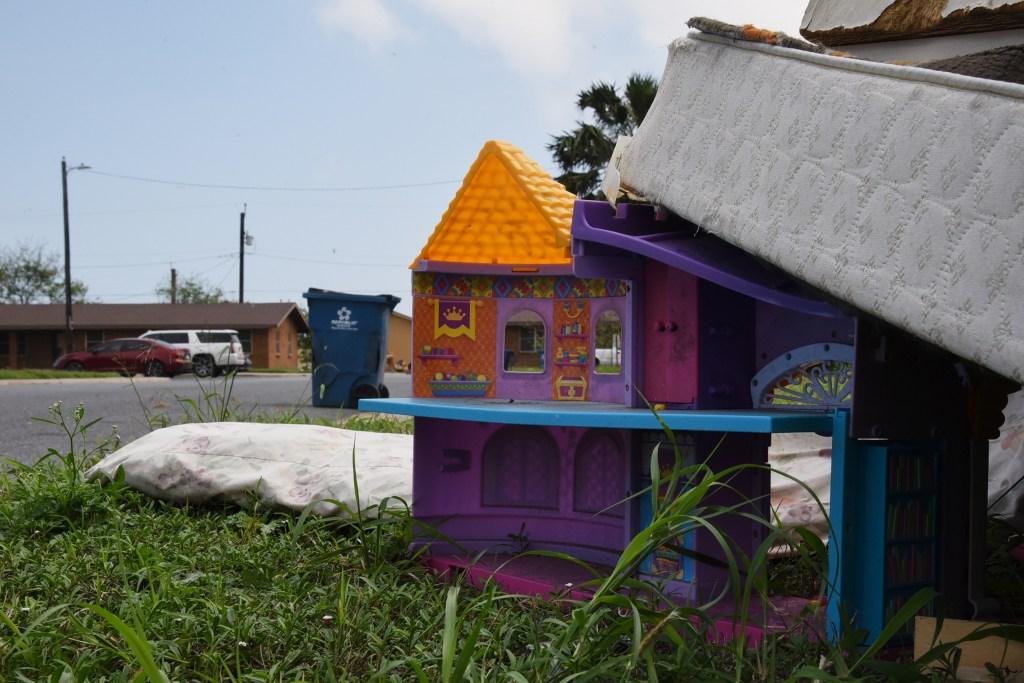
PORT ISABEL — In recent weeks, a once vibrant public housing community in this Gulf Coast town has turned desolate. Children, who previously played joyfully on sunlit lawns, have vanished, and the streets are now lined with discarded furniture as families leave their homes in droves.
This drastic shift was triggered by a miscommunication from the local housing authority regarding a proposed policy from the Trump administration that would strip housing assistance from families with at least one undocumented member. In Port Isabel, a small South Texas community with a population of about 5,000—many of whom are immigrants working in hospitality on nearby South Padre Island—the fallout has been swift and profound.
The Port Isabel Housing Authority conveyed that residents were required to provide proof of legal status for every household member within 30 days or face eviction. This message sent shockwaves through the community. “The consequences extended beyond undocumented immigrants to include those legally residing in the U.S. and their citizen family members,” stated Marie Claire Tran-Leung, a senior attorney at the National Housing Law Project.
For many years, families with at least one eligible resident have been able to live in public housing, provided that those without legal status paid full rent. The U.S. Department of Housing and Urban Development (HUD) is now aiming to reverse this longstanding allowance.
Advocates estimate that as many as 80,000 individuals could lose their homes nationwide if the administration’s proposal is enacted, affecting numerous U.S. citizens, particularly children born in the country to undocumented parents.
On February 3, the Port Isabel Housing Authority’s letter instigated panic among residents, leading to approximately half of the public housing inhabitants vacating their homes within a month. The occupancy rate plummeted from 91% in January to just 43% by May, starkly below the national average of 94%.
Despite the panic, a subsequent letter from the housing authority clarified that proof of legal status was not required, but for many, it was too late. The agency has yet to provide an explanation for the initial confusion, and officials have not responded to multiple inquiries regarding the situation.
Amid growing fears of eviction and potential involvement from immigration authorities, many families decided to leave rather than risk retaliation. One single mother of two U.S. citizen teenagers recounted the stress of the situation, noting that despite being informed by legal aid organizations that they could remain, she felt it was too dangerous to stay and opted to relocate to a more costly apartment within the same school district.
This move not only increased her rent by approximately $500 but also added a longer commute for her family. Her daughter, a high-achieving senior with plans to attend college, now worries about their financial stability after her brother lost his job and their mother faced health challenges.
Other families found themselves in even more precarious situations. One mother of three described how they moved into a one-bedroom trailer home, which was illegally parked, forcing her eldest son to sleep in the living room. Another family had to sell their furniture to fit into a smaller trailer, only to later discover that they couldn’t use their new address for school or health insurance.
“Everything changed in an instant after receiving that letter. The neighborhood was filled with laughter and play before; now it feels empty,” lamented a mother of two, reflecting on the drastic change in their lives.
The proposed rule from HUD, which suggests that any household with an ineligible resident would disqualify the entire family from assistance, has drawn significant criticism. Secretary of HUD Scott Turner emphasized a “zero tolerance” approach toward what he described as exploitation of loopholes in housing regulations.
Organizations advocating for low-income families have estimated that nearly 80,000 people could be displaced, disproportionately affecting children and Latino communities. The rule has garnered over 16,000 public comments, many opposing it, including from city leaders in major urban areas.
City officials in New York, for instance, noted that around 12% of households have at least one member without legal status, affecting approximately 240,000 children. They warned that implementing this rule would likely lead to increased homelessness and poorer outcomes in education and health.
HUD is expected to finalize the rule after reviewing public feedback, and it is anticipated that it will encounter legal challenges once enacted.