






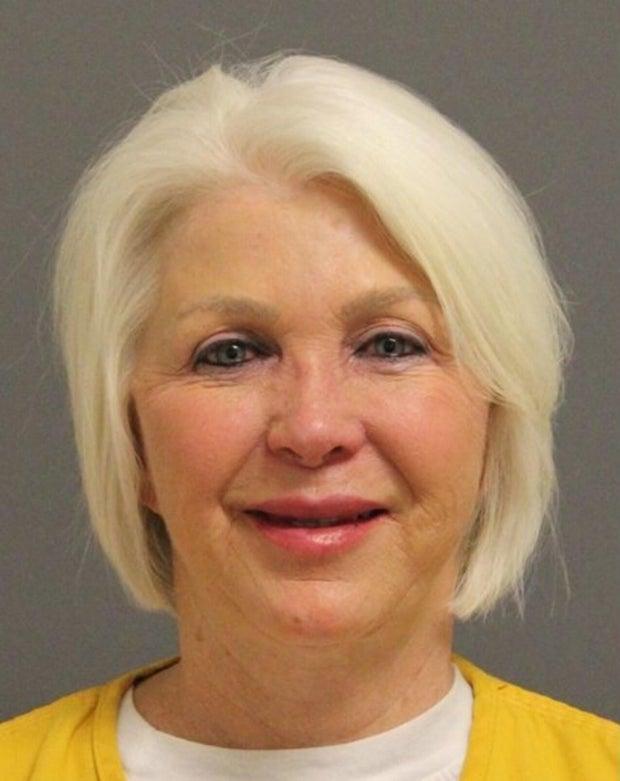
Former Colorado county clerk Tina Peters, currently serving a nine-year state sentence for allowing unauthorized access to voting machines, has received a pardon from former President Donald Trump. This decision, announced on Thursday evening, has raised questions about the scope of presidential pardon power, which is traditionally seen as applicable only to federal offenses.
Trump defended his decision on Truth Social, asserting that Peters is being unjustly targeted for her efforts to ensure election integrity. He referred to her as a “Patriot” who is “sitting in a Colorado prison for the ‘crime’ of demanding Honest Elections.” However, it is important to note that Peters was prosecuted by a Republican district attorney.
The former president claimed that Peters was working to reveal voter fraud in the 2020 elections, a narrative he has consistently pushed without substantiation. Peters, who previously ran for Colorado Secretary of State, has echoed these unfounded claims.
Colorado Secretary of State Jena Griswold responded to Trump’s announcement by emphasizing that Peters was convicted by a jury of her peers in a state court. She stated that Trump lacks the constitutional authority to pardon her, framing his actions as a threat to democracy and state sovereignty.
Colorado Attorney General Phil Weiser further elaborated that the concept of a presidential pardon for someone tried and convicted in state court is unprecedented in American law and would violate constitutional principles regarding state rights and the criminal justice system.
Peters, who once served as the Mesa County clerk, faced seven charges in state court, including three counts of trying to influence a public servant and one count of conspiracy to commit criminal impersonation. Her sentencing occurred in October 2024.
Prosecutors have alleged that in 2021, Peters and others orchestrated a deceptive scheme to facilitate unauthorized access to Mesa County’s voting machines, leading to the online dissemination of sensitive images from the equipment. Peters has been described as being fixated on unfounded allegations of voting irregularities.
During her sentencing hearing, Judge Matthew Barrett labeled Peters as a “charlatan” and noted her defiance in court. Peters has consistently denied any wrongdoing, asserting that she acted without malice or intent to break the law.
Earlier this week, a federal magistrate judge denied Peters’ request for release while she appeals her conviction. Democratic Governor Jared Polis reiterated that Peters was convicted in a Republican jurisdiction and emphasized that matters of state law should be resolved in court, not through presidential intervention.
Trump has shown a vested interest in Peters’ case, previously warning of “harsh measures” if she was not released from state custody. The Federal Bureau of Prisons has sought her transfer to federal custody, which has met resistance from state officials.
In a recent correspondence, Peters’ attorney, Peter Ticktin, argued that Trump might possess the authority to pardon her, despite the constitutional limitations typically associated with state crimes. He acknowledged that this argument has not been tested in court.
Ticktin expressed gratitude towards Trump in a statement, advocating for Peters’ release while legal matters are addressed, including the implications of the president’s pardon.
Trump’s history of pardons includes individuals involved in the January 6 Capitol riot and others convicted in state court for actions related to his 2020 election loss.