






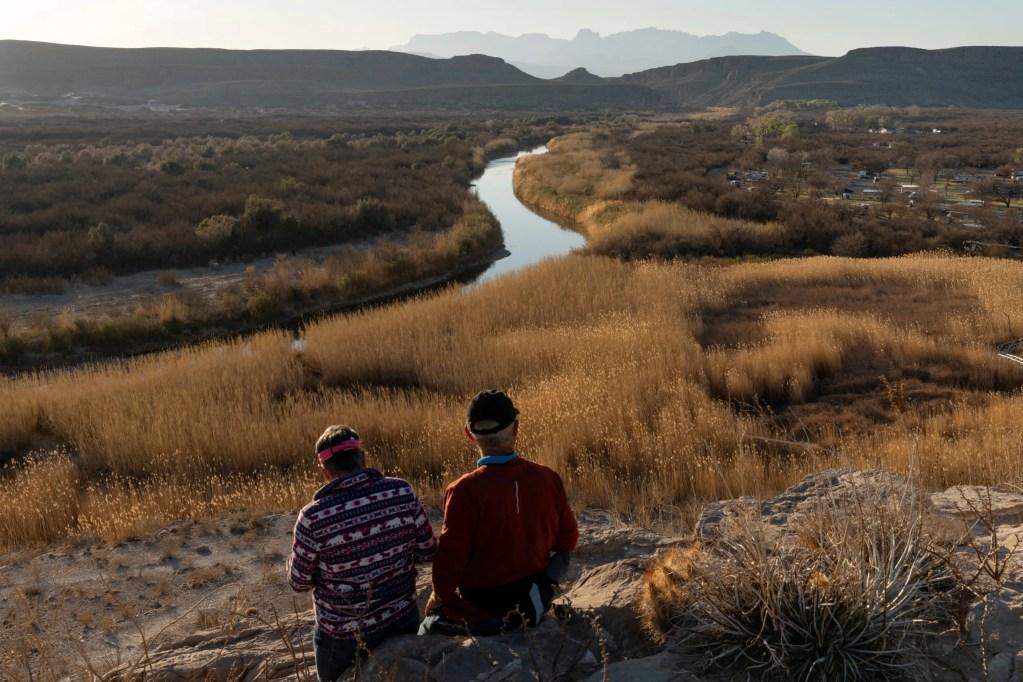
U.S. Customs and Border Protection has awarded a substantial federal contract worth $1.7 billion for border wall construction in the Big Bend region, raising concerns and confusion among the public. This decision comes despite previous assurances from a senior agency official that no barriers would be erected in the national park area.
The contract, announced on Monday, is specifically allocated for “border wall in Big Bend Texas,” marking the largest single amount awarded for border wall contracts in Texas, as per data from usaspending.gov, the official U.S. government spending database.
Additionally, another contract valued at $4.5 million was granted on Thursday for “resource monitoring support” concerning border wall construction in a different section of the Big Bend area.
This recent contract award follows a statement from CBP Commissioner Rodney Scott, who informed the Washington Examiner that no border wall would be constructed at Big Bend National Park due to opposition from local residents. His remarks, along with a CBP statement to another outlet, indicated that the agency would focus on paving roads within the park and utilizing digital surveillance technology instead.
CBP has not yet responded to inquiries regarding the $1.7 billion contract.
Opponents of the border wall are expressing increasing frustration over the project’s unclear communication from the Trump administration, noting a lack of formal announcements about plans affecting the region. “We obviously, at this point, don’t trust anything, but it’s like a roller coaster,” remarked Lico Miller, a business owner in Terlingua, a small town located near the park.
On its website, CBP features an interactive “Smart Wall” map that illustrates plans for installing roads and “virtual wall” technology designed to alert Border Patrol agents when individuals cross the border in the “Big Bend 4” area. The $1.7 billion contract pertains to a segment designated as BBT-4. Although the Smart Wall map was temporarily removed in late April, it was reinstated with updates in mid-May, currently stating that no wall is planned around the national or state park despite the recent contract award.
Laiken Jordahl, a National Public Lands Advocate at the Center for Biological Diversity, criticized the agency’s lack of transparency. “They have made it a mission to obfuscate and make this as confusing of a process as possible,” he stated, highlighting the numerous undocumented changes to the Smart Wall map.
Jordahl further expressed concerns that paved roads along the border could negatively impact local wildlife and facilitate border crossings in areas that would typically be challenging to navigate. He also warned that such roads could pave the way for future barrier installations if CBP decides to change its approach.
On Thursday, the Trump administration issued waivers for environmental protections in the Big Bend area in anticipation of construction, as detailed in a federal notice first reported by Marfa Public Radio. This notice described the 517-mile Big Bend sector as “an area of high illegal entry,” despite it being the least trafficked among the nine sectors, accounting for just 1.3% of over 237,000 apprehensions at the U.S.-Mexico border in fiscal year 2025.
Local residents have pointed to the low frequency of border crossings in the area as further evidence of the project’s misguided nature. “We’re 1.3% of the problem. What is this billions of dollars stuff when we are not an issue?” questioned Cynta de Narvaez, another business owner in Terlingua.
These recent waivers follow similar actions taken in February, when Trump administration officials waived over two dozen environmental laws to facilitate the construction of a 150-mile border barrier through West Texas, which initially included Big Bend National Park.
In response, advocacy groups in the region filed a lawsuit against the Trump administration in mid-April, asserting that the waivers of environmental laws were illegal and required congressional approval.