








President Donald Trump has openly expressed that one of his key motives behind the nighttime operation that resulted in the capture of Venezuelan President Nicolás Maduro on January 3 is the country’s vast oil reserves.
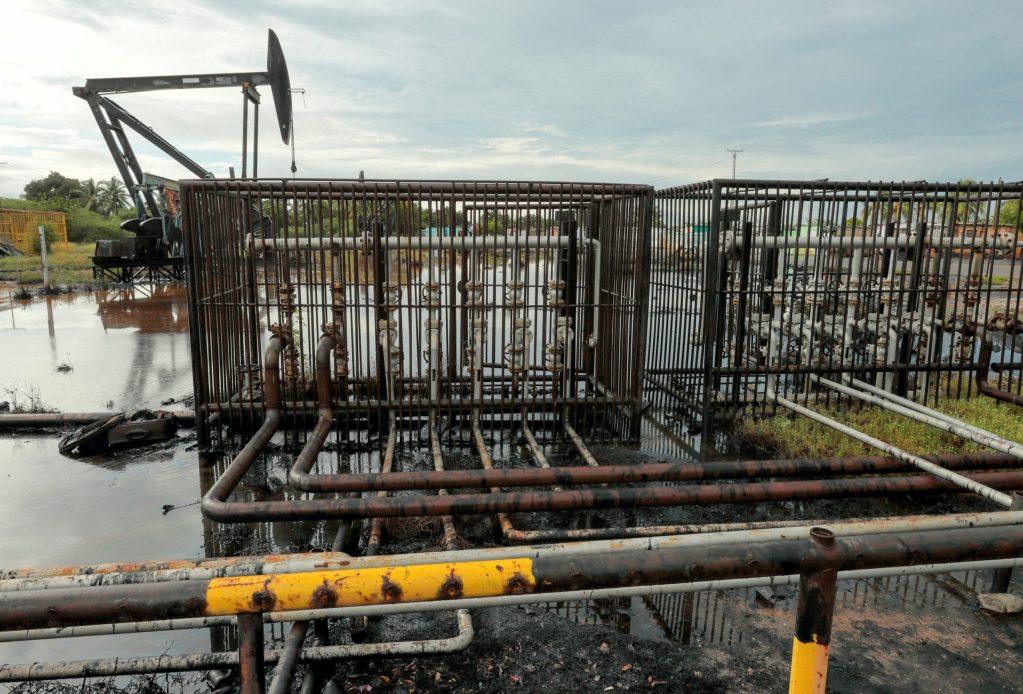
Venezuela is home to the largest proven oil reserves globally; however, after years of economic turmoil and the imposition of U.S. sanctions coupled with a naval blockade, the nation has struggled to sell much of its oil on the international market.
On Saturday, Trump commented, “The oil business in Venezuela has been a bust, a total bust, for a long time. We’re going to have our very large United States oil companies, the biggest anywhere in the world, go in, spend billions of dollars, fix the badly broken infrastructure, and start making money for the country.”
Reports indicate that the Trump administration plans to convene with U.S. oil companies later this week to gauge their interest in investing an estimated $120 billion required to revitalize Venezuela’s crude oil production and export capabilities.
As the leading oil producer globally, the U.S. has Texas at its forefront, particularly with significant drilling activity taking place in the Permian Basin of West Texas. However, the immediate implications of the U.S. push to tap into Venezuelan oil for the Texas economy and its oil sector appear minimal at this time.
Todd Staples, president of the Texas Oil and Gas Association, highlighted, “The Permian has been the best place … to do business for years and we had a surrounding infrastructure that made that attractive. Getting U.S. companies to produce Venezuelan oil will require a massive infusion of capital that must be sourced from willing investors. Given the current global circumstances, it suggests a long-term endeavor.”
U.S. oil companies have largely refrained from commenting on Trump’s assertions regarding their involvement in revitalizing Venezuela’s oil sector. Chevron, the sole U.S. company still operating in Venezuela, has seen its stock price rise following the military operation that led to the capture of Maduro and his wife, who are facing federal drug smuggling and weapons charges in the U.S. However, Chevron has opted not to speculate on future investments in the country.
“Chevron remains focused on the safety and wellbeing of our employees, as well as the integrity of our assets,” stated a Chevron spokesperson. “We continue to operate in full compliance with all relevant laws and regulations.”
Both Chevron and Exxon Mobil, headquartered in Spring, are among the largest oil and gas companies globally, with extensive operations in Texas. The Permian Basin has experienced production growth in recent years, thanks to advances in drilling technologies, particularly fracking, which has increased daily output from less than 2 million barrels a decade ago to approximately 6 million barrels today, according to the Federal Reserve Bank of Dallas. This growth is supported by over a century of infrastructural investment in the state, encompassing pipelines, refineries, and energy supply.
Ben Shepperd, president of the Permian Basin Petroleum Association, remarked, “For more than 100 years of operations, domestic producers in the Permian Basin have weathered wars, economic storms, pandemics, and more.”
Refiners such as Marathon Petroleum, Phillips 66, and Valero Energy benefit from their proximity to oil fields, operating massive refineries along the Gulf Coast. Venezuela’s largest oil field, the Orinoco Belt, produces heavy crude oil, which is more challenging to extract and is characterized as “sour” due to its high sulfur content. While it is less expensive to procure than the Permian Basin’s lighter “sweet” crude, it necessitates a more costly refining process for premium fuel production.
Ed Longanecker, president of the Texas Independent Producers and Royalty Owners Association, noted, “President Trump’s statements about American oil companies investing billions to rebuild Venezuela’s deteriorated infrastructure align with the goal of restoring a once-reliable, proximate heavy crude source. However, the challenges are significant and well recognized.”
Venezuela’s oil output has plummeted by two-thirds since its peak in 1999, despite holding one-fifth of the world’s reserves. The nationalization of the oil industry in 1976 led to partnerships with foreign companies until the early 2000s when Hugo Chávez tightened state control, culminating in the 2007 seizure of assets from major foreign firms, prompting many to exit the country. Economic mismanagement and corruption further deprived the national oil company of the necessary investments over the years, and the imposition of U.S. sanctions in 2017 during Trump’s first term exacerbated the instability of the oil sector and the broader economy.
For Venezuela to compete with the world’s largest oil producers, it must enhance both its drilling and refining capabilities, as crude oil is essentially unusable until refined. Current U.S. sanctions have obstructed Venezuelan crude from reaching Gulf Coast refineries, with the exception of the 200,000 barrels a day produced by Chevron, leading the country to depend largely on India and China in recent years.
Staples emphasized, “The Permian Basin might serve as a comparison for how growth could occur in Venezuela. However, the key distinction is the necessity for upstream production. You need to establish pipelines and have the capacity to export that product, all along with a stable environment.”
Another significant hurdle to Trump’s aspirations is the current state of the global oil market. Economist Ray Perryman, founder of the Waco-based Perryman Group, pointed out that oil prices are presently low, hovering around $60 a barrel, down from a peak of $116 a barrel in 2022 after Russia’s invasion of Ukraine. This decline is attributed to a global oversupply and stagnant demand, which can deter companies from investing in new drilling projects, complicating the prospect of substantial investment in Venezuela.
Nevertheless, Perryman anticipates that long-term global demand will rise as advancements in artificial intelligence increase energy consumption and emerging nations continue to require more energy resources.
Should Venezuela open its doors to U.S. companies, the refineries along the Gulf Coast could stand to gain the most, as the heavier crude oil will require refining. Longanecker pointed out that a reliable, inexpensive, and nearby source of heavy oil in Venezuela could boost profits for these refineries without directly competing with the light crude oil production from the Permian Basin. He noted that share prices for major Texas-based refiners such as Valero Energy and Marathon Petroleum have increased since the military operation in Venezuela.
The primary disadvantage may fall upon Canada, one of the U.S.’s closest allies, which is a significant supplier of heavy crude to the American market.